
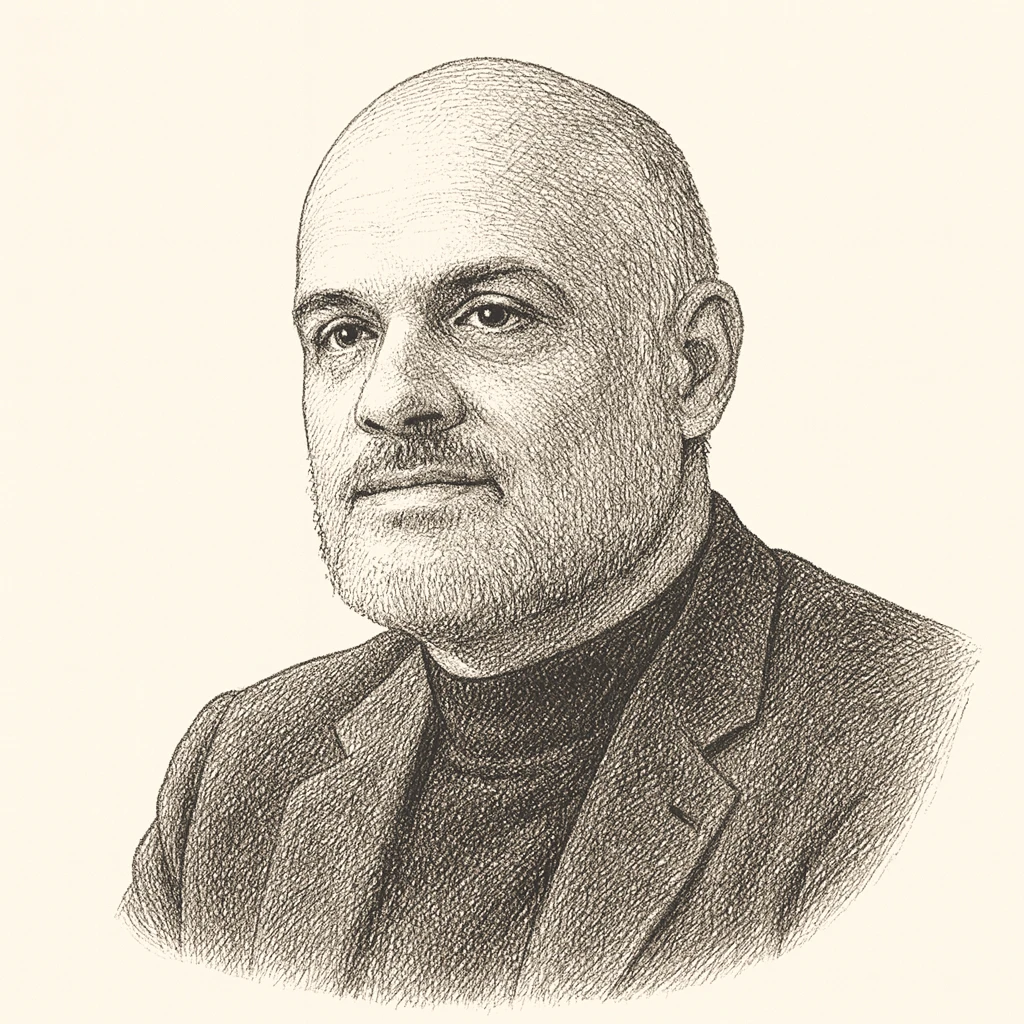
Gary Chartier is an American legal scholar and philosopher based at La Sierra University, where he teaches law and business ethics. He is best known as a leading contemporary exponent of left-wing market anarchism, a strand of anti-authoritarian thought that combines a thoroughgoing rejection of the state with a critique of corporate power and concentrated wealth. Chartier is closely associated with the effort to distinguish "markets" from "capitalism," arguing that historically actual capitalism has depended on state privilege, monopoly protections, and coercive enclosures, and that removing these props would produce a more egalitarian, decentralized economic order rather than the plutocratic outcomes critics attribute to laissez-faire. In this he draws on the mutualist and individualist-anarchist traditions while engaging closely with modern libertarian debate.
A distinctive feature of Chartier's work is his grounding of anarchist conclusions in natural-law moral theory, particularly the strand associated with the "new classical" natural law thinkers. Rather than deriving anti-statism from self-ownership axioms or utilitarian calculation, he builds an account of practical reasonableness and basic human goods, and argues that a stateless legal order—one of polycentric, consensual, and customary law—can secure justice and coordinate social life without a coercive monopoly on force. He has argued that legitimate legal order need not be identified with the state, and that dispute resolution, rights protection, and the rule of law can emerge from voluntary and competing institutions.
Chartier has also been an organizer and popularizer of these ideas, helping consolidate a self-consciously "left" market-anarchist current that positions itself against both statist socialism and pro-corporate libertarianism. He is often linked to the label "anarchism without adjectives," reflecting a tolerance for multiple experimental economic arrangements—cooperatives, mutual aid, worker self-management, and small enterprise—so long as they arise without coercion. His writings press the point that anti-capitalism and free-market advocacy need not be opposed, a claim that has influenced debates at the intersection of libertarian and radical-left thought. Through academic monographs, edited collections, and essays, he has sought to give this position philosophical rigor and to broaden the audience for a nonviolent, market-oriented anarchism.
Gary Chartier is associated with Left Libertarian. See the archetype