
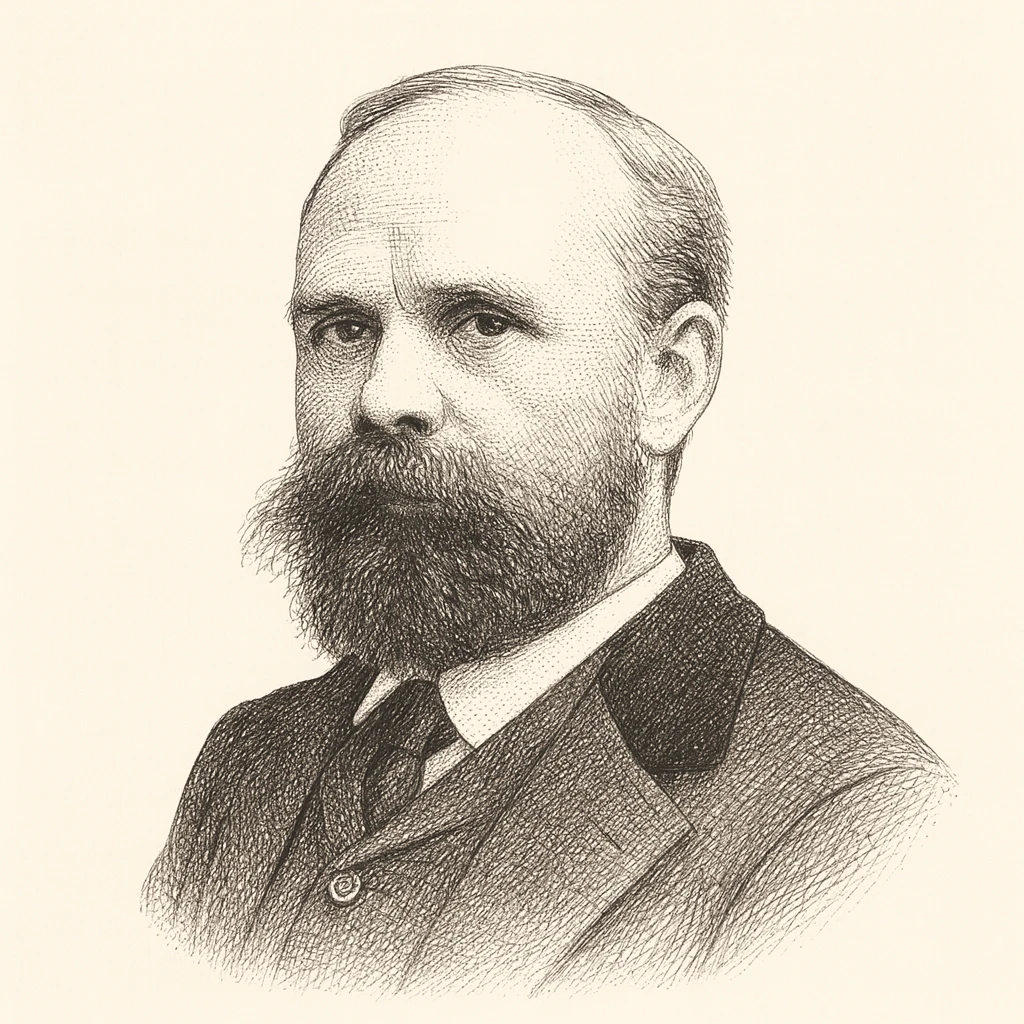
Benjamin Tucker (1854–1939) was the leading exponent of American individualist anarchism, a tradition that sought to reconcile radical opposition to the state with a defense of markets and private exchange. As founder and editor of the journal Liberty, which he published for nearly three decades beginning in the early 1880s, he built a forum for anarchist debate and translated key European thinkers—most notably Pierre-Joseph Proudhon, whose mutualism deeply shaped his outlook—into English for an American readership. Tucker drew together strands from Proudhon, the native individualism of Josiah Warren, and, in his later thought, the egoism of Max Stirner, fashioning a distinctive synthesis he sometimes described in terms of consistent, uncompromising principle.
At the core of Tucker's political thought was the claim that exploitation and social inequality arose not from markets as such but from state-granted monopolies that distorted them. He argued that a handful of legally enforced privileges—especially the monopoly over money and banking, control of land beyond occupancy and use, and protections such as tariffs and patents—allowed a privileged few to collect unearned income in the form of interest, rent, and profit. Remove these props, he contended, and competition would drive such returns toward zero, letting labor receive its full product without the need for collective ownership. This placed him at odds with communist and collectivist anarchists, since he defended individual property and free competition while rejecting capitalism as he understood it, namely a system resting on state-backed advantage.
Tucker's method was resolutely anti-statist and generally opposed to violent revolution, favoring instead the gradual erosion of state power through education, passive resistance, and the building of alternative institutions such as mutual banks. He held that liberty was both the means and the end of social progress, and that voluntary association could handle functions ordinarily assumed by government. Though his movement waned in the early twentieth century, and he came to doubt its near-term prospects, his ideas left a durable imprint. He is widely regarded as a central figure in the lineage of libertarian and market-oriented anti-statist thought, and later thinkers across individualist anarchism and libertarianism have engaged with his critique of monopoly and his vision of a free-market society without a state.
Benjamin Tucker is associated with Left Libertarian. See the archetype