
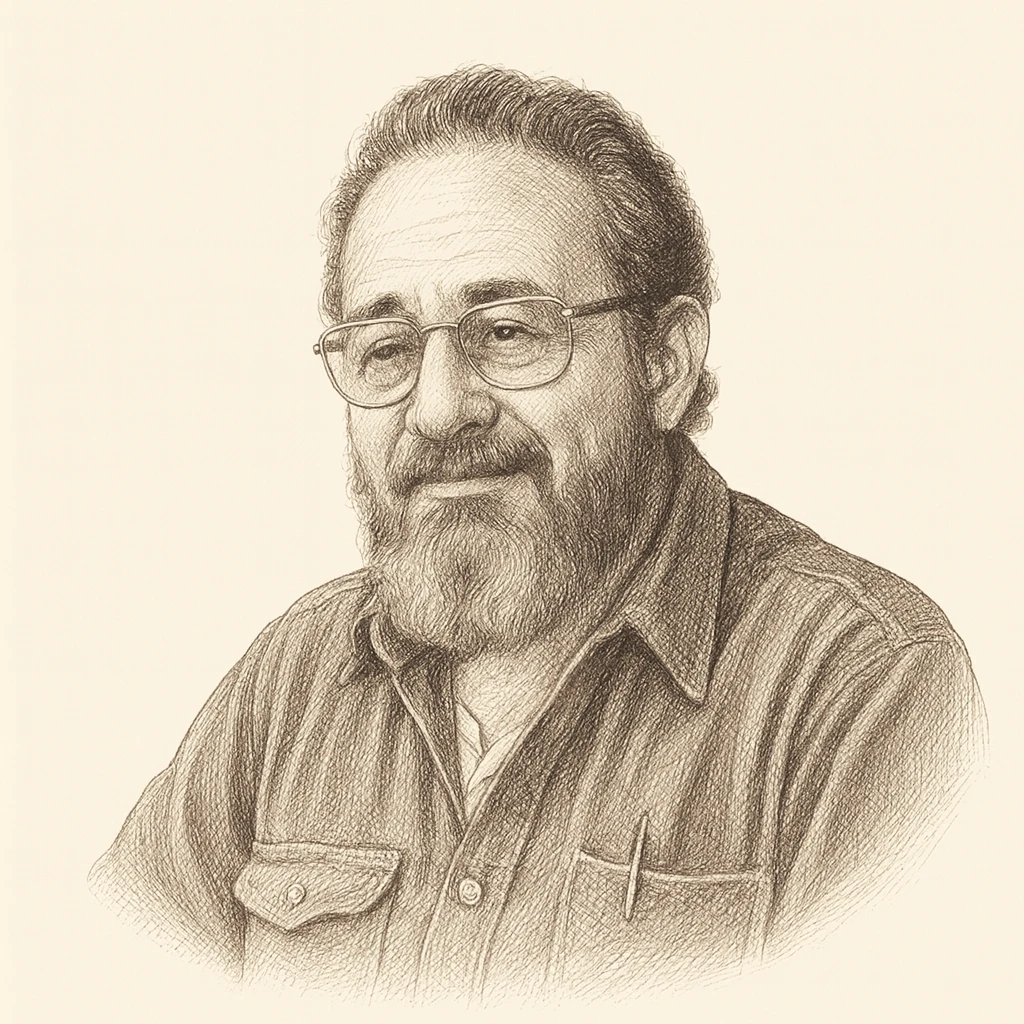
Karl Hess (1923–1994) was an American writer whose political trajectory made him a distinctive figure in twentieth-century libertarian thought. He first gained prominence as a speechwriter and wordsmith for Republican conservatives, most famously working with Barry Goldwater during the 1964 presidential campaign, and is widely associated with the campaign's defining formulation that extremism in the defense of liberty is no vice and moderation in the pursuit of justice no virtue. That phrase captured the uncompromising temperament that Hess would carry with him even as his political commitments shifted dramatically.
Over the following years Hess broke decisively with mainstream conservatism and moved toward a radical, anti-statist libertarianism that resisted easy placement on the conventional left-right spectrum. He came to see the concentrated power of the state and of large corporate institutions as twin threats to individual freedom, and he sought common ground with elements of the New Left in opposition to war, centralized bureaucracy, and coercive authority. He was closely linked to the libertarian intellectual milieu around Murray Rothbard, and his writing during this period reflected an effort to fuse older libertarian principles with a critique of both capitalist and governmental hierarchies.
Hess is best remembered for his advocacy of decentralization, community self-reliance, and what was often called appropriate technology. Rather than treating liberty as an abstraction, he emphasized practical, local self-organization—neighborhood-scale economies, cooperative production, and hands-on skills as means by which ordinary people could reduce their dependence on distant institutions. He famously practiced this ethic himself, working as a welder and experimenting with community technology projects, and his engagement with tax resistance dramatized his belief that individuals should withhold cooperation from a state they regarded as illegitimate in its coercive functions.
His political thought matters chiefly as a bridge and a provocation: he embodied the possibility that anti-authoritarian instincts could travel across ideological camps, and he pushed libertarians to think seriously about voluntary community and grassroots empowerment rather than markets alone. Through his essays and books addressed to a general readership, Hess helped popularize a vision of freedom rooted in decentralization and personal autonomy, influencing later discussions among libertarians, communitarians, and advocates of localism about how liberty might be lived rather than merely theorized.
Karl Hess is associated with Left Libertarian. See the archetype