
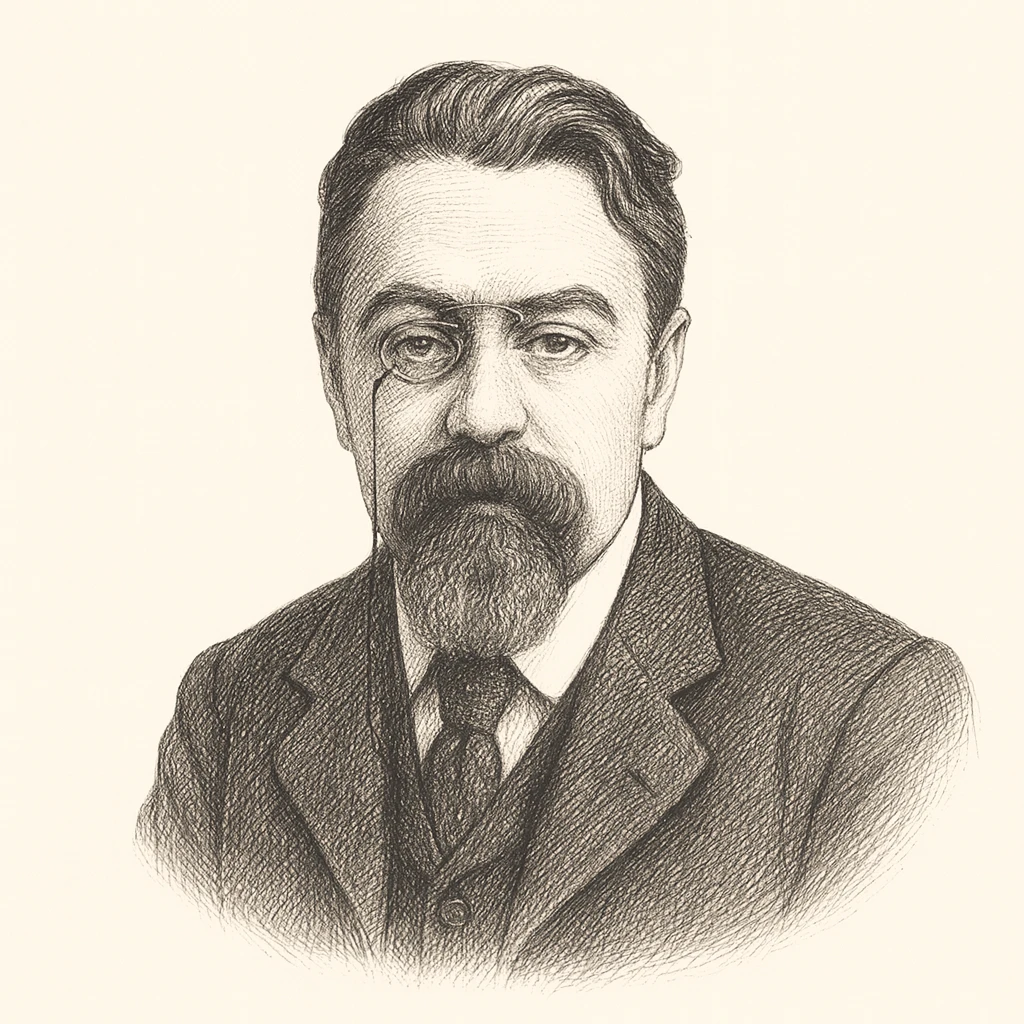
Sidney Webb was a colonial office clerk who joined the Fabian Society in 1885, married Beatrice Potter in 1892, and with her spent fifty years producing the research on which British social policy was built — the histories of trade unionism and industrial democracy, the nine-volume study of English local government, the minority report of the Poor Law Commission of 1909 that first proposed a national minimum below which nobody should fall.
Fabian strategy rejected both revolution and the building of alternative communities in favor of what Webb called permeation: work through existing institutions, supply the facts, staff the committees, and let the logic of administration do the rest. Socialism, on this account, was not a rupture but the direction in which industrial society was already moving — municipal gas and water, factory inspection, compulsory education, public health — and the task was to accelerate and rationalize it. The inevitability of gradualness is his phrase, from his presidential address to the Labour Party in 1923.
He built institutions rather than movements. The London School of Economics, founded in 1895 with a legacy left to the Fabians, was intended to produce the trained administrators the new state would need. He served on the London County Council for eighteen years, reorganized London's secondary and technical education, and helped found the New Statesman.
In 1918 he drafted Labour and the New Social Order, the party's first full program, and the constitution containing Clause IV — common ownership of the means of production, distribution and exchange — which remained Labour's formal objective until 1995 and was the text every subsequent argument about the party's purpose fought over.
His judgment failed him at the end. The Webbs visited the Soviet Union in 1932 and produced Soviet Communism: A New Civilization, a long and admiring account written from official material at the height of collectivization and famine, with the question mark dropped from the title in the second edition. It is the standard example of what technocratic enthusiasm for administration can be persuaded to overlook.
Wondering where you land? Take the 4-minute assessment