
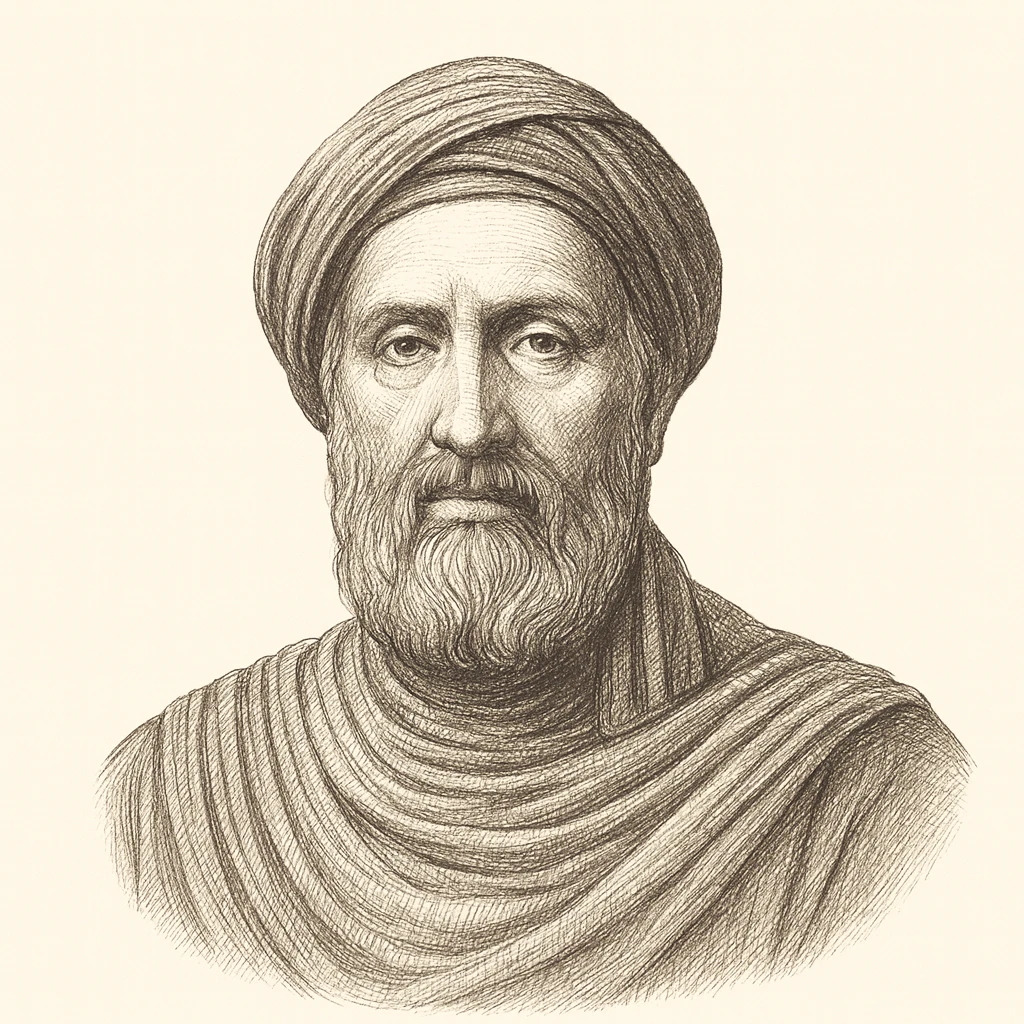
Ibn Khaldun was a jurist, diplomat and court official who spent a turbulent career moving between the courts of the Maghreb, Granada and Mamluk Egypt, was imprisoned more than once, and at one point negotiated with Tamerlane outside the walls of Damascus. The Muqaddimah, written in 1377 as the prolegomenon to a universal history, is the work that matters.
Its subject is not what happened but why polities follow the pattern they do. Ibn Khaldun's organizing concept is asabiyyah — the group feeling, solidarity or cohesion that binds a people and makes collective action possible. Asabiyyah is strongest among those living hard lives at the margins and weakest among the settled and comfortable. His dynastic cycle follows from that: a group with strong cohesion conquers a softened urban dynasty, rules, grows wealthy, acquires the luxury and specialization of settled life, loses the solidarity that brought it to power, and is displaced in turn by the next group from the margins — typically across three or four generations.
What makes this modern is its method rather than its conclusions. He treats history as a subject with causes to be explained rather than a sequence of reigns to be chronicled, insists that implausible reports be tested against what is materially and socially possible, and analyzes taxation, labor, urbanization and the division of specialisms as interacting forces. His observation that raising tax rates eventually reduces revenue is a genuine anticipation of an argument rediscovered in the twentieth century.
His European reception came late and is the honest qualification on his place here: he had no influence on medieval Europe, which never read him. Translation into French and English in the nineteenth century brought him into Western scholarship, where the response was substantial. Arnold Toynbee called the Muqaddimah the greatest work of its kind ever created by any mind in any time or place; Ernest Gellner built an account of Muslim society on asabiyyah; and he is routinely placed in Western histories of social science as a forerunner of the questions Durkheim and Weber would later ask. That is admiration and adoption rather than descent — but it is real, and it is why a Western lineage has reason to name him.
Wondering where you land? Take the 4-minute assessment