
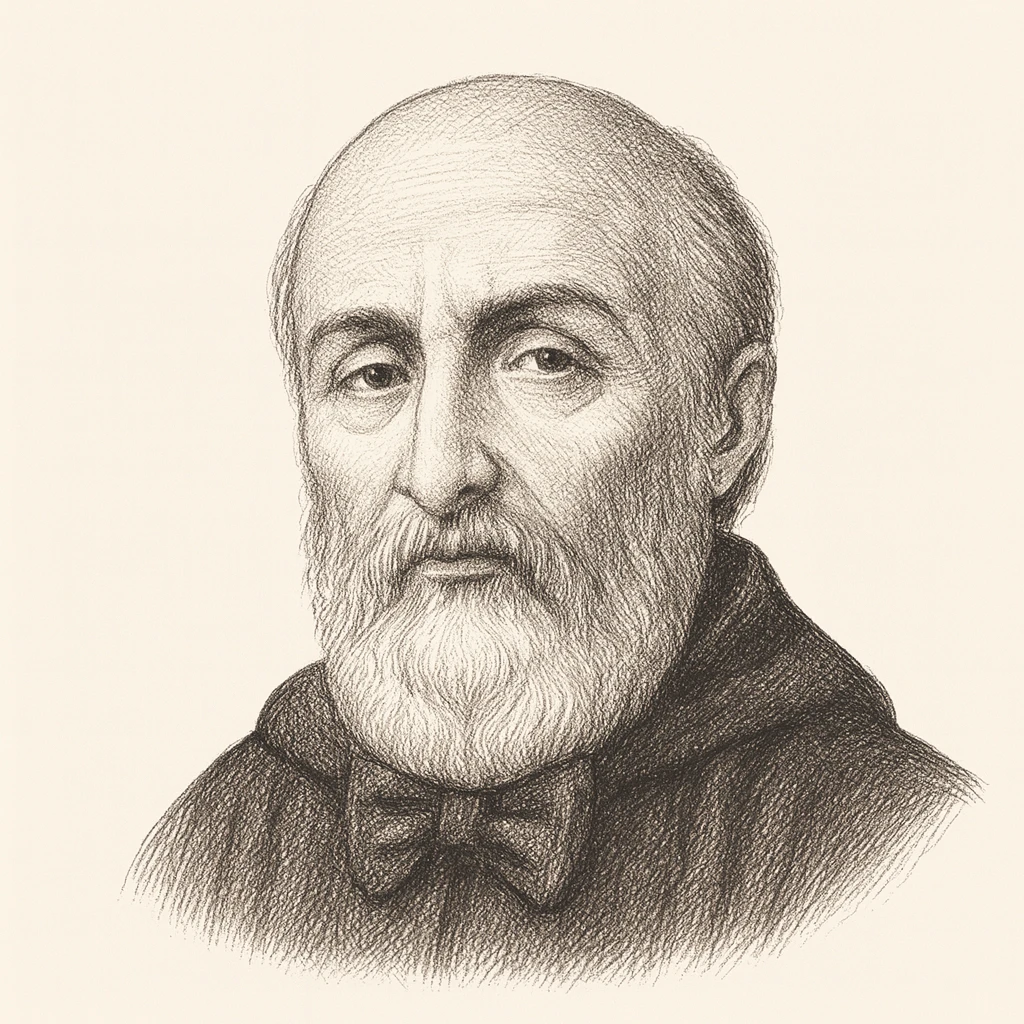
Augustine of Hippo was born in 354 in a small town in what is now Algeria, then part of the Roman Empire in its long decline. His mother Monica was a devout Christian; his father was pagan; Augustine himself spent his youth pursuing pleasure, rhetoric, and philosophical frameworks that Christianity would later absorb or reject. He drifted through Manichaeism, Neoplatonism, and secular ambition before converting to Christianity at thirty-two in a garden in Milan, an event he describes in the Confessions as the turning point of his life and the founding moment of a specifically Christian interiority that would shape Western self-understanding for over a thousand years.
Augustine's political thought was forged by a historical catastrophe. In 410, Rome was sacked by the Visigoths, the first time in eight hundred years that the city had fallen to an enemy. Pagans across the empire blamed the Christians: Rome had abandoned its ancestral gods and now the gods had abandoned Rome. Augustine, by then bishop of the North African port city of Hippo, spent the next thirteen years writing a massive book-length response, The City of God, which became one of the foundational texts of Western political philosophy. His argument was that Rome had never been the eternal city its pagan defenders claimed; no earthly city ever could be. There were only two genuine cities, Augustine argued: the City of Man, built on self-love and oriented toward earthly goods, and the City of God, built on love of God and oriented toward eternal life. These two cities were intermingled in history but would be separated at the final judgment, and no merely political project could ever achieve the perfection that belongs only to the City of God.
This framework was enormously consequential. It gave Western Christianity a way to take political life seriously without idolizing it. Political authority was legitimate and necessary, Augustine argued, as a remedy for human sinfulness and a guarantee of basic order, but it could never be more than a secondary good. The Christian's ultimate loyalty belonged to the City of God, not to any earthly kingdom or empire. This relativization of political authority became one of the deep structural features of Western political thought, distinguishing it from civilizations in which religious and political authority were more tightly fused. The tension between the two cities runs through every later debate about church and state, through the medieval struggles between popes and emperors, through the Reformation, and into contemporary arguments about religious freedom and the limits of political community.
Augustine's broader philosophical project was an attempt to synthesize Christian theology with Platonic philosophy, and his influence on the Western theological tradition is difficult to overstate. The Confessions (c. 397-400) invented a new literary form, the introspective spiritual autobiography, and gave Western Christianity its model of conversion and interior struggle. Augustine's account of the will, grace, and human weakness shaped Catholic and Protestant theology alike and influenced modern psychology and existentialism centuries later.
Augustine died in 430 as Vandal armies besieged his city. The Roman world he had known was collapsing around him. Within a century of his death, North Africa would no longer be part of the Mediterranean Christian world, and Augustine's diocese of Hippo would be lost to Islam. But his writings had already escaped, copied and recopied across Europe, becoming one of the three or four most important bodies of Western intellectual inheritance. For over a thousand years after his death, "Augustine said" was an appeal that could settle arguments in Christian theology, and his influence on Western political and philosophical thought arguably still exceeds that of any other single author in the period between Plato and Aquinas.
Augustine of Hippo is associated with Religious Conservative. See the archetype