
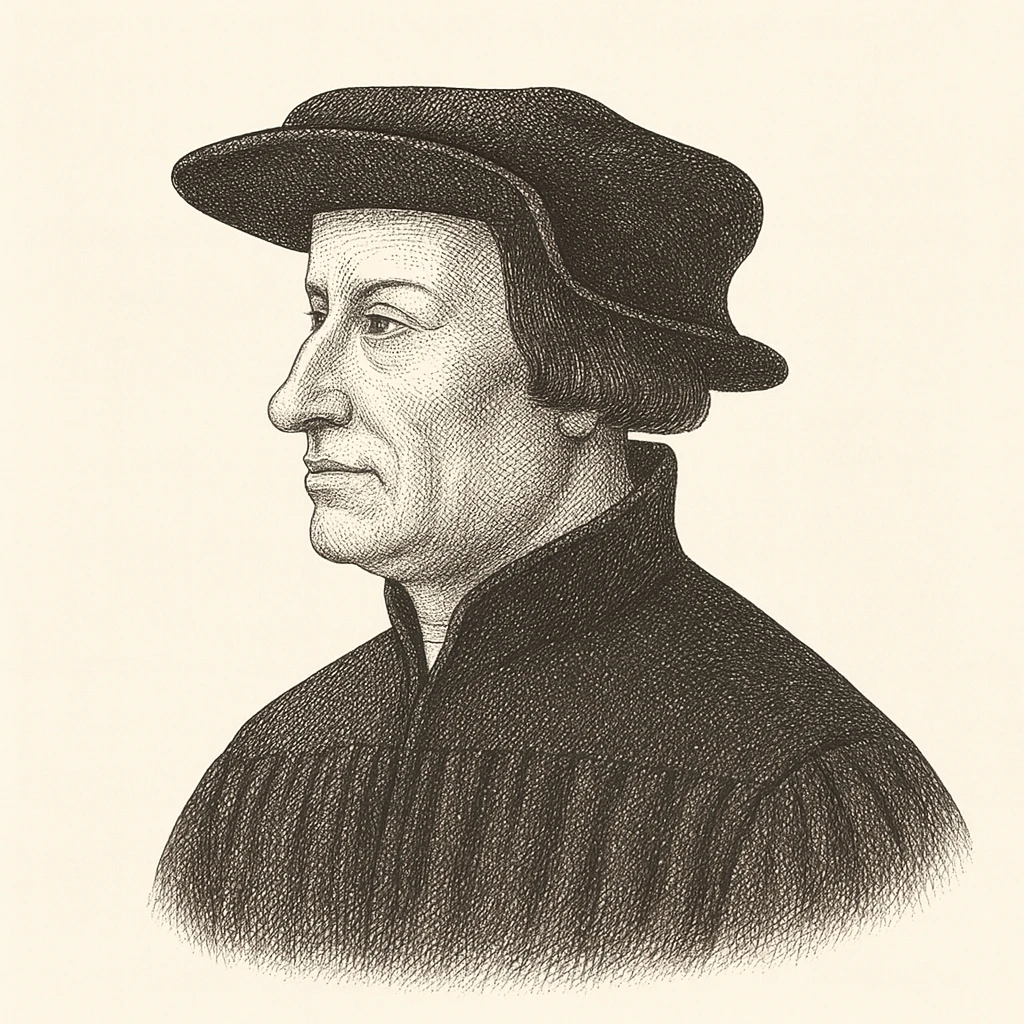
Huldrych Zwingli was a parish priest and army chaplain who had seen Swiss mercenaries slaughtered in Italian wars, and who came to reform through Erasmus rather than through Luther. He arrived at Zurich in 1519 and began preaching straight through the Gospel of Matthew instead of following the lectionary — a small change that carried the whole principle: scripture sets the agenda, not the church's calendar.
The Zurich reformation was conducted through public disputations before the city council, and this is Zwingli's distinctive political contribution. In 1523 he defended sixty-seven articles before the magistrates, who then ruled that he had not been refuted from scripture and authorized him to continue. The council abolished the mass, removed images and dissolved the monasteries. Reformation was thus enacted by the civil authority of a self-governing republic, on the ground that magistrates are Christians charged with ordering the common life and answerable to the Word. Church and city are not two societies but one community under two ministries, and the magistrate who rules contrary to God may be deposed — a claim Zwingli made explicitly and Calvin would handle more cautiously.
His theology pressed further than Luther's on two fronts. On the Eucharist he held the words this is my body to be figurative, a memorial rather than any real presence; the confrontation with Luther at Marburg in 1529 failed on precisely this, and the failure split Protestantism permanently. On images and ceremony he was more thorough, removing what scripture did not command rather than retaining what it did not forbid, which became the Reformed rather than Lutheran pattern.
He also broke with his own radical followers, who argued that his premises required believers' baptism and a church separated from the magistracy. Zurich drowned Anabaptists for that conclusion. Zwingli died in armor at Kappel, fighting the Catholic cantons; Luther took it as a judgment.
Wondering where you land? Take the 4-minute assessment