
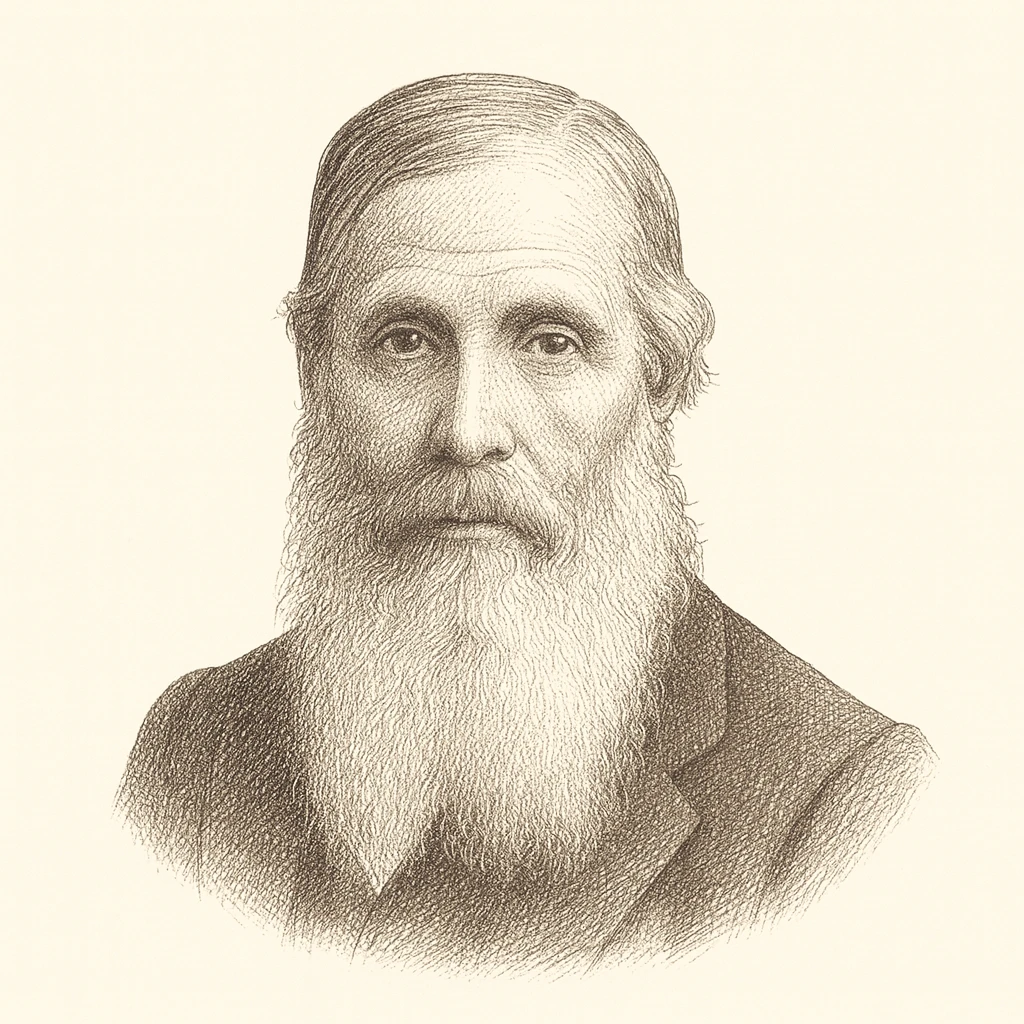
Henry Sidgwick resigned his Trinity fellowship in 1869 because he could no longer subscribe to the Thirty-Nine Articles and thought it dishonest to hold a post requiring it. The college found a way to keep him, and he spent the rest of his life at Cambridge, where he was the driving force behind the founding of Newnham College and the campaign for women's degrees, and a founder and president of the Society for Psychical Research, which he pursued with the same scrupulousness he brought to everything.
The Methods of Ethics of 1874 is his monument, and Rawls called it the first truly academic work in moral theory. Sidgwick's procedure is not to advocate but to examine: he takes the three methods people actually use — egoism, intuitionism and utilitarianism — states each in its strongest form, and asks what each really requires and whether they can be reconciled. The examination of common-sense morality is the most patient ever conducted, and its conclusion is that ordinary moral rules, pressed for precision, turn out to be vague and to conflict, and to be defensible only when they are understood as rules whose observance promotes general happiness. Intuitionism thus leads to utilitarianism rather than opposing it, and he identifies genuinely self-evident axioms — impartiality, prudence, benevolence — of a formal kind that support it.
The problem he could not solve is the dualism of practical reason. Egoism and utilitarianism are each rationally defensible, and where they conflict, reason gives no verdict: it is not irrational to prefer one's own good, nor irrational to prefer the general good, and nothing in the structure of practical reason adjudicates. Sidgwick had hoped a theistic postulate might close the gap and could not bring himself to assert one. The book ends in an admitted failure that he refused to disguise, and the honesty of it is much of why the work is still read.
He is also the first utilitarian to worry properly about whether the doctrine should be published — his esoteric morality, that it might be right for an elite to follow utilitarian reasoning while the public keeps to common-sense rules — which Bernard Williams called Government House utilitarianism and which the tradition has been arguing about since.
Wondering where you land? Take the 4-minute assessment