
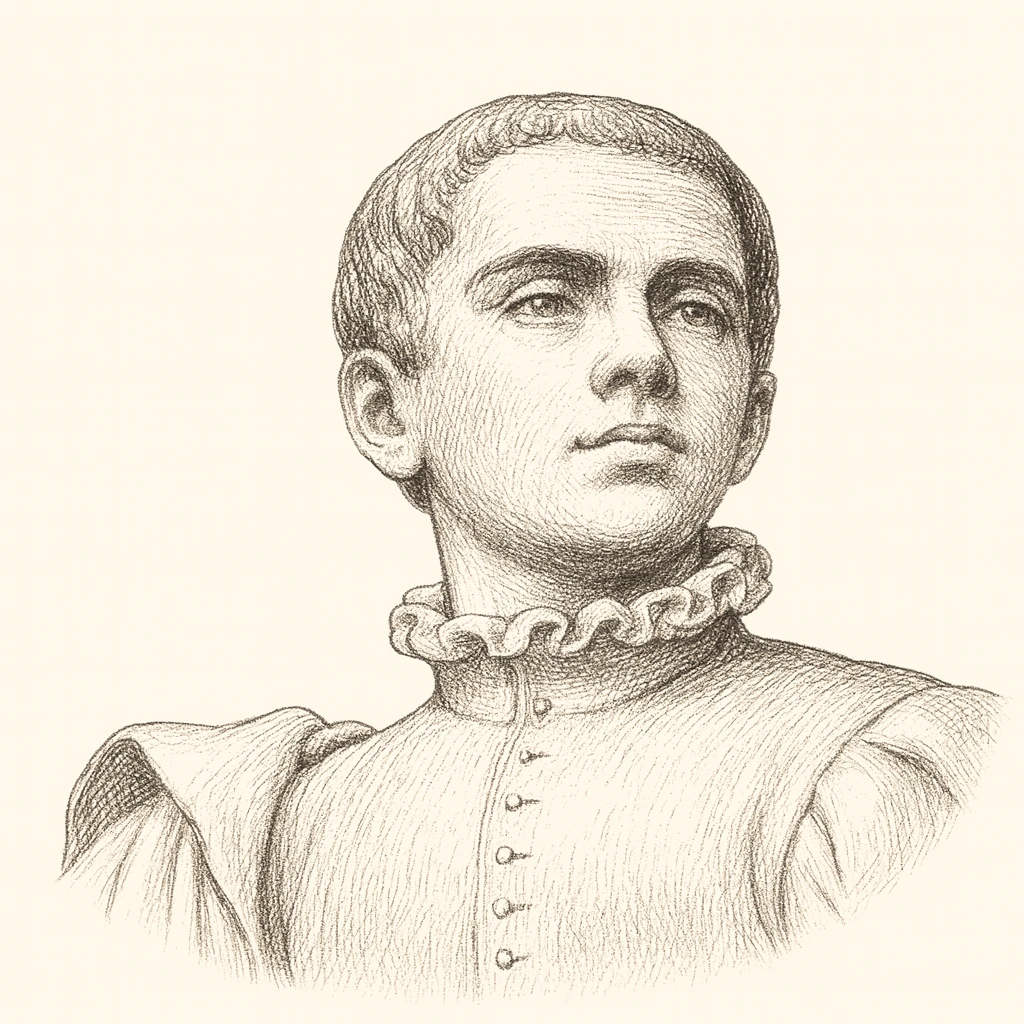
Étienne de La Boétie was a magistrate at Bordeaux who died at thirty-two, and would be entirely forgotten but for a short essay written in his youth and a friendship with Montaigne that produced the most famous account of friendship in European literature.
The Discourse on Voluntary Servitude reverses the standard question of political theory. It does not ask what entitles a ruler to obedience, or how power may be limited, but why millions of people obey one man who has no strength except what they lend him — who has no more eyes than they have, no more hands, and nothing that they have not given him. The answer is not force, since the tyrant's force is theirs. It is habit, custom, and the corruption of those who profit from the arrangement: a chain of dependents each of whom oppresses those below in exchange for a share from above, so that the tyranny is sustained by the tyrannized.
The practical conclusion is startling in its simplicity. Nothing needs to be taken from the tyrant; it is enough to give him nothing. Resolve to serve no more and you are free — the colossus falls of its own weight when the pedestal is withdrawn. It is the first clear statement of the theory of nonviolent noncooperation, that all power rests ultimately on consent and can be dissolved by mass withdrawal of it, and it was reprinted by Huguenots after the massacre of 1572, by revolutionaries in 1789, by Lamennais, by Tolstoy, and by twentieth-century theorists of civil resistance.
Montaigne, who called him the greatest man of his age, published La Boétie's poems and translations but withheld the Discourse, alarmed by the company it had acquired among the religious militants — he wrote that his friend had composed it as a schoolboy exercise on a commonplace theme, which is probably a protective understatement. The essay On Friendship, written for him, contains the sentence that is the whole of their relation: because it was he, because it was I.
Wondering where you land? Take the 4-minute assessment