
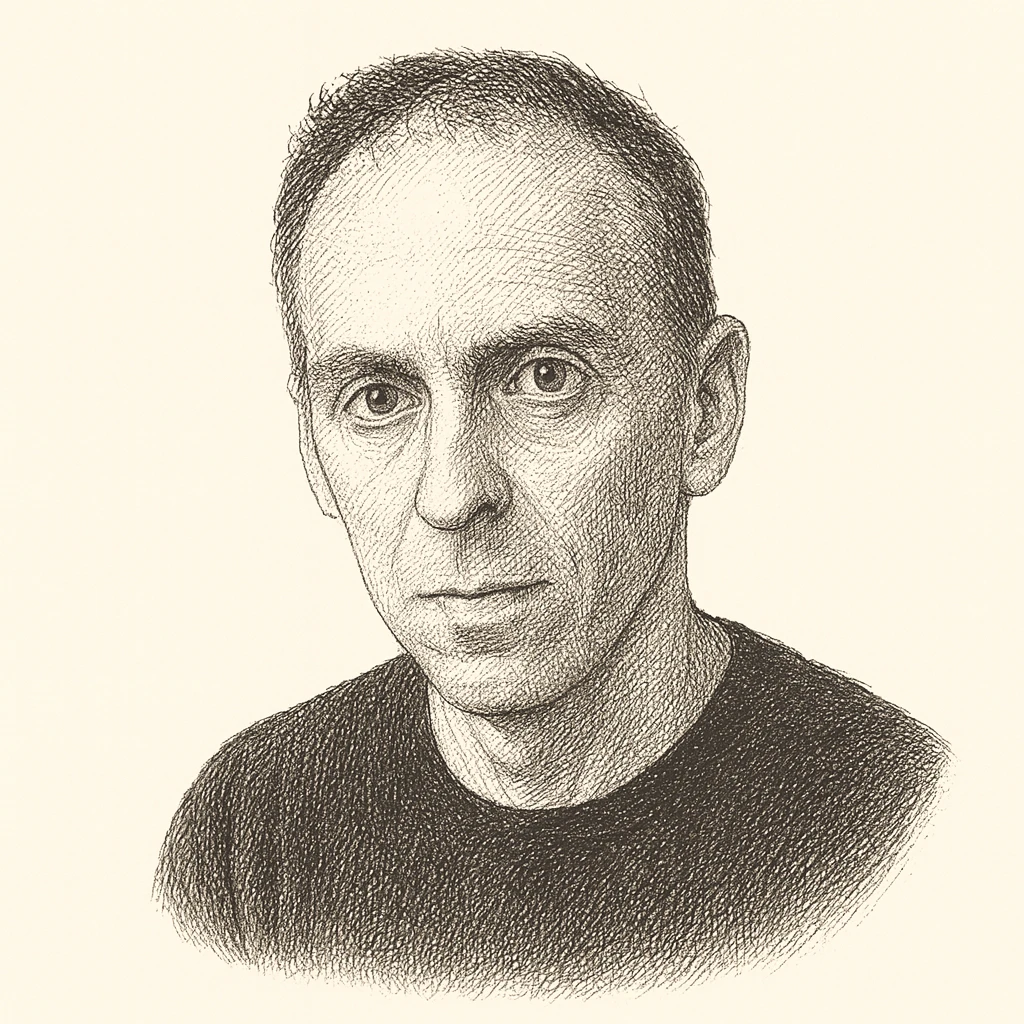
Nick Land
Thinker

Nick Land

1962– · British · philosopher

Nick Land is a British philosopher of right accelerationism whose anti-egalitarian 'Dark Enlightenment' writings made him a touchstone of the online neoreactionary right

Nick Land is a British philosopher (born in 1962) who first became prominent in the 1990s as a lecturer at the University of Warwick, where he was associated with the experimental collective known as the Cybernetic Culture Research Unit (CCRU). His early work fused elements of Continental philosophy—drawing especially on Deleuze and Guattari, Nietzsche, and Bataille—with cybernetics, science fiction, and economics. From this synthesis emerged an early strain of what came to be called accelerationism: the idea that the deterritorializing forces of capitalism and technology should be intensified rather than resisted, treating the market and machine intelligence as autonomous processes that outrun human intention and control.

Land's political significance derives largely from the trajectory his thought took after he left academia. In writings published online from the late 2000s onward, he articulated a critique of liberal democracy and egalitarianism that became foundational to the movement variously labeled neoreaction (NRx) or the 'Dark Enlightenment,' a term he popularized. In dialogue with the ideas of the software entrepreneur Curtis Yarvin, Land argued that democratic politics tends toward decay and that governance might be better organized on the model of the corporation or the sovereign city-state, with exit and competition replacing voice and consent. He is closely associated with the anti-democratic slogan 'no voice, free exit,' framing political order in terms of capital flows rather than popular legitimacy.

These positions place Land within a broadly reactionary and libertarian-adjacent tradition, though his emphasis on impersonal, machinic dynamics distinguishes him from conventional conservatism. Objections to his work center on its endorsement of hierarchy and its engagement with themes tied to scientific racism and 'human biodiversity,' and he is often read as an intellectual influence on parts of the contemporary online reactionary right and the broader alt-right milieu. At the same time, accelerationism has been contested territory: left-wing thinkers have developed their own versions, positioning Land's later 'right accelerationism' against more emancipatory readings.

Land's influence is felt less through formal institutions than through the diffuse circulation of his essays and concepts in digital subcultures, where his fusion of technological determinism, anti-egalitarianism, and speculative rhetoric continues to shape debates about the relationship between capitalism, artificial intelligence, and the future of governance.

Nick Land is associated with Techno-Authoritarian. See the archetype
Positions on the recordReviewed Sep 2026

Where Nick Land stands

Associated with the Techno-Authoritarian archetype, in the Statist family. Its nearest types are Pragmatic Centrist and Neoconservative.

  1. Liberty

    Authority to Liberty

    In The Dark Enlightenment he wrote that democracy may begin as a check on government power but develops into systematic thievery by electoral coalitions. In a conversation published in 2026 he called Curtis Yarvin's neocameralism, the state as sovereign corporation, an amazing intellectual adventure, though he valued its question over its conclusions.

    Sources: After the Hour of Decision (Dr. Monzo, Substack), Setting the Record Straight on Neoreaction (9 Feb 2026)Architechtonics (Vincent Lê, Substack), A Conversation with Nick Land (Part 2) (20 Jan 2026)

  2. Economy

    State to Market

    In a conversation published in 2026 he said the Austrian School completely closes the Marxist system and is right, called today's economic superstructure Keynesian, and wished Argentina's Javier Milei well. In The Dark Enlightenment he wrote that democracy loots the future through currency debauchment, debt accumulation and growth destruction.

    Sources: Architechtonics (Vincent Lê, Substack), A Conversation with Nick Land (Part 2) (20 Jan 2026)After the Hour of Decision (Dr. Monzo, Substack), Setting the Record Straight on Neoreaction (9 Feb 2026)

  3. Scope

    National to Global

    Citing James C. Bennett, he wrote in The Dark Enlightenment that Anglophones tend to settle disagreements by territorial schism and flight, seen in hostility to globalist political projects, and called such exit the well-spring of their liberty. In a conversation published in 2026 he said Chinese global hegemony would not be a good outcome for capital.

    Sources: Philosophy Portal (Cadell Last, Substack), Landian Exit and Hegelian Love (5 Sep 2024)Architechtonics (Vincent Lê, Substack), A Conversation with Nick Land (Part 2) (20 Jan 2026)

  4. Culture

    Traditional to Progressive

    In The Dark Enlightenment he called blank-slate theory, the view that every legitimate question about humankind belongs to culture, the central dogma of the Cathedral, and wrote that under it only failures of nurture may be seen. In a conversation published in 2026 he described the Cathedral as the complex of universities, NGOs, bureaucracy and media.

    Sources: After the Hour of Decision (Dr. Monzo, Substack), Setting the Record Straight on Neoreaction (9 Feb 2026)Architechtonics (Vincent Lê, Substack), A Conversation with Nick Land (Part 2) (20 Jan 2026)

Summarized from Nick Land's public statements and record, with a source for each position. The archetype is an editorial association, not a Scan result.

Traditions2
Archetypes1
Influences & connections2

A selection of notable, documented connections — not an exhaustive map.

Discover your political archetype.

A four-minute assessment across four axes — no account required, no signup, no spam.

Take the Scan