
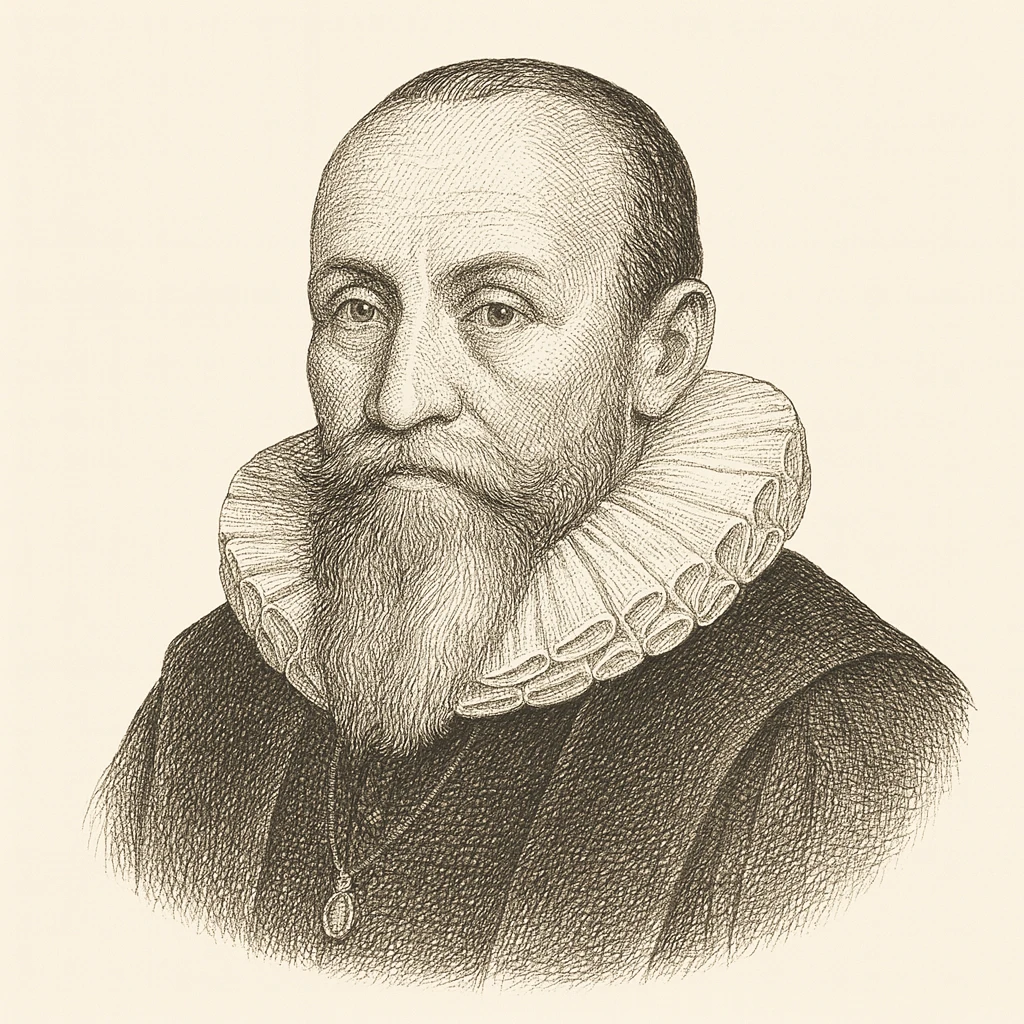
Johannes Althusius taught law at Herborn and spent thirty years as syndic of the city of Emden, a Calvinist republic that had asserted its independence against its Lutheran count. The Politica Methodice Digesta of 1603 is the political theory of that situation, and it is the most thoroughly worked out alternative to Bodin produced in the period.
Politics, Althusius begins, is the art of associating: the science by which people join to establish a common life. The commonwealth is not a mass of individuals under a sovereign but a nested structure of associations, each with its own life and rights. Families and colleges — guilds, corporations — are the private associations; from these are constituted cities, from cities provinces, and from provinces the commonwealth. Each level is formed by agreement among the members of the level below, and each retains the competences appropriate to it. Higher associations exist to do what lower ones cannot, which is the principle later called subsidiarity, and they hold their authority as a trust from below.
Sovereignty, on this account, belongs to the whole organized people and cannot belong to a ruler at all — Bodin, he says, erred precisely here. The supreme magistrate administers what the people own; he is bound by the covenant on which he was admitted; and the ephors, the representatives of the constituent bodies, may resist and depose him if he breaks it. This is Calvinist resistance theory given a full constitutional architecture rather than a doctrine of emergency.
Althusius was largely forgotten for two and a half centuries — Bodin's concept of sovereignty won, and unitary states had no use for him — until Otto von Gierke recovered him in 1880. He has since been claimed by federalists, by Catholic social thought for subsidiarity, by Dutch neo-Calvinism through Kuyper's sphere sovereignty, and by communitarians looking for a theory of the state that begins with real associations rather than with individuals and a contract. The European Union's subsidiarity principle has a genealogy that runs back to Emden.
Wondering where you land? Take the 4-minute assessment