
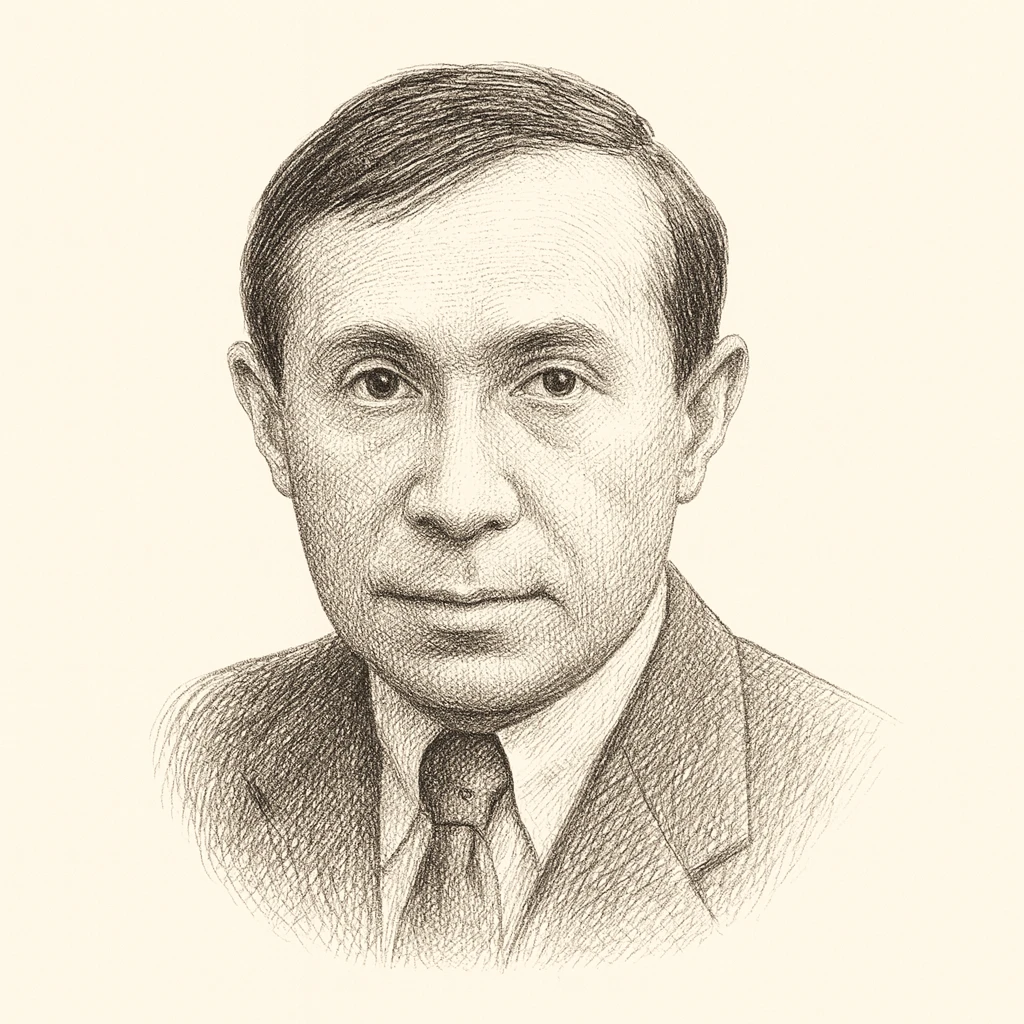
Leo Strauss is one of the strangest and most consequential figures in 20th century political philosophy, a German-Jewish émigré scholar who spent his American academic career at the University of Chicago reading ancient philosophical texts with extraordinary care and arguing that modern political philosophy had gone catastrophically wrong somewhere around Machiavelli. He founded what became known as the Straussian school, which has shaped contemporary political philosophy, classical studies, and parts of American conservative thought in ways that remain controversial. Reading Strauss is often an exercise in learning to read at all — his slow, careful, attentive approach to texts that most scholars assumed they already understood has influenced how an entire generation of political theorists approach the history of political thought.
Strauss was born in 1899 in a small German town into an observant Jewish family, served briefly in the German army in the final months of World War I, and then studied philosophy at several German universities before completing his doctorate under the phenomenologist Ernst Cassirer in 1921. His formative intellectual experience was studying with Martin Heidegger in the 1920s, which he later described as encountering for the first time a contemporary philosopher who was actually thinking at the same level as the ancient Greeks. Heidegger's insistence that modern philosophy had lost touch with the fundamental questions that had animated ancient thought shaped Strauss's entire subsequent career. When Hitler came to power in 1933, Strauss was on a Rockefeller fellowship in England and never returned to Germany. He spent years in England and France working on the medieval Jewish philosopher Moses Maimonides and the Islamic philosophical tradition before emigrating to the United States in 1937.
Strauss's mature work developed several distinctive themes. The first was his insistence that classical political philosophy — especially Plato, Aristotle, and the medieval Jewish and Islamic philosophers who had built on them — had possessed genuine wisdom about political life that modern thinkers had dismissed without really understanding what they were rejecting. The second was his argument that much premodern philosophical writing was deliberately esoteric, containing exoteric surface teachings that conformed to the religious and political orthodoxies of the time along with esoteric deeper teachings that only careful readers could recover. This argument — developed most famously in Persecution and the Art of Writing (1952) — provoked sharp dispute because it suggested that reading premodern texts properly required techniques of close attention that most modern scholars had not developed. The third theme was his critique of modern political philosophy as having taken a wrong turn starting with Machiavelli, who had rejected classical philosophy's orientation toward human excellence in favor of a more realistic but ultimately reductive focus on the actual behavior of political actors.
Strauss's critique of modernity centered on what he called the "three waves" of modern political thought. The first wave was Machiavelli, who had lowered the standards of political philosophy from the classical orientation toward virtue to a more realistic focus on what actually worked. The second wave was Rousseau, who had introduced historicism and the idea that human nature could be transformed by social conditions. The third wave was Nietzsche, who had extended historicism to a full relativism about values. Each wave, Strauss argued, had moved further away from the classical recognition that some ways of life were simply better than others and that political philosophy existed to help human beings understand what the good life required. The result, by the mid-20th century, was a pervasive relativism that Strauss believed was destroying the foundations of liberal democracy by making it impossible to distinguish democratic life from its alternatives in any principled way.
Strauss spent most of his American academic career at the University of Chicago from 1949 until 1968, where he taught an entire generation of political theorists who became known as Straussians and who carried his approach to reading classical texts into the broader academic profession. The Straussian school eventually split into several factions. "East Coast Straussians" tended to read Strauss as a philosophical conservative skeptical of American liberal democracy's capacity to sustain itself without some return to classical wisdom. "West Coast Straussians," associated with Claremont, read Strauss as a more direct defender of American constitutional democracy grounded in natural rights. And there were fierce internal debates about what Strauss had actually meant on nearly every major question — debates that reflected his own deliberately ambiguous writing style and his suspicion of any quick summary of his position.
Strauss's influence on American political life has been controversial, particularly because several prominent neoconservative intellectuals associated with the George W. Bush administration — including Paul Wolfowitz and William Kristol's circle — had studied with Straussian teachers. Whether Straussianism actually shaped the foreign policy decisions of the Bush era has been debated exhaustively, with most serious scholars concluding that the connection has been substantially overdrawn by Strauss's critics. But the association stuck, and Strauss's reputation has become caught up in broader political controversies that have often obscured the quality of his actual scholarly work.
Strauss died in 1973 in Annapolis, Maryland, having spent his final years continuing to write on Plato, Xenophon, and the classical tradition. His influence on contemporary political philosophy, classical studies, and American conservative intellectual life remains substantial, and serious engagement with his work continues to produce new scholarship and new disagreements about what he was actually doing.
Leo Strauss is associated with Neoconservative. See the archetype