
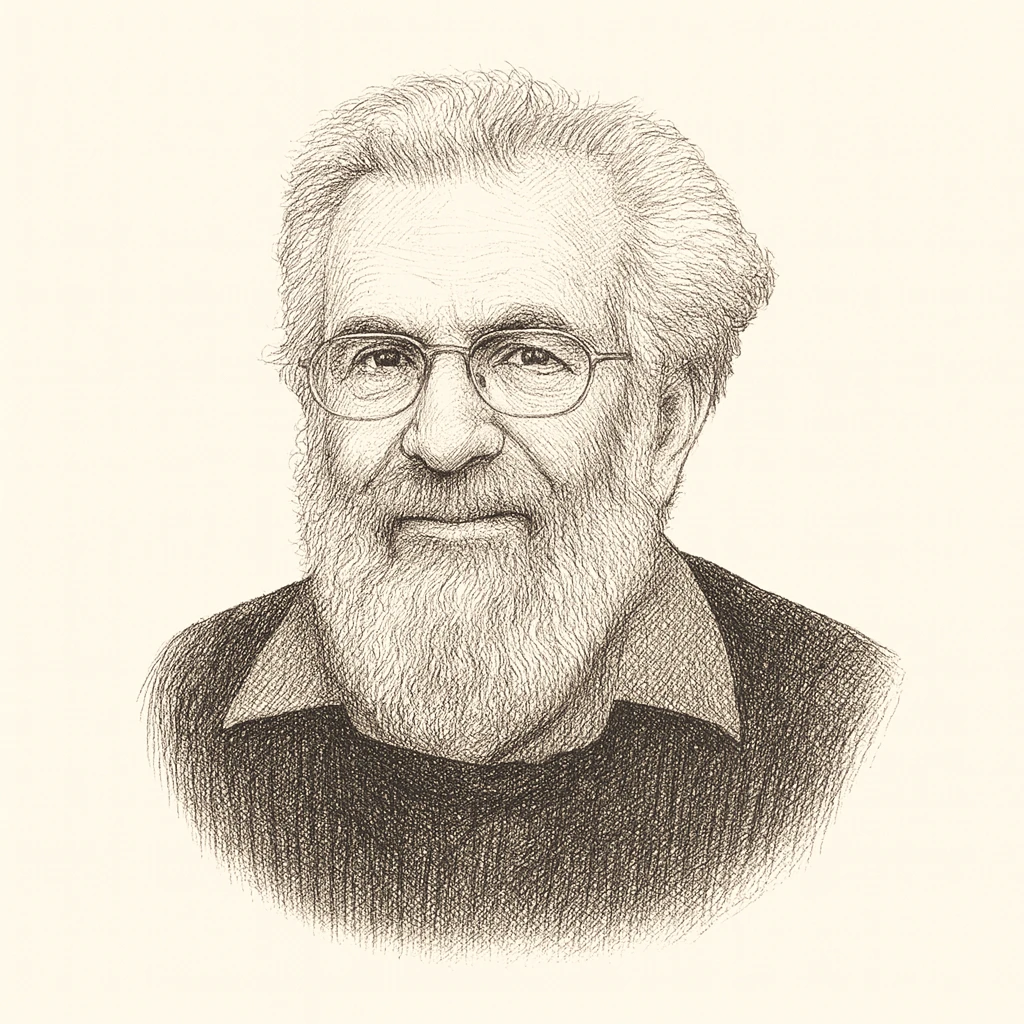
Joseph Raz was born in Haifa, in Mandatory Palestine, in 1939, and studied law at the Hebrew University of Jerusalem, graduating in 1963. As a student he found an error in a paper by the Oxford legal philosopher H. L. A. Hart and wrote to tell him; Hart replied, and later supervised Raz's doctorate at Oxford, completed in 1967 as a thesis on the concept of a legal system. Raz then taught law and philosophy at the Hebrew University before returning to Oxford in 1972 as a fellow of Balliol College. He was Professor of the Philosophy of Law at Oxford from 1985, held a chair at Columbia Law School from 2002 to 2019, and became a research professor at King's College London in 2011.
His early books, The Concept of a Legal System (1970), Practical Reason and Norms (1975) and The Authority of Law (1979), defended a form of legal positivism: the view that the content of the law can be identified from social facts without first judging whether the law is good. He defended it against the criticisms of Ronald Dworkin, and in 1994 he co-edited the second edition of Hart's The Concept of Law, including the postscript in which Hart answered Dworkin. Raz's account of authority, which he called the service conception, holds that a directive binds a person when following it helps that person comply better with the reasons that already apply to him than acting on his own judgment would.
The Morality of Freedom (1986) carried these ideas into political philosophy. Raz argued for a perfectionist liberalism, in which the state's aim is to promote the flourishing of its members, and he rejected the ideal of state neutrality between conceptions of the good life, which he said "would undermine the chances of survival of many cherished aspects of our culture." Personal autonomy, the ability to be the author of one's own life, stood at the center of the book, but autonomy on his account requires access to an adequate range of valuable options that public action can help sustain. Massimo Renzo of King's College London placed the book alongside John Rawls's A Theory of Justice and T. M. Scanlon's What We Owe to Each Other as works that "set the terms of the debate in political philosophy for the past four decades."
In his later work Raz turned to the theory of reasons and value, in Engaging Reason (1999), The Practice of Value (2003) and The Roots of Normativity (2022), published a few weeks before his death. He received the Tang Prize in Rule of Law in 2018. He died at Charing Cross Hospital in London on May 2, 2022, at the age of 83.
Joseph Raz is associated with Social Liberal. See the archetype