
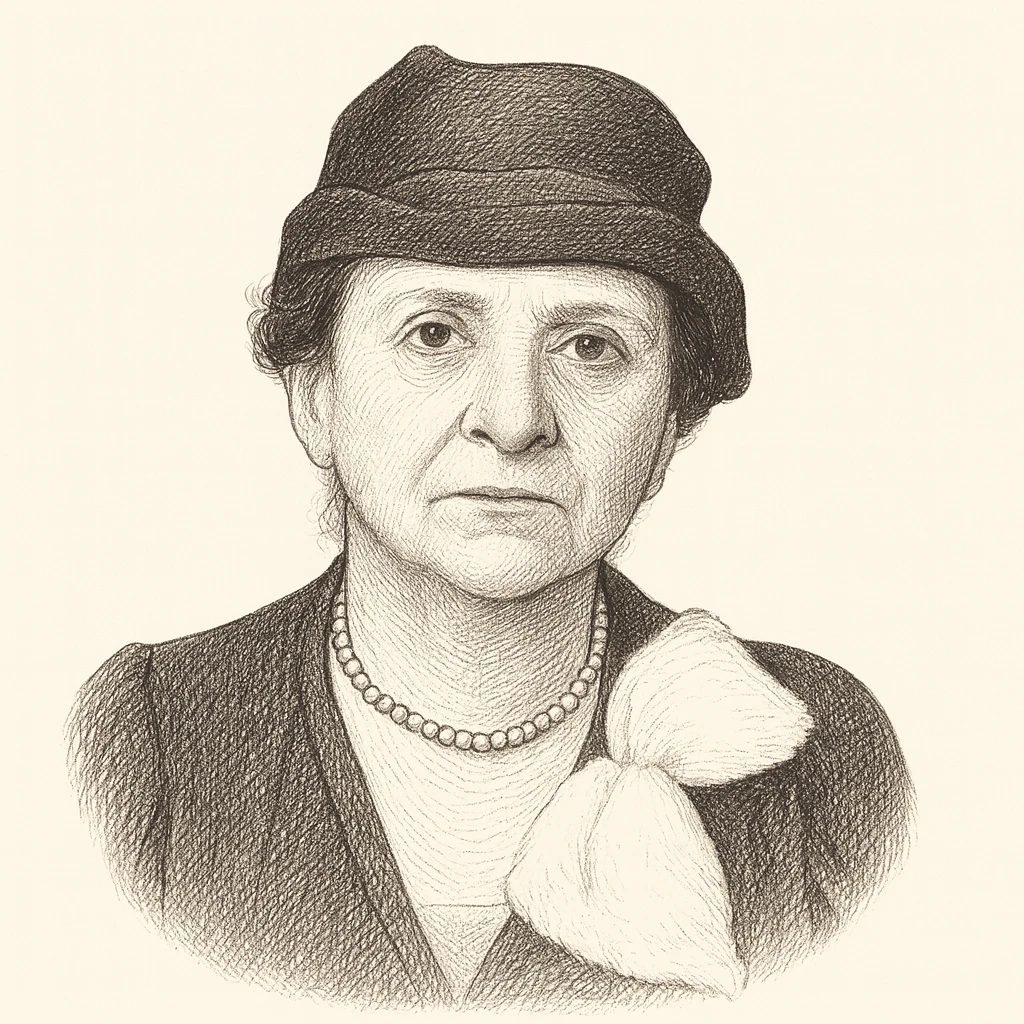
Frances Perkins was born in Boston in 1880, graduated from Mount Holyoke College in 1902 and earned a master's degree at Columbia University in 1910, where she studied sociology and economics. She came to politics through the settlement houses, including Hull House in Chicago, and the National Consumers League, for which she lobbied against child labor and for a shorter workweek. On March 25, 1911, she came upon the fire at the Triangle Shirtwaist factory in New York, which killed 146 workers, most of them young women; she later called it "the day the New Deal was born." From 1912 to 1915 she served as an investigator, expert witness and guide for the New York State Factory Investigating Commission, whose findings produced a body of state health and safety law.
Her politics were those of the administrative reformer, working through legislation, inspection and social insurance. In 1919 Governor Al Smith appointed her to New York's State Industrial Commission, making her the first woman named to an administrative post in the state government, and in 1929 Governor Franklin Roosevelt named her State Industrial Commissioner. When Roosevelt offered her the Labor Department in 1933, she set out the program she meant to pursue: a forty-hour week, a minimum wage, unemployment and workers' compensation, the abolition of child labor, federal unemployment relief, old-age insurance, a revived public employment service and universal health insurance. She served as Secretary of Labor from March 4, 1933, to June 30, 1945, the first woman in a presidential cabinet and the longest-serving holder of the office.
On June 29, 1934, Roosevelt created the cabinet-level Committee on Economic Security by executive order and made Perkins its chair. The committee reported on January 15, 1935, and its recommendations became the blueprint for the Social Security Act, which Roosevelt signed on August 14, 1935. The act set up a system of payroll taxes and state grants to fund old-age benefits, unemployment insurance and child welfare. The Department of Labor describes her as "the principal architect" of the act. It also credits her with the Wagner-Peyser Act, which rebuilt the U.S. Employment Service; the Wagner Act, protecting workers' right to organize; and the Fair Labor Standards Act of 1938, which in the department's words "set a floor under wages and a ceiling over hours" and restricted child labor.
After leaving the cabinet she served on the U.S. Civil Service Commission under President Truman and published The Roosevelt I Knew in 1946. She lectured at Cornell University's School of Industrial and Labor Relations until her death in New York City on May 14, 1965. The Labor Department's headquarters in Washington was named for her in 1980.
Frances Perkins is associated with Rooted Progressive. See the archetype