
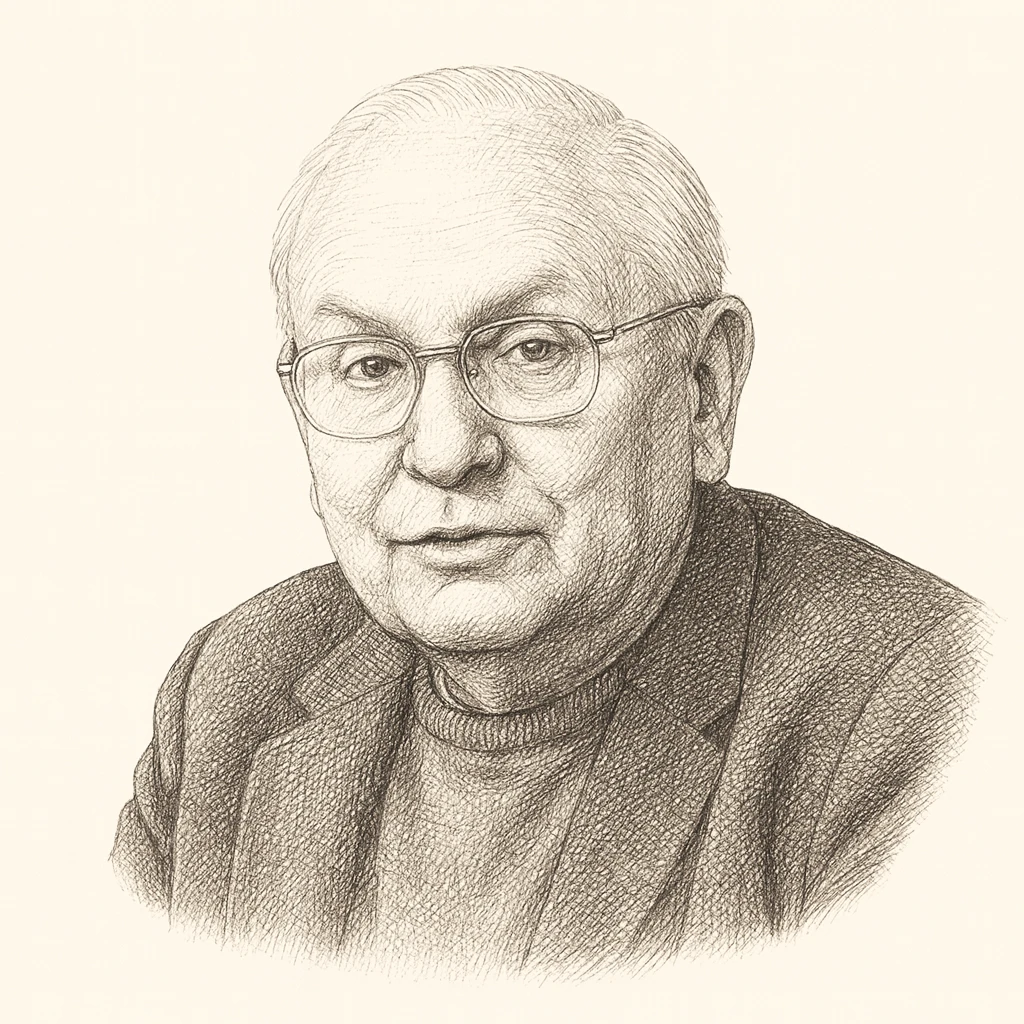
Ernesto Laclau was born in Buenos Aires in 1935 and studied history at the University of Buenos Aires, graduating in 1964. His political life began, as he later recalled, "in the student movements and in the political struggles of the 1960s in Argentina." He served as a student representative on the university's governing council and later joined the leadership of the Socialist Party of the National Left. As a young man he was drawn to Argentine Trotskyism, and he was preoccupied with Peronism and the hold it had over the country's popular sectors, a movement that led him to a lifelong study of populism.
With help from the historian Eric Hobsbawm, he went to St Antony's College, Oxford, in 1969 for graduate research, and in 1973 he moved to the University of Essex, where he taught until 2008, latterly as professor of political theory. He was the founding director of the Centre for Theoretical Studies in the Humanities and the Social Sciences, and with Chantal Mouffe, his wife, he led what became known as the Essex School of discourse analysis. His first book, Politics and Ideology in Marxist Theory (1977), criticized the economism and class reductionism of the Marxism of the time and included the essay "Towards a Theory of Populism."
In Hegemony and Socialist Strategy (1985), Laclau and Mouffe drew on Antonio Gramsci's theory of hegemony to argue that class no longer defined political identities, and called for a radical democratic politics built by linking many separate struggles. Laclau sometimes called himself a post-Marxist, while insisting that he remained anti-imperialist and anti-capitalist. On Populist Reason (2005) completed his theory of populism. Laclau defined populism as a way of constructing a people by drawing a political frontier between the underdogs and those in power, and he argued that populism is not necessarily democratic or left-wing but belongs to democratic life, and that a populist rupture can be needed where institutions fail to meet popular demands.
His work drew political attention in the 2000s. In Argentina he was closely associated with the governments of Néstor Kirchner and Cristina Fernández de Kirchner and was seen as the leading public intellectual of Kirchnerism, praised by its supporters and attacked by its opponents. Some activists in Greece's Syriza and Spain's Podemos publicly acknowledged his influence. He died of a heart attack in Seville, where he had gone to speak at a conference, in April 2014; his last book, The Rhetorical Foundations of Society, was due out the following month. Cristina Kirchner said on his death that he "had three virtues: he thought, did so with great intelligence, and in open conflict with the paradigms issuing from the centres of world power."
Ernesto Laclau is associated with Rooted Progressive. See the archetype