
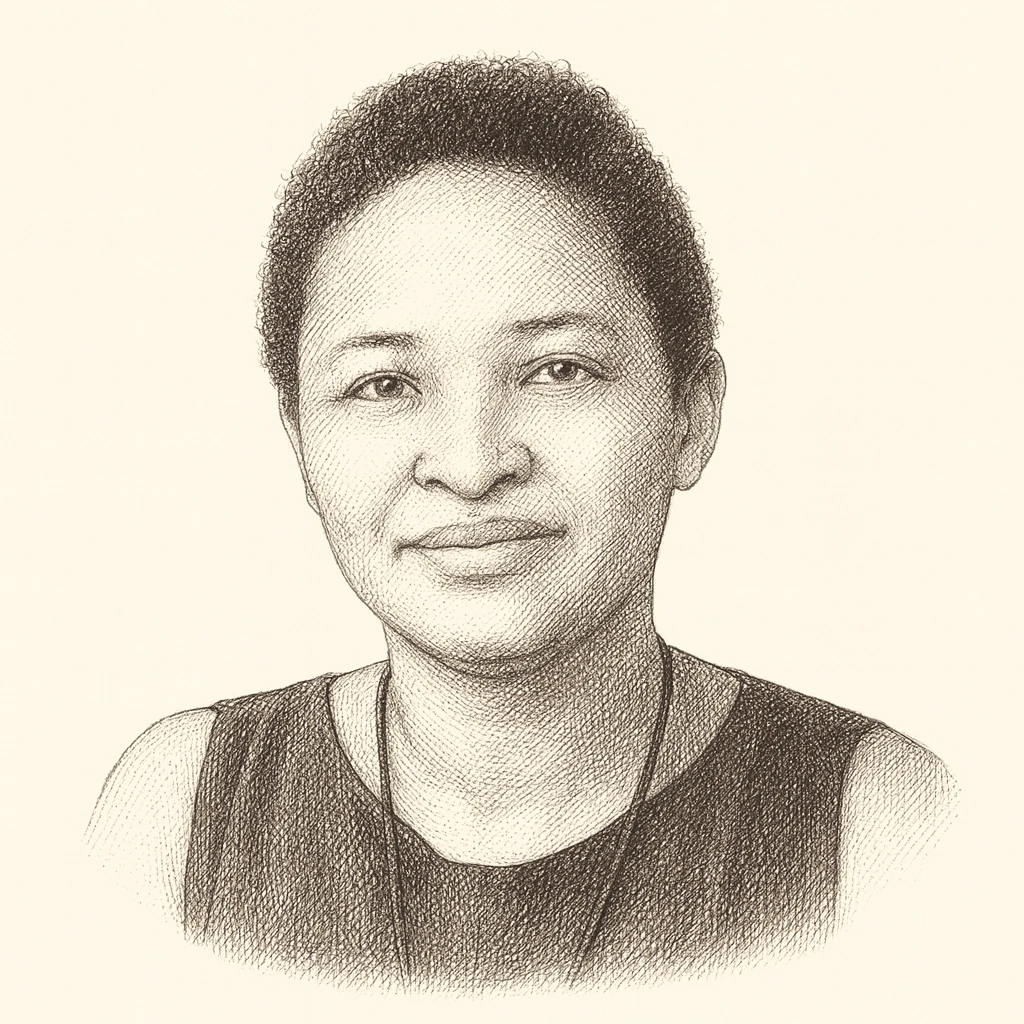
Danielle Allen was born in Takoma Park, Maryland. She studied classics at Princeton, graduating in 1993, took an MPhil and a doctorate in classics at the University of Cambridge, and earned a second doctorate, in government, at Harvard in 2001. That year she received a MacArthur fellowship. Her first book, The World of Prometheus (2000), examined punishment in classical Athens, and Talking to Strangers (2004) took the 1954 Brown v. Board of Education decision and the crisis at Little Rock as the starting point for a study of sacrifice and trust among citizens. She served as Dean of the Division of Humanities at the University of Chicago and later moved to Harvard.
Our Declaration (2014) grew out of teaching the Declaration of Independence to adult night students on the South Side of Chicago. Reading it with her students from beginning to end, she said, "I became convinced that there is a coherent philosophical argument about equality in the text." Her reading places equality at the foundation of liberty: "we build our political institutions together based on equality in order to secure our independence." Her memoir Cuz: The Life and Times of Michael A. (2017) examines how racism in the justice system and mass incarceration affected her own family, and makes a call for equality before the law.
Allen is now the James Bryant Conant University Professor at Harvard, where she directs the Democratic Knowledge Project and the Allen Lab for Democracy Renovation. She has chaired the Pulitzer Prize Board and the board of the Mellon Foundation. She wrote a column on constitutional democracy for the Washington Post until October 2024, when she resigned over the paper's decision not to endorse a presidential candidate. She co-chaired a bipartisan commission of the American Academy of Arts and Sciences that in June 2020 recommended 31 steps to strengthen American institutions and civic culture, and she founded Partners In Democracy, a reform organization. She received the Library of Congress's Kluge Prize in 2020. Her book Justice by Means of Democracy (2023) sets out what she calls power-sharing liberalism, a reconstruction of liberalism built on full inclusion and non-domination, in which no group has a monopoly on power in politics, the economy or society.
In June 2021 she entered the Democratic primary for governor of Massachusetts; her campaign described her as the first Black woman to run for statewide office in the state. She described her approach as progressive and integrative, and she proposed decriminalizing possession of small amounts of all drugs. She ended the campaign on February 15, 2022, criticizing the party's caucus system, under which a candidate needs 15 percent of convention delegates to reach the primary ballot, as "leading to a serious impoverishment of our democracy."
Danielle Allen is associated with Moderate Liberal. See the archetype