
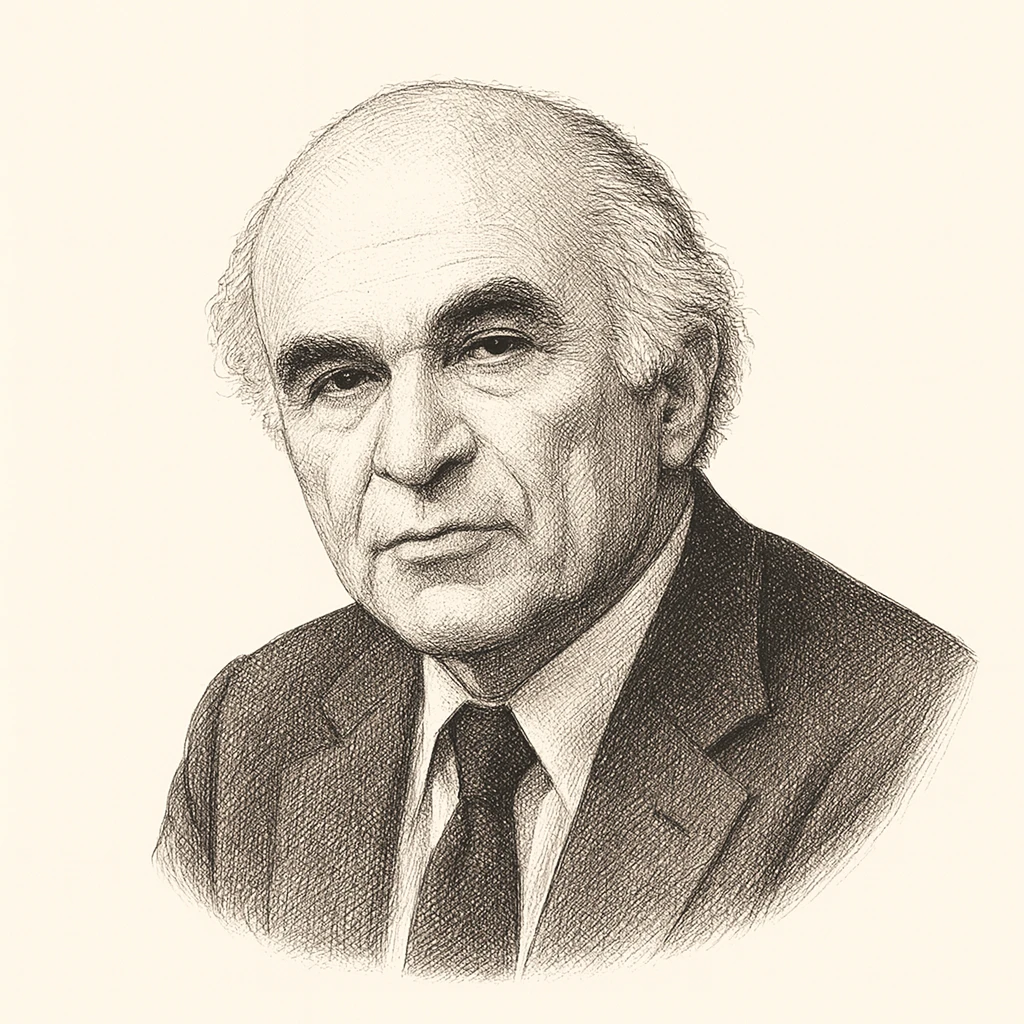
Robert Nisbet (1913–1996) was an American sociologist whose work bridged social theory and conservative political thought. His central preoccupation was community: the small-scale, intermediate associations—family, church, guild, neighborhood, voluntary group—that stand between the individual and the centralized state. His best-known book, The Quest for Community, argued that the erosion of these bonds left modern individuals atomized and anxious, and that this loss of belonging created a dangerous appetite for the state to supply, through political mass movements and centralized power, the sense of solidarity that traditional associations once provided. In this reading, the growth of the modern state was not simply a neutral expansion of administration but a rival to the intermediate institutions it displaced.
Nisbet drew heavily on the European sociological tradition and on conservative and communitarian currents, tracing his concerns to thinkers such as Edmund Burke and Alexis de Tocqueville, both of whom warned about the fragility of local and civil society under centralizing pressures. He also engaged the classical sociologists in reconstructing what he saw as sociology's core themes—community, authority, status, the sacred, and alienation—reading the discipline itself as in part a conservative reaction to the disruptions of the French and Industrial Revolutions. This gave his political thought an unusual grounding: his critique of mass society and bureaucratic centralization came framed in sociological rather than purely ideological terms.
Politically, Nisbet is generally counted among the mid-twentieth-century American conservative intellectuals, and he wrote directly about conservatism as a tradition of thought, emphasizing pluralism, prescription, the authority of custom, and skepticism toward utopian designs to remake society. Yet his conservatism was as wary of concentrated corporate and military power as of the welfare state, and he was critical of both unfettered individualism and coercive collectivism, insisting that genuine freedom depends on a rich fabric of autonomous social groups.
His influence extended beyond academic sociology into debates about civil society, mediating structures, and communitarianism. The vocabulary he helped popularize—intermediate institutions, the tension between community and the centralized state, the perils of atomization—remains a touchstone for arguments across the political spectrum about the health of civil society and the proper limits of government.
Robert Nisbet is associated with Traditionalist. See the archetype