
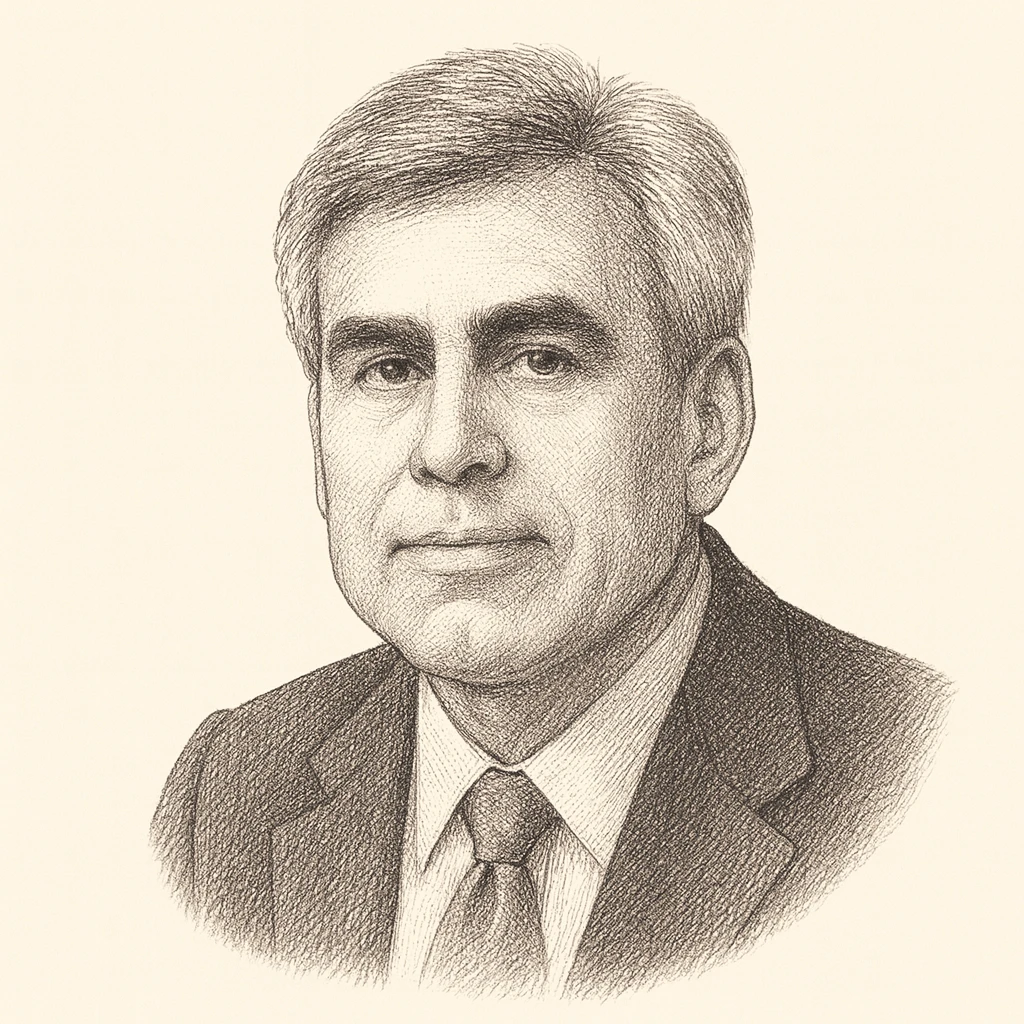
Jonathan Haidt was born in 1963 in New York City and grew up in Scarsdale, New York, in the comfortable Jewish liberal professional milieu that would later become one of the primary subjects of his research. He attended Yale, where he studied philosophy, and then went to the University of Pennsylvania for his doctorate in social psychology under the supervision of Martin Seligman, one of the founders of positive psychology. The Penn years gave him his methodological foundation: the experimental study of moral judgment, the careful design of scenarios that revealed how people actually made moral decisions rather than how they said they made them.
His early research focused on the phenomenon he called moral dumbfounding — the experience of having a strong moral reaction to something but being unable to articulate a convincing reason for it. His experimental paradigm typically involved scenarios designed to be morally offensive but harmless: a family that ate their dog after it was killed by a car, a couple who used a flag as a sex toy, a person who cleaned their toilet with the national anthem. Most subjects found these scenarios deeply wrong; almost none could provide a principled justification for their reaction that survived scrutiny. When their initial justifications were challenged, subjects typically fell back on "it's just wrong" — what Haidt called the "moral dumbfounding" response. The implication was that moral judgment preceded moral reasoning: people had the verdict first and the argument second.
A Fulbright scholarship took him to Bhubaneswar in the Indian state of Orissa in 1993, a research trip that proved as decisive for his intellectual development as Edmund Burke's reflection on the French Revolution had been for conservatism. He was studying moral reasoning cross-culturally, interviewing both middle-class and lower-class residents of Bhubaneswar as well as American comparison groups, and he found that his own liberal moral intuitions — his sense of what was obviously right and obviously wrong — were not shared by everyone. The Oriya Brahmins he was interviewing held strong moral views about purity, authority, and social hierarchy that his liberal framework registered as mere prejudice but that were, from the inside, experienced as genuine moral knowledge. He came back from India with what he later described as a conversion experience: the recognition that his own moral intuitions were culturally parochial rather than universal, and that a psychology of morality that started from liberal assumptions was missing most of the moral universe.
He joined the faculty at the University of Virginia in 1995, where he spent sixteen years developing the social intuitionist model of moral judgment and the moral foundations theory that would become his signature contributions. The University of Virginia was itself a significant environment: a Southern research university with a more politically diverse faculty and student body than the Northeastern elite institutions Haidt had previously inhabited, and a place where he encountered conservative perspectives from people whose intelligence and good faith he could not dismiss. The experience reinforced his sense that liberal academic culture was epistemically impoverished by its political homogeneity.
The moral foundations theory that he developed with Craig Joseph and Jesse Graham organized moral psychology around six distinct foundations — care/harm, fairness/cheating, loyalty/betrayal, authority/subversion, sanctity/degradation, and liberty/oppression — that different cultures and political orientations weighted very differently. The research finding that proved most consequential for his public role was the asymmetry between liberals and conservatives in their use of these foundations. Liberals drew primarily on care and fairness; conservatives drew on all six. Haidt argued that this meant liberals systematically misread conservative moral motivations — attributing to selfishness, ignorance, or prejudice what were, in his account, responses to moral concerns that liberals did not share or register. The result was a political culture in which one side felt constantly misrepresented and the other felt constantly baffled.
The Righteous Mind (2012) brought these findings to a general audience and made Haidt one of the most widely read social scientists of his generation. Its publication coincided with a period of intensifying political polarization in American public life, and its argument — that political disagreement reflected genuine differences in moral psychology rather than differences in intelligence or virtue — was received as both clarifying and threatening, depending on the reader's politics. Conservatives tended to feel vindicated. Many liberals felt accused. His subsequent projects — Heterodox Academy, founded in 2015 to address what he saw as the ideological monoculture of universities, and The Coddling of the American Mind (2018, co-authored with Greg Lukianoff) — made his political positioning more explicit and more controversial.
He moved to New York University's Stern School of Business in 2011, where he has continued to develop the political and organizational implications of his moral psychology research. His work remains contested in ways that the work of Hume or Burke is not. One objection is that his moral foundations framework naturalizes conservative concerns rather than subjecting them to criticism, and that the political symmetry he finds may obscure real asymmetries in the relationship between different political positions and evidence. He has engaged these objections directly.
Jonathan Haidt is associated with Pragmatic Centrist. See the archetype