
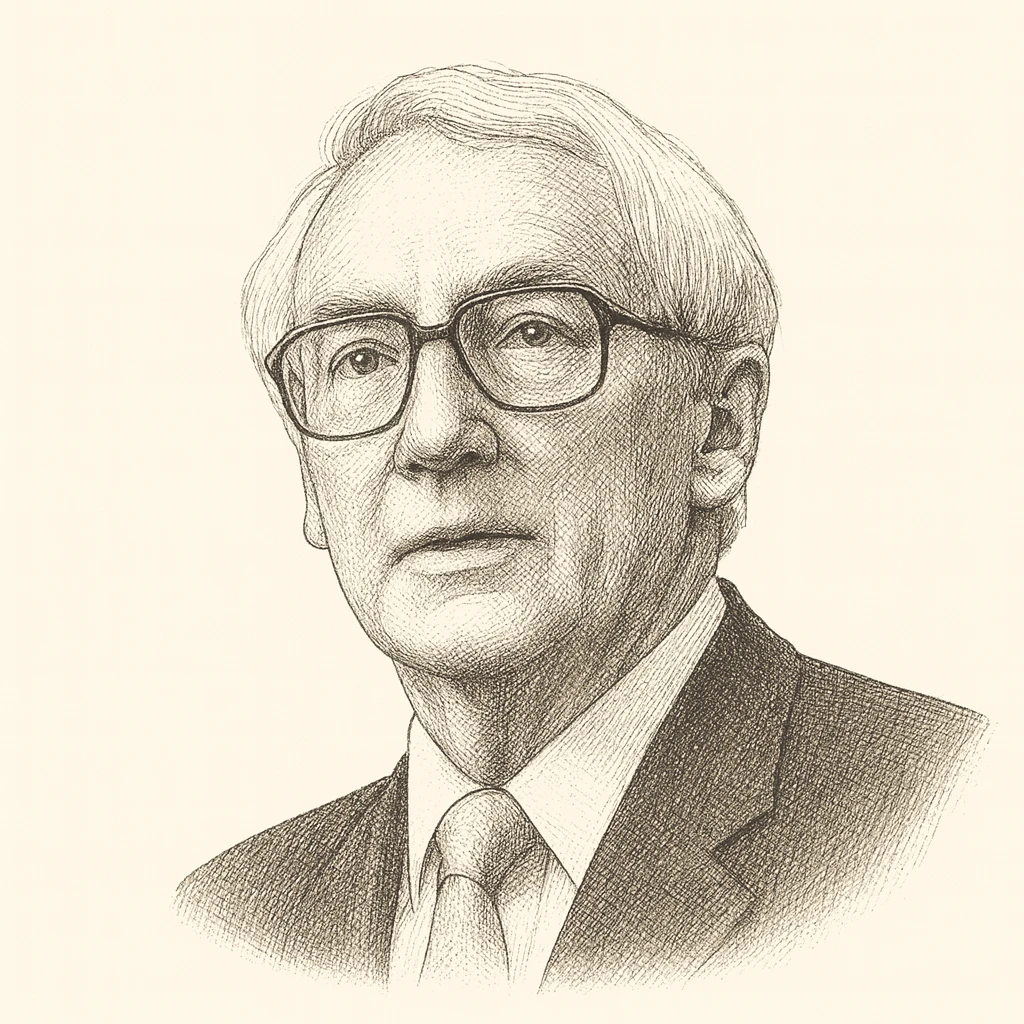
James Q. Wilson (1931–2012) was among the most influential American political scientists of the late twentieth century, known for bringing empirical rigor and a distinctly moral sensibility to questions of crime, government, and human character. Trained in political science and long associated with Harvard University and later UCLA and Pepperdine, Wilson worked at the intersection of academic social science and public policy, advising government commissions and writing for both scholarly and general audiences. His thought is often grouped with a pragmatic, evidence-oriented strand of postwar American conservatism that emphasized order, personal responsibility, and the limits of ambitious social engineering.
Wilson is best remembered for the "broken windows" theory, developed with George L. Kelling, which argued that visible signs of disorder and neglect—such as unrepaired broken windows—signal that a community is unwatched and invite more serious crime. The argument implied that maintaining public order and addressing minor offenses could help prevent larger breakdowns of civic life. The idea became enormously influential in debates over urban policing in the 1980s and 1990s, shaping law-enforcement strategies in major American cities, and it remains a focal point of controversy, praised for prioritizing neighborhood safety and criticized for encouraging aggressive or discriminatory enforcement.
Beyond crime policy, Wilson wrote extensively on bureaucracy and the behavior of government agencies, analyzing how organizations actually operate rather than how they are formally designed. He also turned to broader questions of ethics and human nature, exploring the sources of moral sentiment and the role of the family in shaping character and social order. This latter emphasis placed him within a family-centered conservatism that treated stable social institutions, rather than the state alone, as essential to a healthy society. Across these projects, he consistently argued that public policy should be grounded in careful observation of behavior and mindful of unintended consequences.
Wilson's intellectual legacy lies in his insistence that political questions are inseparable from moral and behavioral ones, and that social science should inform, but not replace, prudent judgment about how people actually live. His work continues to be cited across debates on policing, crime, governance, and the cultural foundations of political life, making him a reference point for thinkers who blend empirical analysis with a conservative concern for order and character.
Wondering where you land? Take the 4-minute assessment