
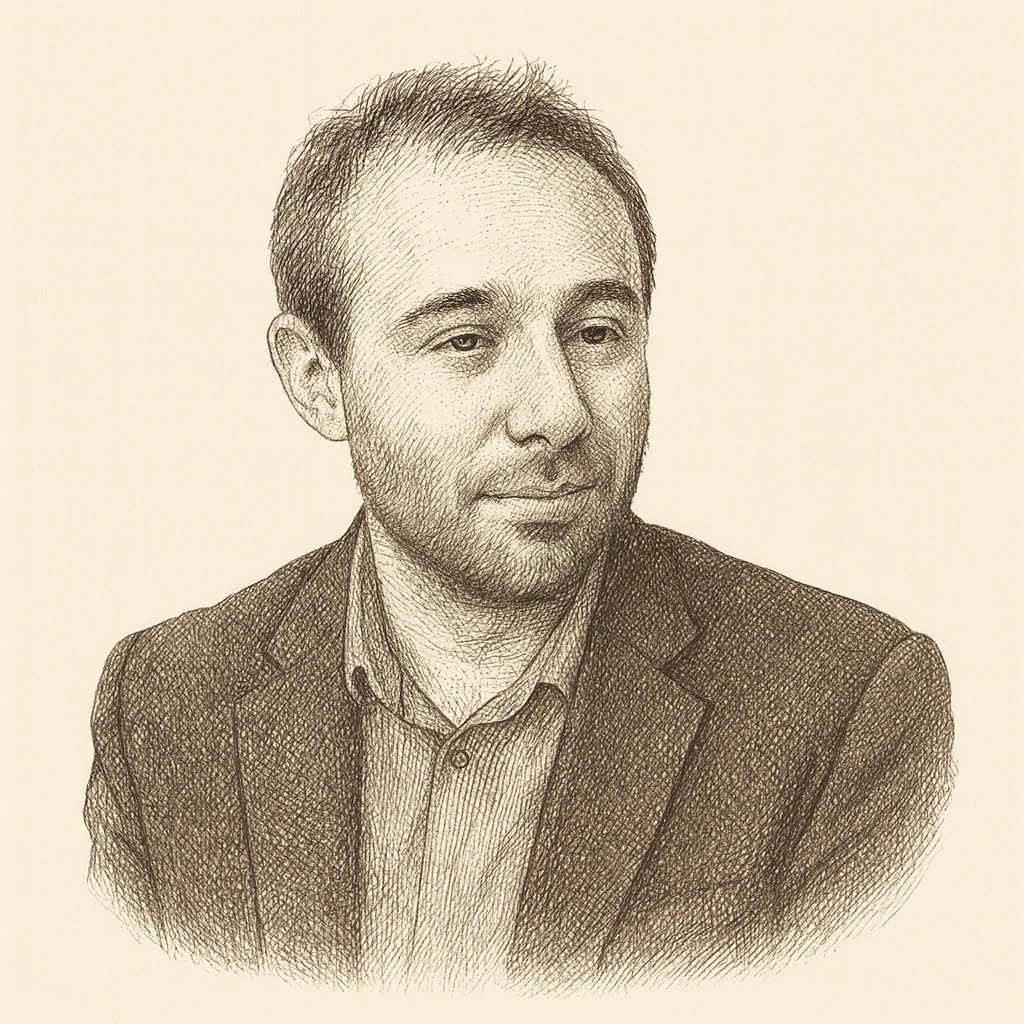
Yascha Mounk is a German-born political scientist and public intellectual whose work centers on the fragility of liberal democracy in the contemporary world. Educated at Cambridge and Harvard, where he earned his doctorate in government, he has held academic positions and become a prominent essayist, writing for publications such as The Atlantic and founding his own outlets for political commentary. His central argument, developed most influentially in the late 2010s, is that liberal democracy has historically depended on a fusion of two elements—individual rights (liberalism) and popular self-government (democracy)—and that this fusion is now coming apart. On one side, he identifies the rise of populist movements that claim to speak for the people while eroding the rule of law, minority protections, and independent institutions; on the other, he warns of technocratic and elite governance increasingly insulated from democratic accountability.
Mounk situates himself firmly within the liberal tradition, defending constitutional norms, pluralism, and the open society against what he sees as growing threats from both the authoritarian right and, in some of his work, illiberal tendencies on the left. He has written extensively about immigration and diversity, arguing that Western democracies face a historically novel experiment: building stable, cohesive societies composed of citizens from many ethnic, religious, and cultural backgrounds without descending into either exclusionary nationalism or fragmented group identities. He advocates a version of liberal patriotism and civic inclusion as an alternative to both ethnonationalism and what he characterizes as a rigid, group-based identity politics.
His critique of identity-focused progressive politics has made him a distinctive voice, one that resists easy placement on the conventional left-right spectrum. He argues that centering political life on immutable group identities risks undermining the universalist commitments—equal individual dignity, shared citizenship—on which liberal democracy rests. At the same time, he remains a consistent critic of Donald Trump and of authoritarian populism internationally, and he has been an active participant in debates about democratic backsliding, examining how elected leaders can hollow out democratic institutions from within.
Mounk's influence lies less in a single systematic theory than in his role as a synthesizer and public communicator who has helped popularize concerns about democratic erosion, populism, and the tensions within pluralistic societies. His writing bridges academic political science and broad public debate, making him a notable figure in early twenty-first-century discussions of liberalism's prospects.
Yascha Mounk is associated with Classical Liberal. See the archetype