
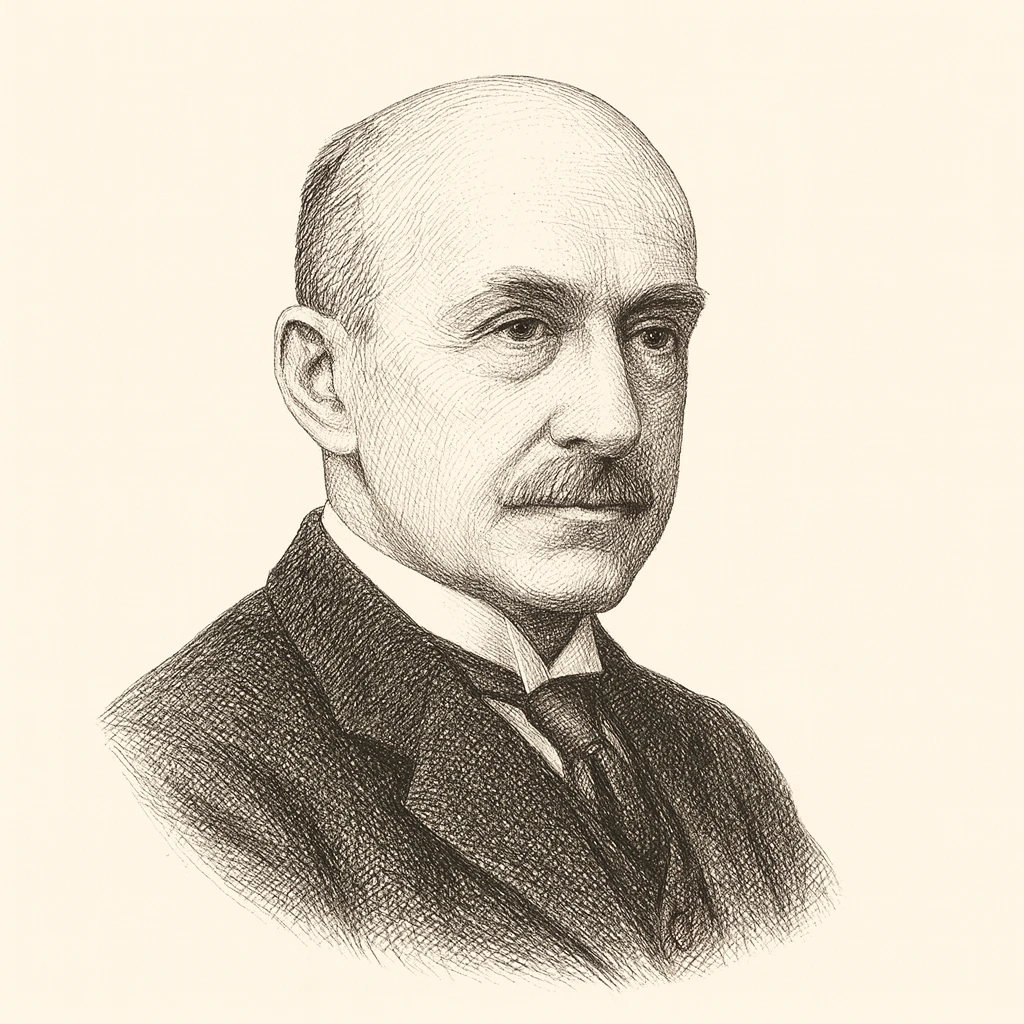
William Graham Sumner was among the most forceful American exponents of laissez-faire liberalism in the late nineteenth century. Trained for the ministry before turning to political economy and sociology, he spent most of his career at Yale, where he became one of the earliest academics to teach sociology in the United States. His thought fused classical economics, evolutionary social theory, and a stern moralism about self-reliance, and he used the lecture hall and the popular essay alike to argue against government intervention in markets and in private life.
Sumner's most enduring political contribution is his portrait of "the Forgotten Man" — the ordinary, industrious taxpayer who is compelled to underwrite schemes designed to help a more visible beneficiary. In his telling, reformers focus on a sympathetic subject and a proposed remedy, while ignoring the anonymous person who ultimately pays the bill. The argument became a durable rhetorical device in debates over redistribution and state action, prized by opponents of expansive government for reframing charity and regulation as transfers imposed on the unseen. He generally opposed protective tariffs, defended free trade and hard money, and treated economic competition as a natural and beneficial ordering force.
He was also a prominent anti-imperialist, arguing forcefully against American expansion after the Spanish–American War. In this vein he warned that a republic acquiring overseas dominions risked adopting the habits of the powers it defeated, corrupting its own liberties in the process. This strand of his work aligned classical-liberal skepticism of concentrated power with a critique of militarism and conquest, and it remains among the most cited parts of his legacy.
Sumner's reputation is genuinely contested. His embrace of social evolutionary ideas led him to view poverty and inequality as largely the outcome of natural competition, and his hostility to reform could shade into indifference toward the vulnerable; critics then and since have read this as a hard-edged justification of the existing order. He is often grouped with the social Darwinist current of his era, a label he complicates but does not escape. His work is best understood as a rigorous, unsentimental defense of limited government whose assumptions about who deserves help remain the subject of sharp disagreement.
William Graham Sumner is associated with Classical Liberal. See the archetype