
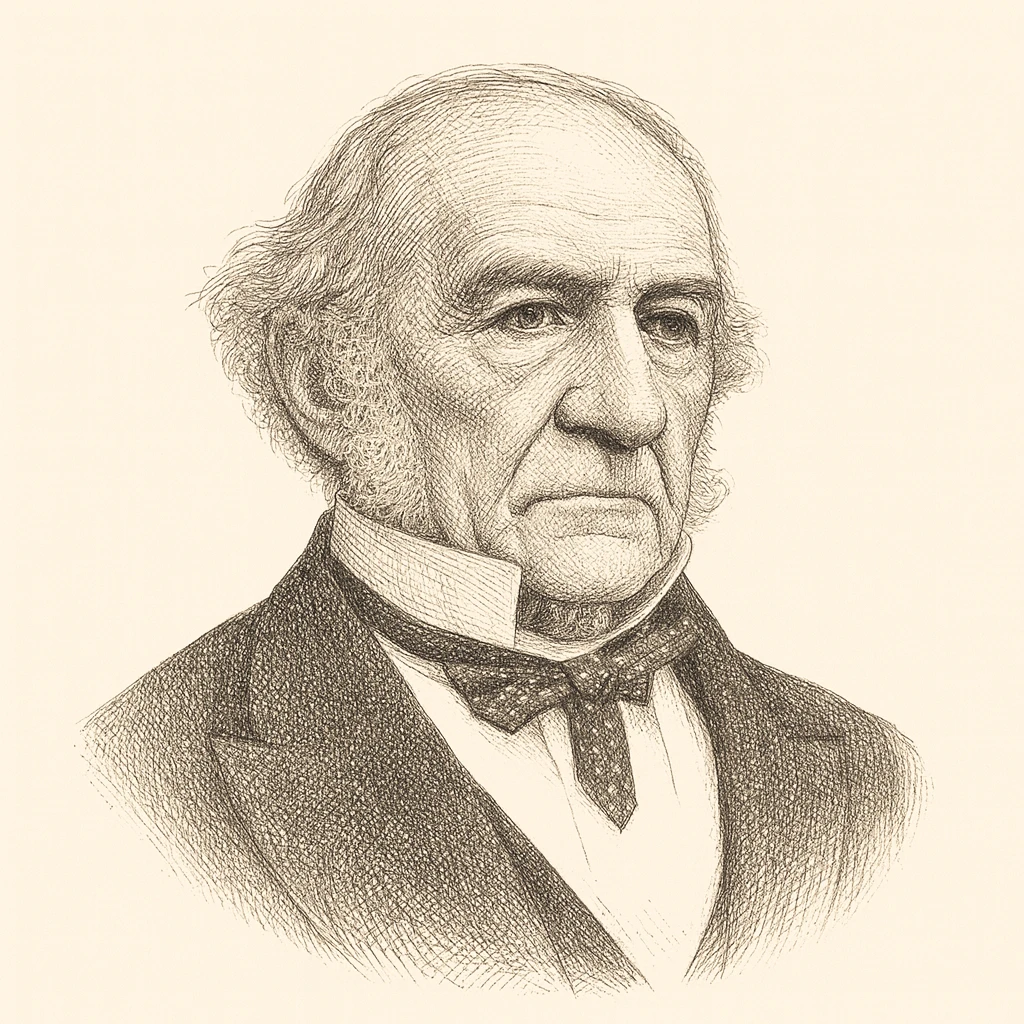
William Ewart Gladstone was the dominant figure of Victorian liberalism, serving as Prime Minister four times and embodying 19th-century progressivism's faith in moral improvement, free trade, and extending liberty. His rivalry with Disraeli defined an era; his commitment to Irish Home Rule split his party.
Gladstone began as a Conservative but evolved toward liberalism, championing free trade, expanded suffrage, Irish land reform, and education. As Chancellor of the Exchequer he presented thirteen budgets, cutting or abolishing customs and excise duties and waging war on waste, in the belief that the public was best served by a prosperous economy stimulated by international free trade. He believed in minimal government but also moral government—foreign policy should follow ethical principles, not just national interest. His Midlothian Campaign pioneered modern electioneering.
Gladstone's liberalism joined a devout Anglican faith with free-trade economics. The formula of "peace, retrenchment, and reform" summarized his creed: avoid costly foreign entanglements, cut wasteful expenditure, and widen participation gradually. He held that liberty and self-government were morally improving, and that a great nation should submit its conduct abroad to the same ethical standards it expected at home—an argument he pressed against Disraeli's government over its response to Turkish atrocities in the Balkans.
Gladstone's crusade for Irish Home Rule consumed his final decades. Convinced that justice required Irish self-government, he split the Liberal Party over it. Opponents feared his plans would destabilize the British Empire, and Joseph Chamberlain and Lord Hartington led the Liberal Unionists out of his party. The split cost the Liberals power, and he failed to pass Home Rule: his bills were defeated in the Commons in 1886 and in the Lords in 1893.
Opponents found his moral earnestness self-righteous; the Radical MP Henry Labouchère said he did not object to Gladstone having the ace of trumps up his sleeve, only to his belief that the Almighty had put it there. Gladstone's liberalism of peace, retrenchment, and reform defined progressive politics for generations.
William Gladstone is associated with Classical Liberal. See the archetype