
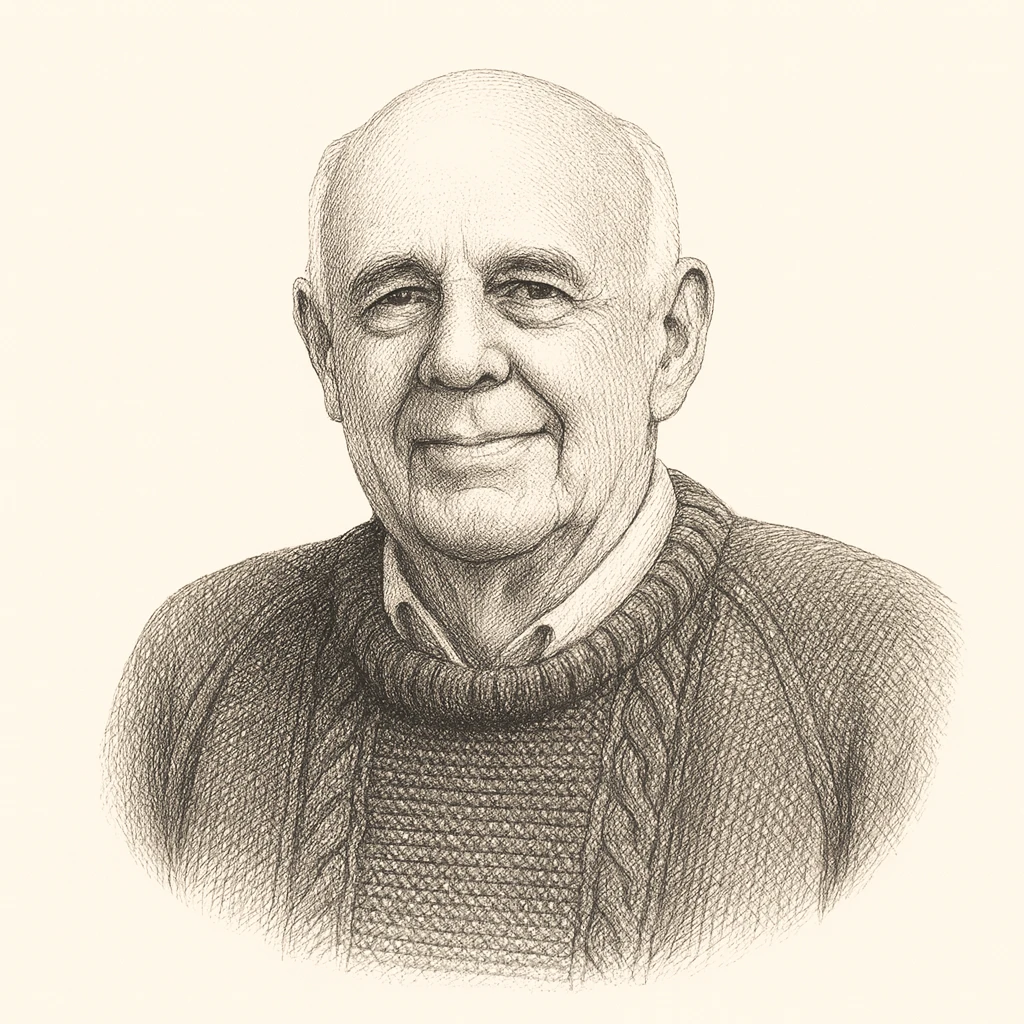
Wendell Berry is an American writer, poet, essayist, novelist, and farmer whose work forms one of the most sustained contemporary expressions of agrarian thought. Farming land in his native Kentucky, Berry has drawn on that experience to develop a body of writing that treats care for land, membership in a local community, and the practice of good work as inseparable moral and political concerns. His politics resist easy placement on a conventional left-right spectrum: he combines an ecological critique associated with the left, a suspicion of large-scale government and technocracy, and a communitarian traditionalism that conserves inherited practices and attachments.
At the center of Berry's political thought is a critique of industrialism and the abstractions of a global, extractive economy. He argues that treating land, labor, and community as interchangeable commodities degrades both the natural world and human character. Against this, he defends what he calls the local economy and the household, small-scale agriculture, limits on human ambition, and fidelity to particular places over the pursuit of unbounded growth and mobility. He is deeply skeptical of the assumption that technological and economic progress is inherently beneficial, insisting that innovations be judged by their effects on communities, families, and the health of the soil.
Berry frames these arguments in terms of stewardship, membership, and responsibility rather than rights or efficiency. His frequent theme of the beloved community and the interdependence of neighbors places him within a communitarian tradition, while his emphasis on affection for the particular and distrust of centralized power resonates with certain strands of conservatism as well as decentralist and distributist thinking. His faith, rooted in a Christian moral vision, informs his understanding of creation as something entrusted to human care rather than owned outright.
Berry's influence extends well beyond literature into environmental politics, the local-food and sustainable-agriculture movements, and debates over community, technology, and modern life. He is frequently cited by critics of consumer culture and globalization across the political spectrum, and his writing has helped make agrarianism a living rather than merely nostalgic tradition. His significance lies less in a systematic political program than in a persistent moral challenge: to measure economic and political choices against the concrete goods of place, community, and enduring stewardship of the land.
Wendell Berry is associated with Traditionalist. See the archetype