
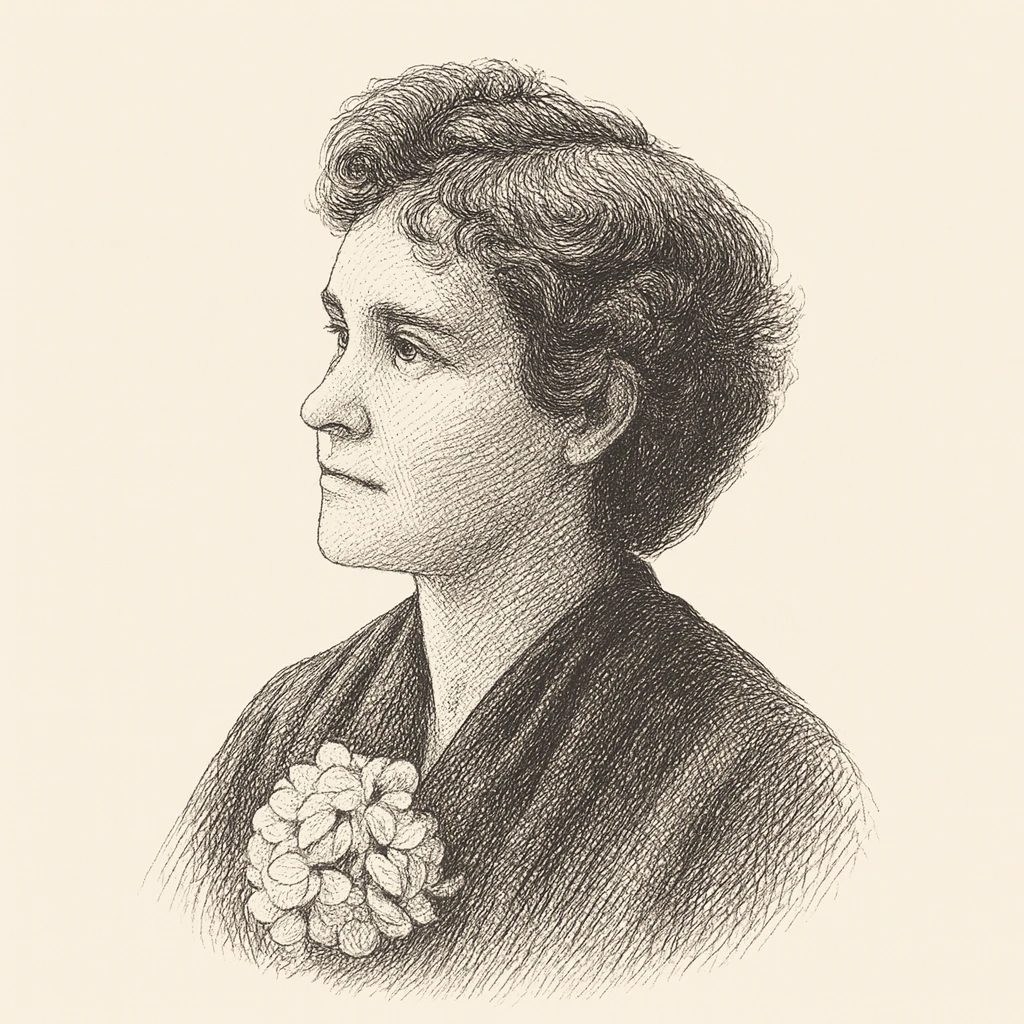
Voltairine de Cleyre (1866–1912) was an American anarchist writer, essayist, poet, and lecturer whose work bridged several strands of radical thought in the late nineteenth and early twentieth centuries. Emerging from a freethought and secularist milieu, she became one of the most articulate voices in the American anarchist movement, active on the lecture circuit and in radical periodicals. Her politics centered on the sovereignty of the individual, a deep suspicion of coercive authority, and a conviction that genuine freedom required dismantling the structures—state, church, and economic compulsion—that constrained self-determination.
De Cleyre is often associated with the position sometimes called "anarchism without adjectives," a stance that declined to insist on a single economic blueprint for a free society. Rather than commit dogmatically to individualist or communist anarchism, she argued that voluntary experimentation should determine which arrangements people adopted, and that solidarity among anarchists mattered more than doctrinal purity. Her thought moved over her lifetime, and she engaged seriously with both individualist and more collectivist currents, which made her a figure who resisted easy categorization within the movement's factions.
Her feminism was integral to her political vision. She subjected marriage and conventional sexual morality to sharp criticism, treating them as institutions that subordinated women and mirrored the larger relations of domination she opposed in the state. She linked women's emancipation to broader questions of economic dependence and personal autonomy, insisting that liberty had to reach into intimate and domestic life, not merely the political sphere. This made her an early voice connecting anarchist critique with the critique of patriarchy.
De Cleyre also reflected on the tension between violent and nonviolent means, and on the relationship between direct action and long-term social transformation. Though she was a contemporary and sometime interlocutor of Emma Goldman—who wrote admiringly of her after her death—de Cleyre developed a distinct intellectual identity as a stylist and moralist of freedom. Her influence has been felt less through organized movements than through the enduring appeal of her essays and lectures, which continue to be read by those interested in anarchist theory, radical feminism, and the ethics of resistance to authority.
Voltairine de Cleyre is associated with Left Libertarian. See the archetype