
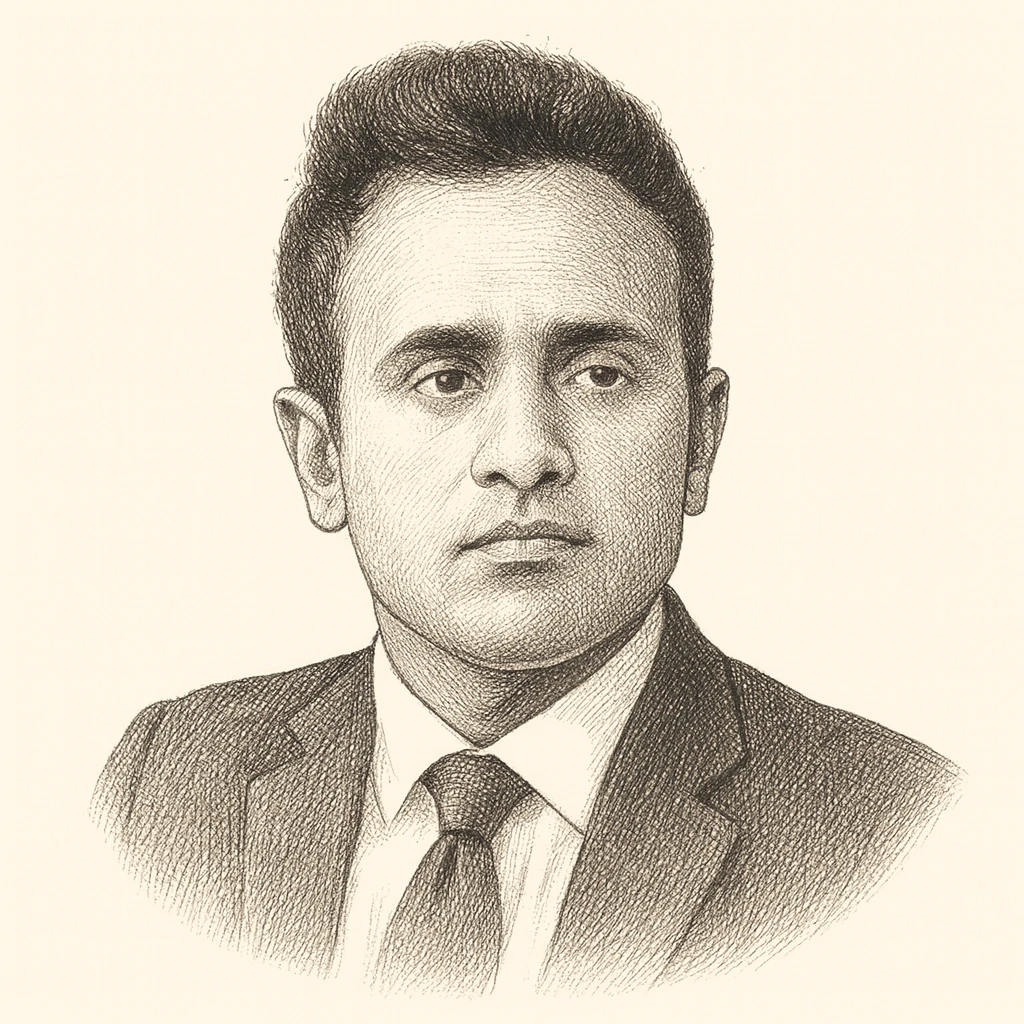
Vivek Ramaswamy is an American biotech entrepreneur and author who emerged in the early 2020s as a prominent voice on the American right. He first gained national attention through his critique of "stakeholder capitalism" and environmental, social, and governance (ESG) investing, arguing that corporations had strayed from their core purpose to advance progressive political agendas. In his writing, most notably his book Woke, Inc., he contended that the fusion of corporate power and identity-based politics represented a threat to both economic freedom and open democratic debate, framing "wokeness" as a substitute religion filling a void of national meaning.
Ramaswamy translated these cultural arguments into a broader political program during his 2024 campaign for the Republican presidential nomination. He positioned himself within the emerging "New Right" and America First tradition, championing economic nationalism, restrictive immigration policy, and skepticism of foreign entanglements. A defining theme of his thought is hostility to the federal bureaucracy, or "administrative state," which he argues wields unaccountable power beyond constitutional limits. He advocated dramatic reductions in the federal workforce and the dismantling of agencies, casting this as a restoration of self-governance by elected officials rather than unelected experts.
His rhetoric emphasizes national identity, civic renewal, and what he describes as a crisis of purpose and meaning among younger Americans. Drawing on a merit-focused and individualist framing, he criticizes affirmative action and identity politics while promoting an assimilationist vision of American citizenship. These ideas placed him among the intellectual entrepreneurs seeking to give populist energy a more systematic policy expression, and he was briefly associated with the Department of Government Efficiency (DOGE) initiative aligned with the second Trump administration before leaving it to run for governor of Ohio; he won the Republican nomination on May 5, 2026, and faces Democrat Amy Acton in the November 2026 general election.
Ramaswamy's significance lies less in original theoretical contribution than in his role as a communicator and synthesizer, packaging anti-establishment, anti-bureaucratic, and anti-"woke" arguments for a mass audience. Supporters see him as a fresh, articulate advocate for constitutional restoration and national confidence; the objections raised against him are that his positions combine libertarian economics uneasily with nationalist populism and that his sweeping proposals to shrink government are impractical. Either way, he exemplifies how business-world figures have entered and reshaped conservative political debate in the Trump era.
Vivek Ramaswamy is associated with National Conservative. See the archetype