
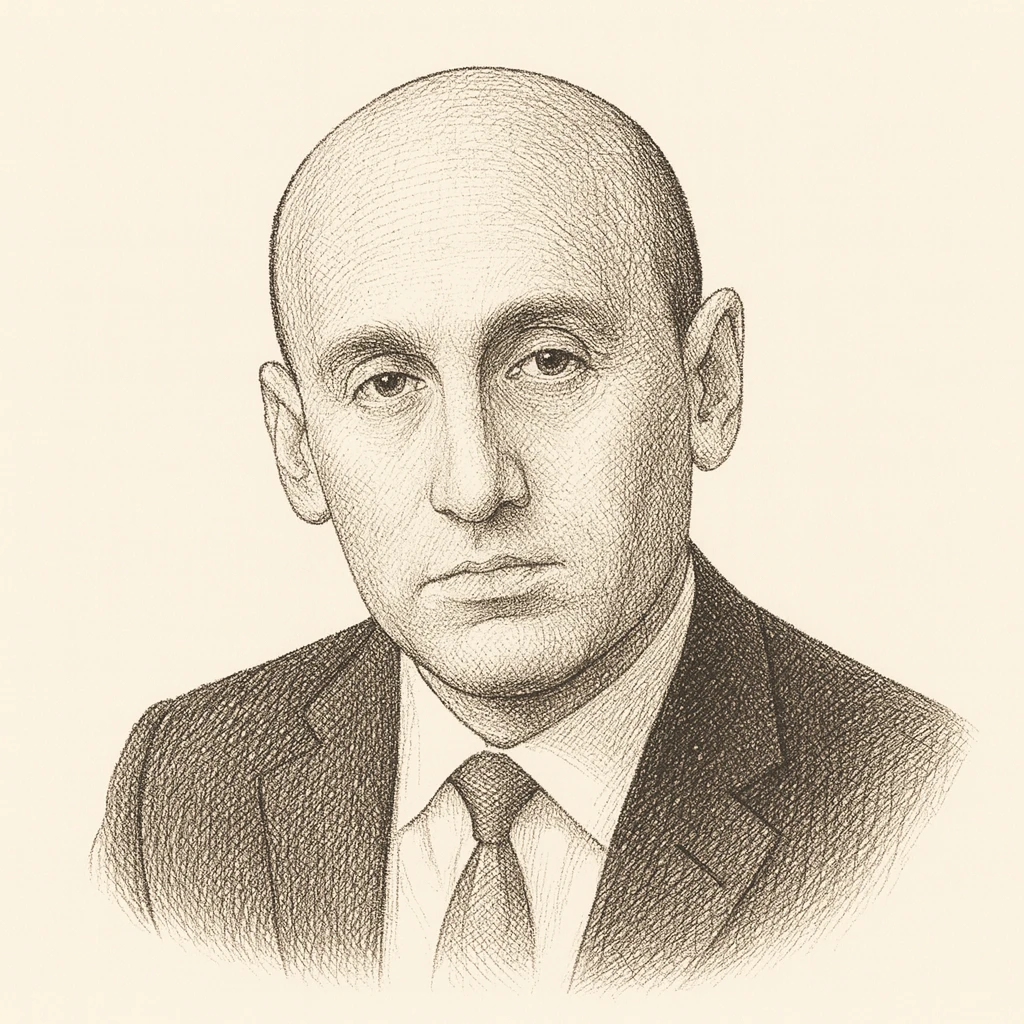
Stephen Miller is an American political operative and policy adviser best known as the leading architect of immigration restrictionism within the modern Republican Party and the administrations of Donald Trump. Emerging from the conservative movement in the 2000s, he worked for figures such as Senator Jeff Sessions before becoming a senior White House adviser and speechwriter. His political thought centers on a nationalist, sovereigntist conception of the state: the belief that a nation's first obligation is to its existing citizens, that borders and enforceable immigration limits are essential to national identity and social cohesion, and that both legal and illegal immigration should be sharply reduced.
Miller's arguments draw on and popularize themes long present in the American immigration-restriction tradition, fusing economic claims about wages and labor competition with cultural and security-oriented appeals. He has consistently framed immigration not as a discrete policy question but as a civilizational and existential one, tying it to concerns about crime, national security, assimilation, and the erosion of what he casts as the interests of native-born workers. This framing helped shift the Republican mainstream away from the more market-friendly, expansionist posture that prevailed among many conservatives in earlier decades, moving the party toward a populist and protectionist stance on migration.
As a practitioner rather than a theorist, Miller's influence lies less in formal writing than in translating restrictionist ideas into policy design and political rhetoric. He is closely associated with initiatives to curtail refugee admissions, tighten asylum, restrict travel from certain countries, and expand interior enforcement, and with a communications strategy that treats hardline immigration policy as a central mobilizing issue for the conservative base. Supporters view him as a disciplined defender of national sovereignty and the rule of law; critics regard his agenda as nativist and argue that it dehumanizes migrants and strains constitutional and humanitarian norms.
Miller matters intellectually because he helped move a once-marginal strand of restrictionist thinking to the center of a major party's governing agenda. His work exemplifies how a policy adviser can shape not only specific measures but the broader terms of debate, making questions of borders, sovereignty, and demographic change durable fault lines in contemporary American politics. His ideas continue to define one pole of the ongoing national argument over immigration.
Stephen Miller is associated with National Populist. See the archetype