
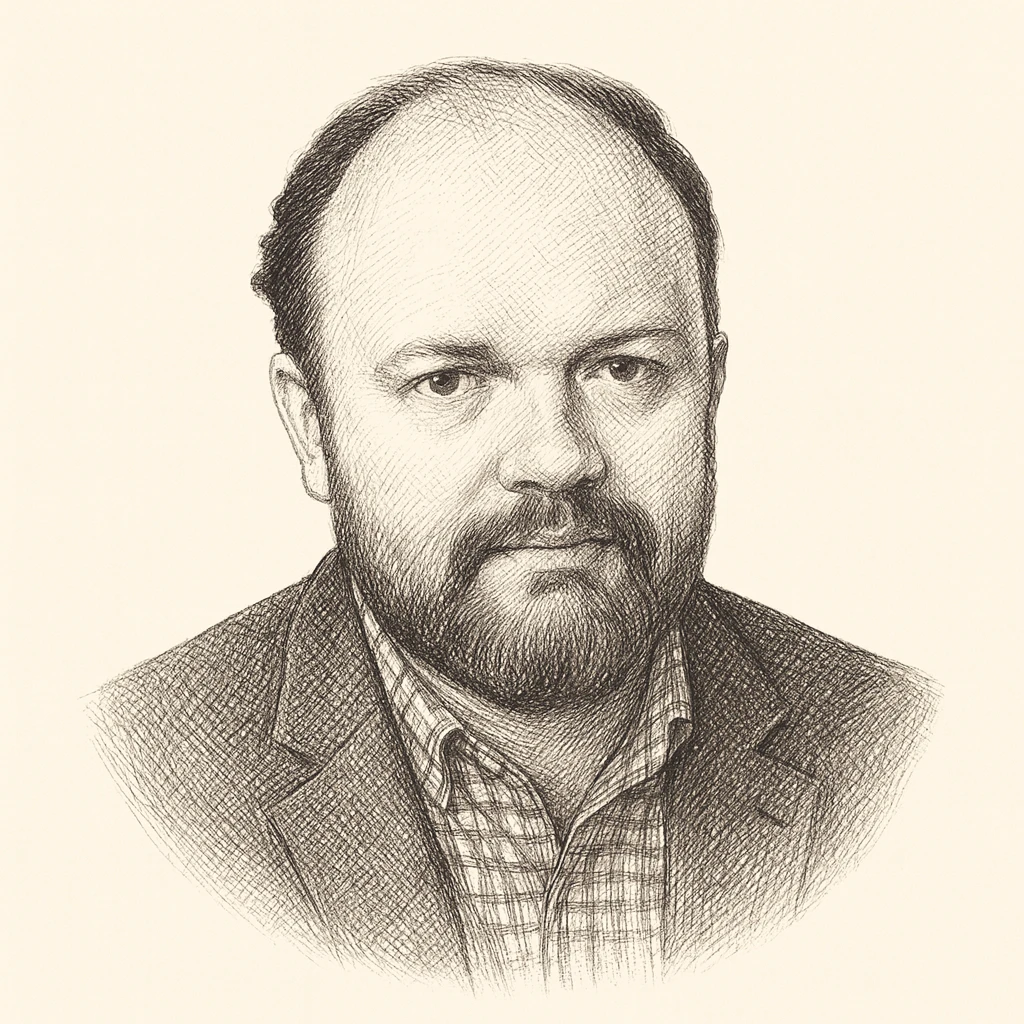
Ross Douthat is an American writer and columnist best known for his work as an opinion columnist at The New York Times from 2009 to 2026, where he became one of the paper's leading conservative voices. He left the paper in August 2026 to become a correspondent for CBS News' 60 Minutes. A convert to Catholicism, Douthat writes from a distinctly religious and traditionalist sensibility, and much of his political thought is animated by the relationship between faith, culture, and the health of liberal democracy. He first gained wider attention through his early writing about elite institutions and the culture of American meritocracy, and he has consistently argued that questions of religion, family, and social solidarity are central to political life rather than peripheral to it.
Douthat is closely associated with efforts to reform and renew conservatism from within. Alongside collaborators, he advanced a "reform conservative" argument that the Republican Party and the broader right should attend more directly to the economic anxieties and family concerns of ordinary voters rather than defaulting to older free-market orthodoxies. He has been a persistent critic of what he sees as the intellectual exhaustion and populist drift of the American right, while also remaining skeptical of secular progressivism, which he regards as unable to sustain the moral and communal foundations that liberal societies depend upon. This dual critique places him in an ambivalent position: a conservative who diagnoses the failures of his own side even as he resists the assumptions of the left.
A recurring theme in his commentary is the idea of cultural and civilizational decadence—the notion that wealthy, technologically advanced societies can settle into stagnation, declining dynamism, and a loss of shared purpose. He has explored the erosion of institutional religion in American life and its political consequences, arguing that spiritual questions persist even in an ostensibly secular age. Douthat also writes frequently about the Catholic Church itself, engaging in debates over its direction and doctrine with an eye toward their broader cultural significance.
As a columnist and public intellectual, Douthat's influence lies less in a single systematic doctrine than in his role as an interpreter and provocateur within conservative debate. He helps frame arguments about the future of the right, the meaning of religious decline, and the vulnerabilities of contemporary liberalism, and he is widely read across ideological lines as a thoughtful, sometimes contrarian voice.
Ross Douthat is associated with Reform Conservative. See the archetype