
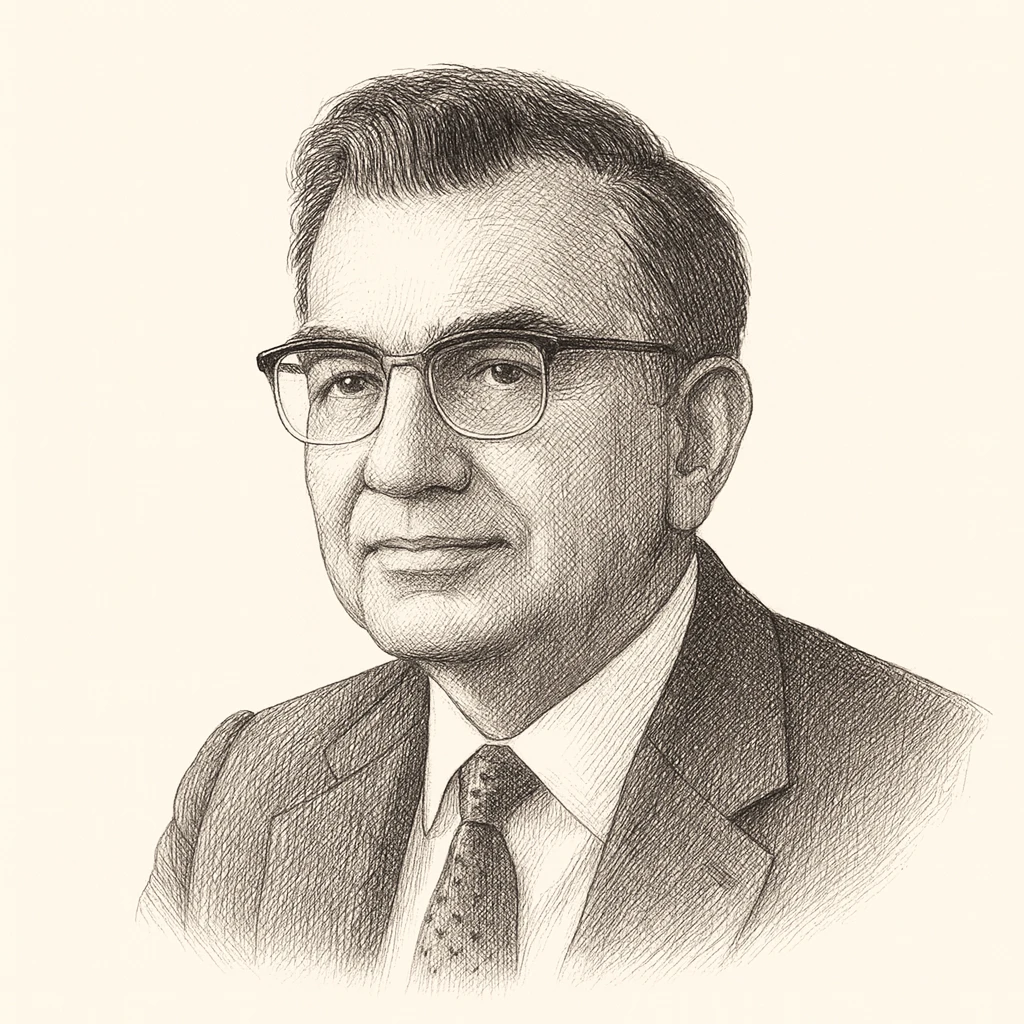
Ronald Coase reshaped economic and legal-political thought by asking why economic activity is organized as it is. In his early essay on the nature of the firm, he argued that firms exist because using the price mechanism carries costs — of discovering prices, negotiating, and enforcing contracts — and that organizations emerge to economize on these transaction costs. This insight moved the focus of analysis away from idealized frictionless markets toward the concrete institutional arrangements through which people actually coordinate, an approach that would influence how scholars think about the boundaries between markets, hierarchies, and the state.
His most consequential contribution addressed the problem of social cost — externalities such as pollution or noise that spill over onto third parties. Coase argued that, absent transaction costs, parties would bargain their way to an efficient outcome regardless of how legal rights were initially assigned; the result later became known as the Coase theorem. His deeper point, often lost on casual readers, was the reverse: because transaction costs are real and frequently large, the assignment of property rights and the design of legal institutions matter greatly, and policy should compare the actual costs of alternative arrangements rather than assume regulation is the automatic remedy.
This reasoning made Coase a foundational figure in the law and economics movement, which analyzes legal rules by their effects on incentives and efficiency. Politically, his work has been enlisted by advocates of market solutions and clearly defined property rights, including in environmental policy through tradable permits, and by skeptics of heavy-handed regulation. Yet Coase resisted doctrinaire readings; he emphasized empirical study of how institutions really operate and was critical of what he saw as economics detached from the real world.
Coase spent much of his career in the United States, notably at the University of Chicago, and received the Nobel Memorial Prize in Economic Sciences in 1991 for his work on transaction costs and property rights. His influence extends beyond economics into legal theory, public policy, and debates about the proper scope of government, where his central lesson — that institutions and their costs, not blackboard ideals, determine outcomes — remains widely invoked across the political spectrum.
Ronald Coase is associated with Cosmopolitan. See the archetype