
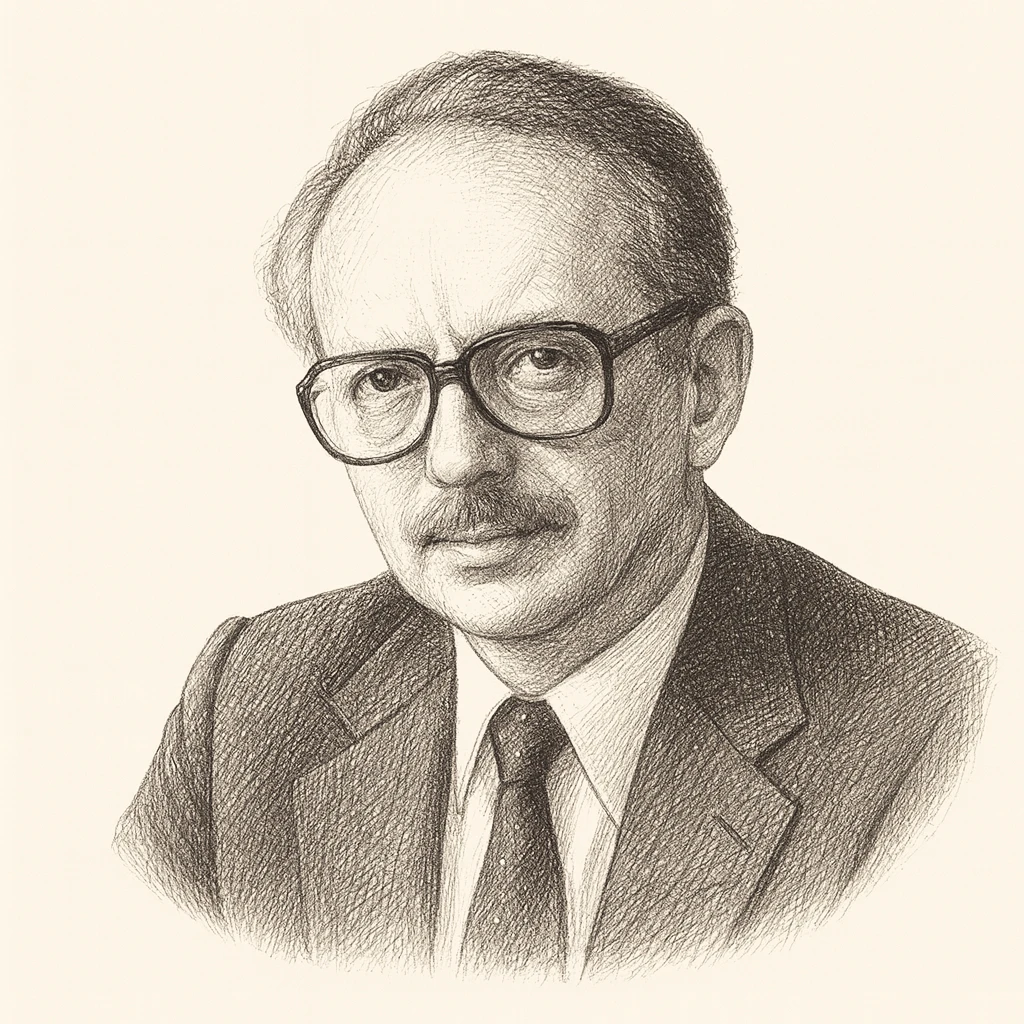
Ralf Dahrendorf (1929–2009) was a German-British sociologist, politician, and public intellectual whose work bridged the disciplines of social theory and liberal political philosophy. Having lived through the Nazi era as a young man—an experience that shaped his lifelong suspicion of totalitarianism—he emerged in the postwar period as a leading analyst of social conflict. Against the equilibrium-focused functionalism dominant in mid-century sociology, Dahrendorf argued that conflict, rooted in unequal distributions of authority within institutions, was a permanent and productive feature of social life. Rather than seeking to eliminate such conflict, he held that liberal societies should channel and regulate it, treating disagreement and competition as engines of change and freedom rather than as pathologies to be suppressed.
Dahrendorf's political thought is best understood as a defense of the open society, a concept he shared with Karl Popper, whom he admired. He was a committed liberal in the classical sense, wary of utopian blueprints and grand ideological schemes that promised final answers. He emphasized the expansion of what he called life chances—the range of opportunities and choices available to individuals—as the proper measure of social progress, insisting that both ligatures (the bonds and belongings that give life meaning) and options (freedoms and possibilities) mattered. This concern placed him at a distinctive point between liberal individualism and an awareness of social cohesion.
His liberalism was also internationalist and institutional. A supporter of European integration and transatlantic ties, Dahrendorf worried about the health of citizenship and the rule of law, and later in life reflected critically on the challenges of globalization, the temptations of authoritarian populism, and the difficulty of squaring economic competitiveness with social solidarity and political freedom. He viewed the maintenance of open, plural, self-correcting institutions as an unending task rather than a settled achievement.
Dahrendorf moved between academic, public, and political life, serving in German politics, in the European Commission, as director of the London School of Economics, and later in the British House of Lords. This unusual dual career gave his writing a practical inflection: he wrote as someone concerned with how liberal principles could be embodied in real institutions across national boundaries. His enduring influence lies in reminding liberals that freedom is inseparable from managed conflict, robust institutions, and the widening of individual opportunity.
Ralf Dahrendorf is associated with Cosmopolitan. See the archetype