
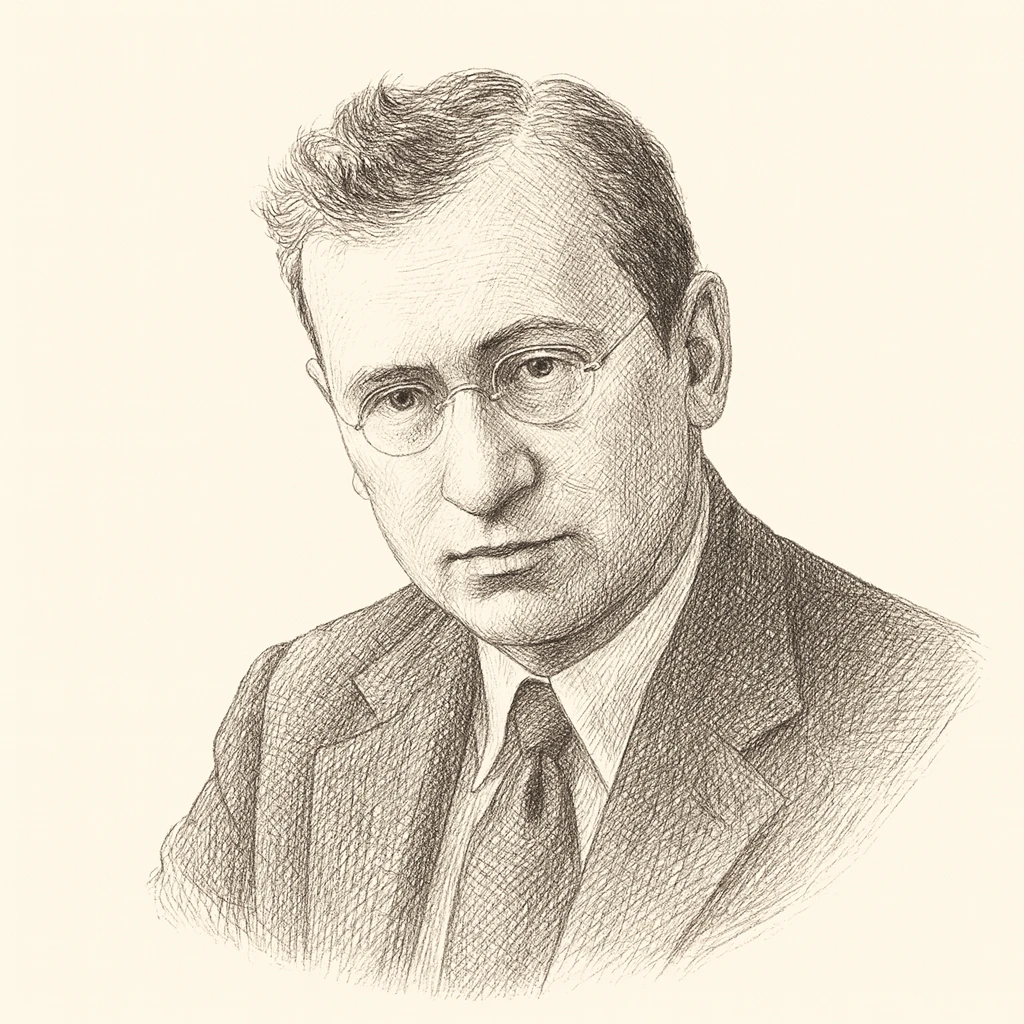
Peter Viereck (1916–2006) was an American historian and poet whose writings in the years after World War II helped rehabilitate the word "conservative" in mid-century American political discourse. Trained as a historian and long a professor at Mount Holyoke College, he argued for a conservatism rooted in the European tradition of Edmund Burke and the nineteenth-century order associated with figures such as Metternich, whom he studied closely. His central claim was that a healthy society depends on inherited institutions, cultural continuity, moral restraint, and a temperamental resistance to utopian schemes—whether those schemes came from the revolutionary left or from radical, populist forces on the right. This vision, which he framed as a humanistic and value-centered conservatism, treated conservatism as a disposition and an ethical inheritance rather than as a partisan program.
Viereck stood apart from the conservative movement that coalesced in the 1950s around institutions like National Review. He was a sharp critic of Senator Joseph McCarthy and of what he saw as the demagogic, anti-intellectual populism that threatened to define the American right. He was also skeptical of the fusion of free-market economics, militant anti-communism, and populist grievance that became the ascendant conservative synthesis. Because he defended the New Deal's basic accomplishments and warned against reactionary excess, he was increasingly marginalized by the very movement whose intellectual vocabulary he had helped to shape, and he came to be viewed as a dissenting or "unadjusted" conservative.
His significance lies partly in this tension. Viereck represents a road not taken in American conservatism: an aristocratic, culturally humanistic, and anti-populist strain that prized moderation, pluralism, and the life of the mind over ideological combat. His notion of a conservative realism emphasized limits—on power, on ambition, and on the human capacity to remake society. As a poet who also won recognition for his verse, he embodied the idea that political thought and cultural sensibility are intertwined.
In later decades Viereck was rediscovered by scholars and commentators seeking alternatives to movement conservatism, who cited him as an early and prescient critic of right-wing populism. His work remains a reference point in debates about what conservatism is, whether it is fundamentally a temperament or an ideology, and how a tradition-minded politics should relate to democratic mass movements.
Peter Viereck is associated with Reform Conservative. See the archetype