
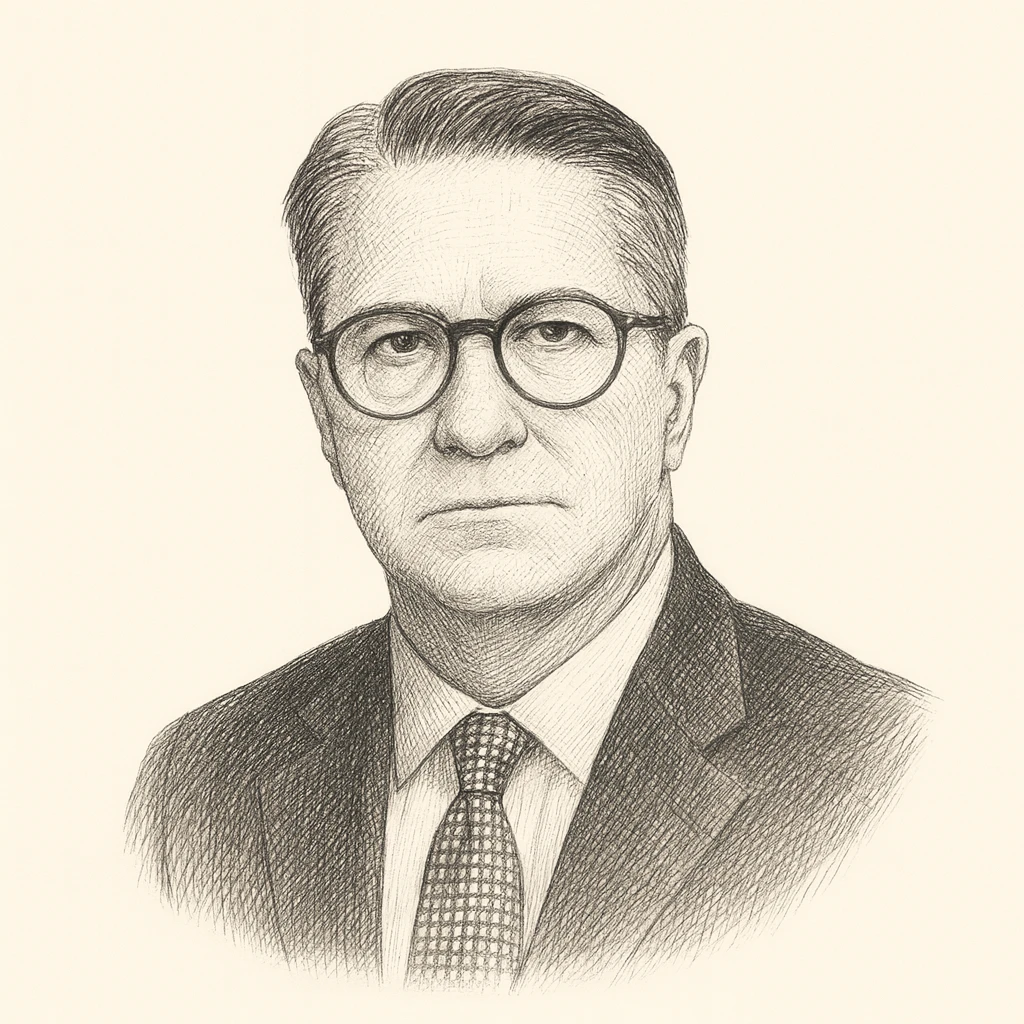
Patrick Deneen is an American political theorist and professor of political science at the University of Notre Dame, where his work focuses on political philosophy, the history of political thought, and the intellectual foundations of the modern liberal order. He is best known for his book Why Liberalism Failed, which argues that liberalism has not so much malfunctioned as succeeded too completely, corroding the very social bonds, traditions, and forms of self-governance on which a healthy political community depends. In his account, the emphasis on individual autonomy and the liberation of the self from unchosen obligations ultimately produces atomized individuals, an expansive state, and a market that dissolves local cultures and shared moral horizons.
Deneen situates his critique within a broader tradition of thinkers skeptical of Enlightenment liberalism, drawing on classical and Christian sources as well as communitarian and anti-modern strands of political thought. He argues that both the progressive left and the free-market right are, at root, variants of the same liberal project, differing over means while sharing a commitment to individual liberation and the expansion of choice. Against this, he emphasizes the importance of community, family, religious tradition, place, and practices of self-restraint, suggesting that a genuine alternative requires rebuilding local and cultural institutions rather than simply reforming national politics.
His work has made him one of the most prominent voices in what is often called postliberalism, an intellectual current on the American right that rejects the assumptions of classical liberalism and calls for a politics more explicitly oriented toward the common good and moral formation. In later writing he has pressed these arguments further, advocating a more assertive use of political power to reshape culture and institutions, a stance that has drawn both enthusiastic followers and sharp critics. Admirers see him as diagnosing a real crisis of meaning and social cohesion in Western democracies; readers less persuaded point to liberalism's achievements and to how few concrete prescriptions he offers. Regardless of where one stands, Deneen has helped move a once-marginal critique of liberalism toward the center of contemporary debates about the future of democracy, tradition, and the relationship between politics and the good life.
Patrick Deneen is associated with National Conservative. See the archetype