
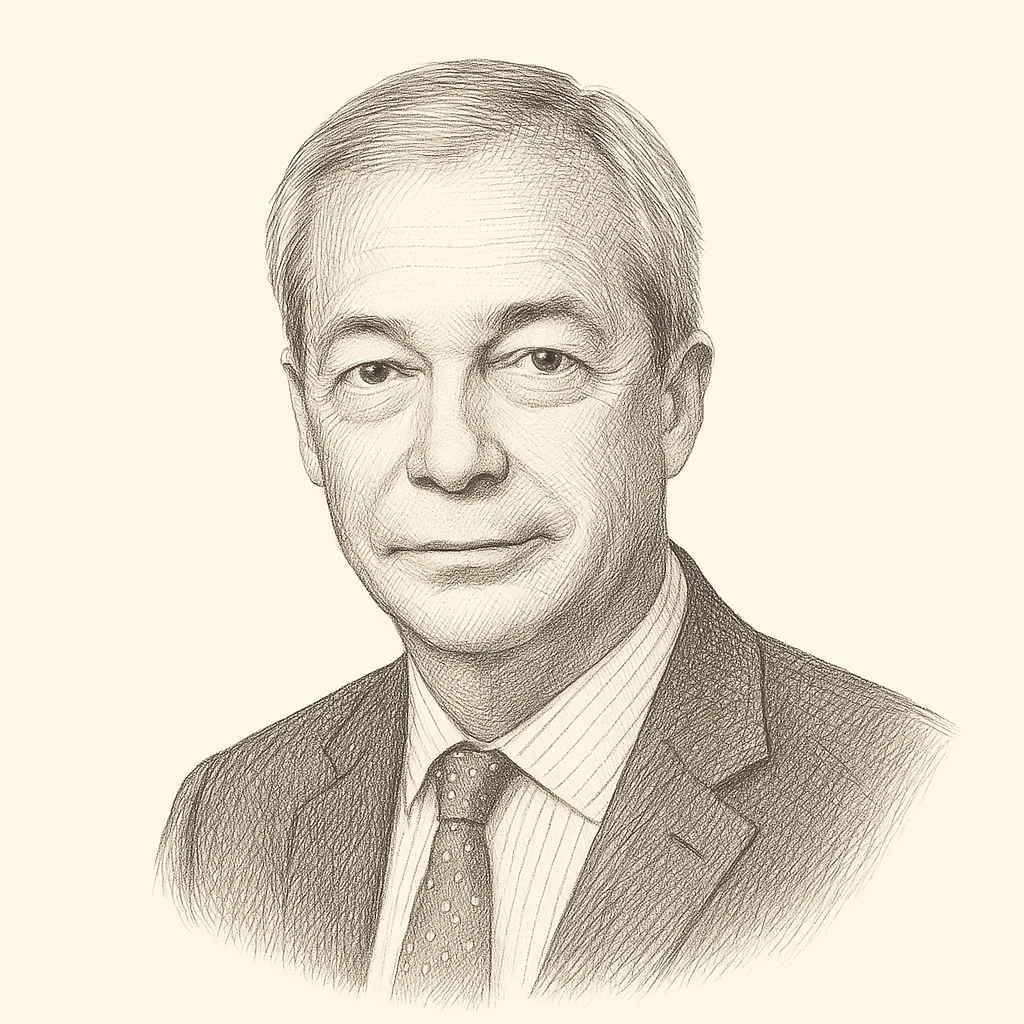
Nigel Farage built his political career around a single, defining conviction: that Britain should leave the European Union and reclaim what he framed as national sovereignty over borders, laws, and trade. Emerging from a background in the City as a commodities trader, he became the long-serving public face of the UK Independence Party and later helped launch the Brexit Party, using a mix of pub-populist showmanship, relentless media presence, and blunt anti-establishment rhetoric to move a fringe cause into the political mainstream. His thought is less a systematic ideology than a durable populist posture: a claim that a self-serving political and bureaucratic elite had detached itself from the instincts and interests of ordinary people, and that mass immigration and supranational governance were the twin symptoms of that betrayal.
Farage belongs to a broader tradition of national populism that fuses cultural conservatism, economic grievance, and a rhetoric of the "real people" against cosmopolitan elites. He consistently argued that questions of immigration and national identity were not marginal but central, and that established parties suppressed public anxieties in the name of respectability. His genius was strategic more than intellectual: by threatening the Conservative Party's electoral base, he pressured the government into calling the 2016 referendum, whose Leave victory reshaped British politics and emboldened similar movements across Europe and beyond. He is widely regarded as among the most consequential figures never to hold high office.
His record is seriously contested. In the referendum's final week George Osborne called UKIP's "Breaking Point" poster "disgusting and vile," with "echoes of literature used in the 1930s," and Nicola Sturgeon called it racist; supporters counter that he articulated legitimate concerns about democratic accountability that mainstream politicians ignored. What is not in dispute is his influence on political method: he demonstrated how a disciplined single-issue insurgency, amplified by television and a distinctive personal style, could bend a governing party and even a nation's constitutional trajectory without commanding a parliamentary majority. That model of outsider pressure politics remains his most studied legacy.
Nigel Farage is associated with National Populist. See the archetype