
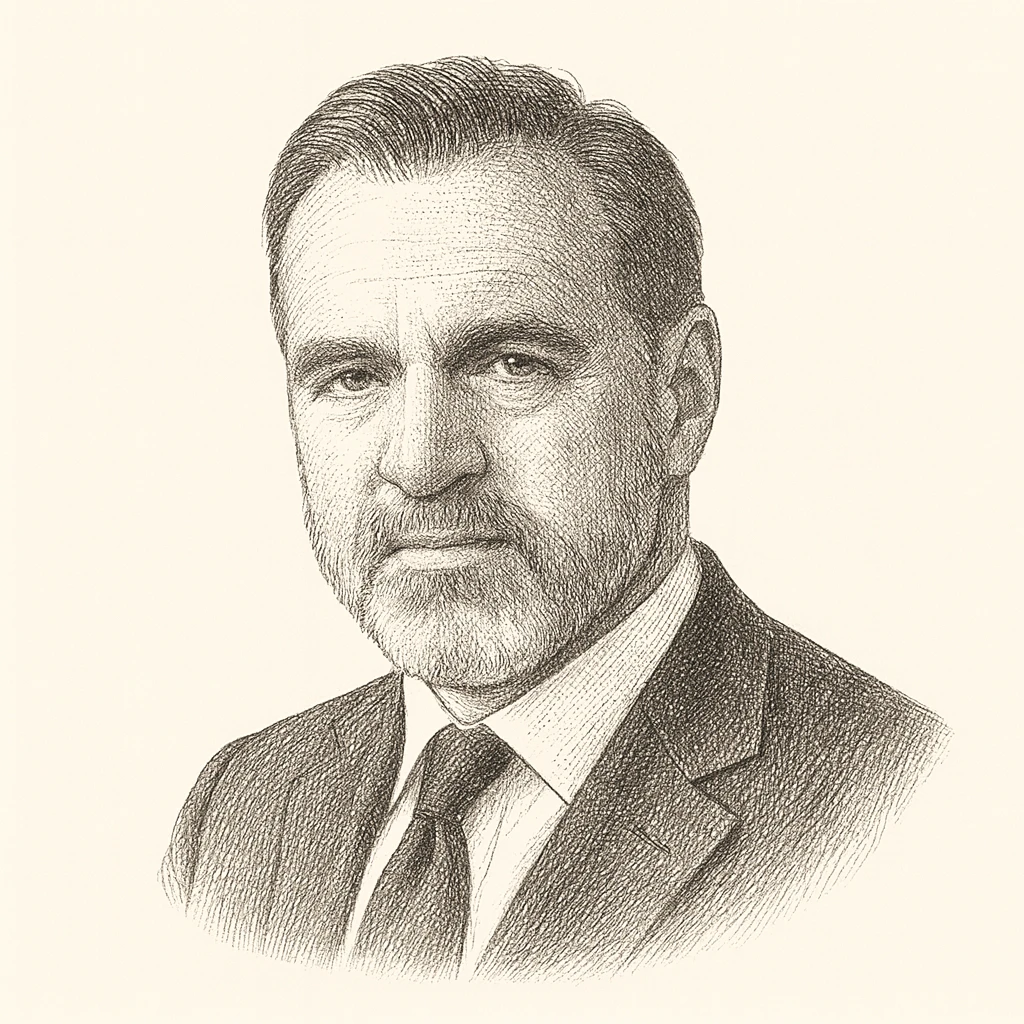
Niall Ferguson is a Scottish-born historian and public intellectual whose work spans financial history, empire, and the fate of Western civilization. Trained at Oxford and later based at institutions including Harvard and the Hoover Institution at Stanford, he built his reputation on studies of money, credit, and the political power that finance underwrites. His broader argument, developed across many books and essays, is that free markets, secure property rights, the rule of law, representative government, and competitive institutions explain why parts of the West grew wealthy and dominant. In this he stands within a broadly classical liberal and conservative tradition, emphasizing institutions and incentives over structural or purely materialist explanations of history.
Ferguson is best known politically for his revisionist and largely sympathetic reassessment of the British Empire, arguing that empires, despite their coercion and violence, spread institutions, markets, and legal frameworks that shaped the modern world. He has extended this into a broader case for the responsibilities of hegemonic powers, warning against what he sees as American reluctance to sustain global order. These positions have made him prominent, admired on the right for defending Western achievement and criticized by others, among them Pankaj Mishra in the London Review of Books in 2011, for downplaying the costs of imperial rule.
A persistent theme in his writing is anxiety about Western decline. He has argued that the institutions underpinning liberal prosperity are fragile and can decay through debt, complacency, bureaucratic sclerosis, and loss of cultural confidence. He has also written on the tension between hierarchical power and decentralized networks as recurring forces in history. Politically he has positioned himself against what he regards as progressive orthodoxy in universities and public life, becoming an outspoken commentator on academic freedom and heterodox debate.
As a writer and public figure, Ferguson matters less for a single systematic theory than for popularizing a confident, institution-focused defense of Western liberalism and capitalism to a broad audience. His prolific journalism, books, and media presence have made him one of the most widely read conservative-leaning historians of his generation, and a lightning rod in debates over empire, globalization, and the durability of the liberal order.
Niall Ferguson is associated with Classical Liberal. See the archetype