
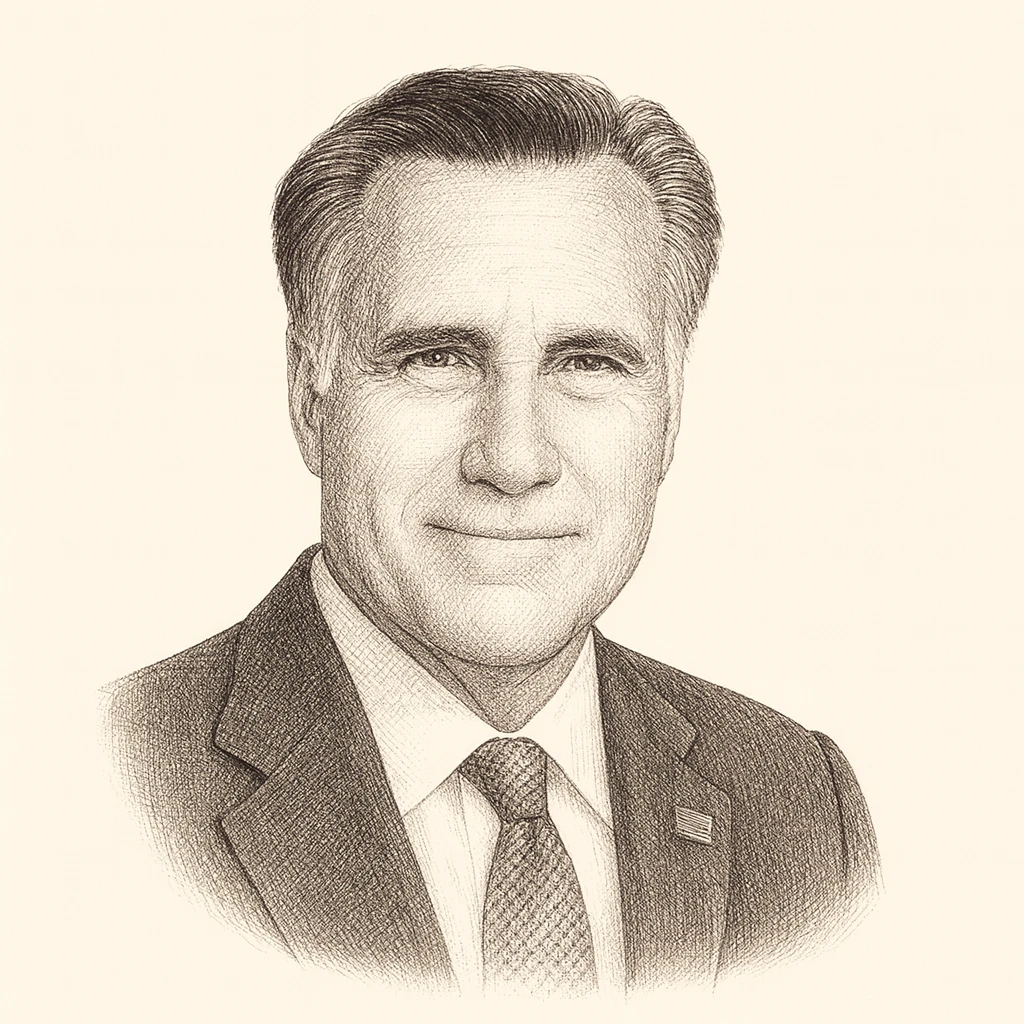
Mitt Romney occupies a distinctive place in modern American conservatism as a representative of its pragmatic, managerial, and business-oriented wing. Trained in law and business at Harvard and shaped by a career in private equity, Romney approached governance with an emphasis on data, efficiency, and problem-solving over ideological purity. As governor of Massachusetts, he championed a market-based health-care reform built on an individual mandate and state-run insurance exchanges—an approach rooted in center-right ideas about personal responsibility that later became a model, and a point of contention, when similar mechanisms appeared in the national Affordable Care Act. This trajectory illustrates a recurring tension in his thought: a technocratic willingness to use policy tools that could be cast as either conservative or interventionist depending on the political moment.
As the Republican presidential nominee in 2012, Romney articulated a fiscally conservative vision centered on lower taxes, reduced regulation, entitlement reform, and a robust, assertive foreign policy that identified great-power rivals as enduring strategic threats. He drew on a Reagan-era synthesis of free-market economics, muscular internationalism, and traditional social values, positioning himself as an heir to establishment conservatism rather than its populist or libertarian variants. His emphasis on private-sector experience as a qualification for public leadership reflected a broader conviction that government should be run with the discipline and accountability of a well-managed enterprise.
In his later Senate career, Romney became a notable dissenting voice within his own party, defending institutional norms, constitutional process, and a more restrained, principled conservatism against the ascendant populism of the Trump era. His willingness to break with party leadership on questions of presidential accountability made him a symbol of what commentators often called the "conscience" wing of the Republican Party. This stance placed him within an older tradition that prizes character, civility, and institutional stewardship as conservative values in themselves. His deep Latter-day Saint faith also informed a public ethic emphasizing service, integrity, and moral seriousness. Romney's political significance lies less in a distinctive body of theory than in his embodiment of a fading establishment consensus—and in the sharp questions his career raised about whether that consensus could survive the realignment of the party he long served.
Mitt Romney is associated with Moderate Conservative. See the archetype