
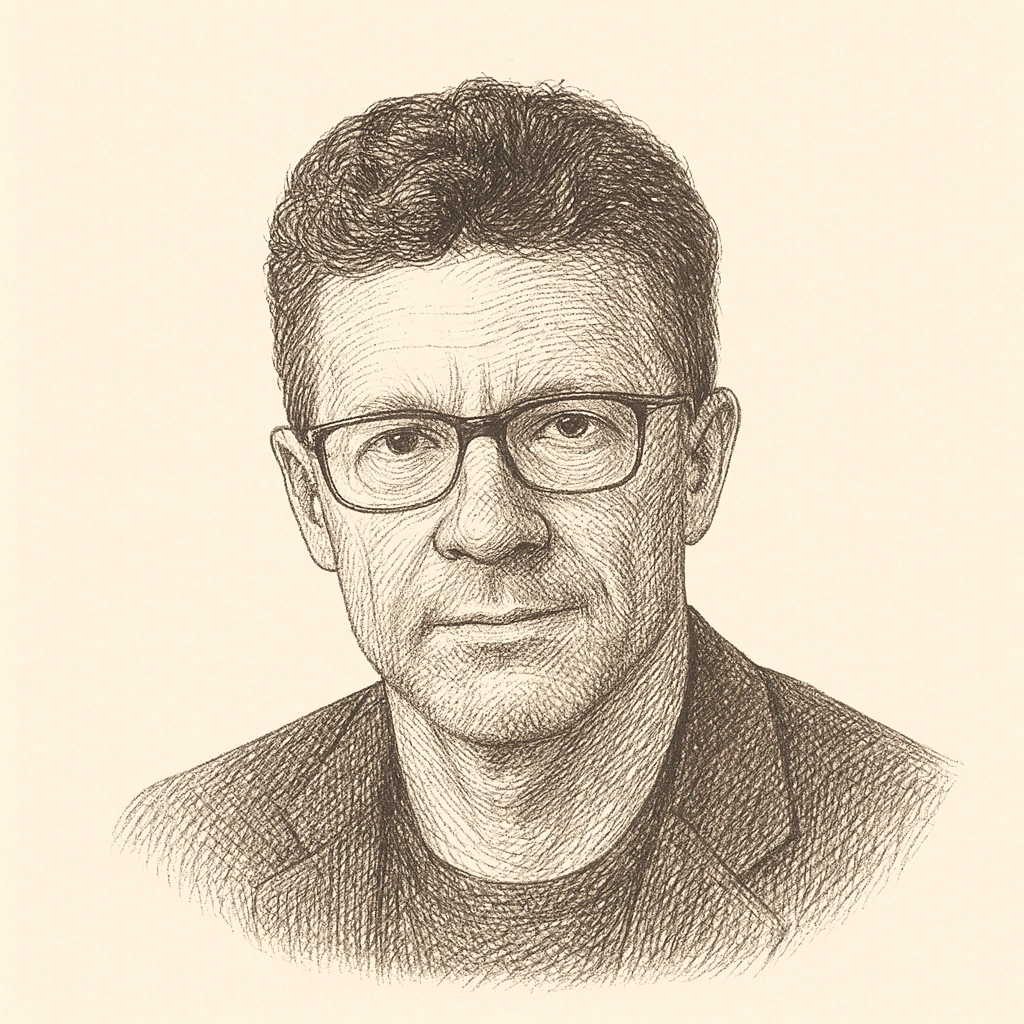
Matthew Crawford is an American writer and philosopher best known for arguing that skilled manual work is a neglected source of human dignity, autonomy, and civic virtue. Trained in political philosophy, he earned a doctorate from the University of Chicago and has been associated with the Institute for Advanced Studies in Culture at the University of Virginia. His biography is central to his thought: alongside academic and think-tank work, he has run a motorcycle repair business, and he presents the tradesman's competence as a form of knowledge that abstract, credential-driven office work tends to obscure.
Crawford's central political argument, developed in Shop Class as Soulcraft, is a critique of the modern knowledge economy and the assumptions that have devalued the trades. He contends that the separation of thinking from doing—rooted in industrial management and extended into contemporary white-collar labor—leaves many workers estranged from the tangible results of their efforts. Against this, he defends the manual trades as intellectually demanding and morally formative, offering a directness of feedback and personal responsibility that he sees as diminished in bureaucratic and managerial settings. His concerns connect to older traditions of thought about craft, meaningful labor, and the relationship between work and self-reliance.
In later work, notably The World Beyond Your Head, Crawford broadened his focus to the politics of attention, arguing that a modern environment saturated with engineered distraction and commercialized stimulus erodes the individual's capacity for focused, self-directed engagement with the world. He treats attention as a scarce good subject to appropriation, and links the cultivation of skill to a fuller and more grounded form of agency. His writing on driving and automation extends these themes to questions of autonomy, risk, and the trade-offs of increasingly automated, safety-managed systems.
Crawford's ideas resonate across the political spectrum, appealing to critics of consumerism and industrial alienation as well as to conservatives concerned with self-reliance, embodied practice, and skepticism of expert and managerial authority. He is frequently cited in debates about the dignity of work, vocational education versus universal college, and the cultural costs of a digitized, service-oriented economy. His influence lies less in a partisan program than in reframing everyday work and attention as matters of political and ethical consequence.
Matthew Crawford is associated with Traditionalist. See the archetype