
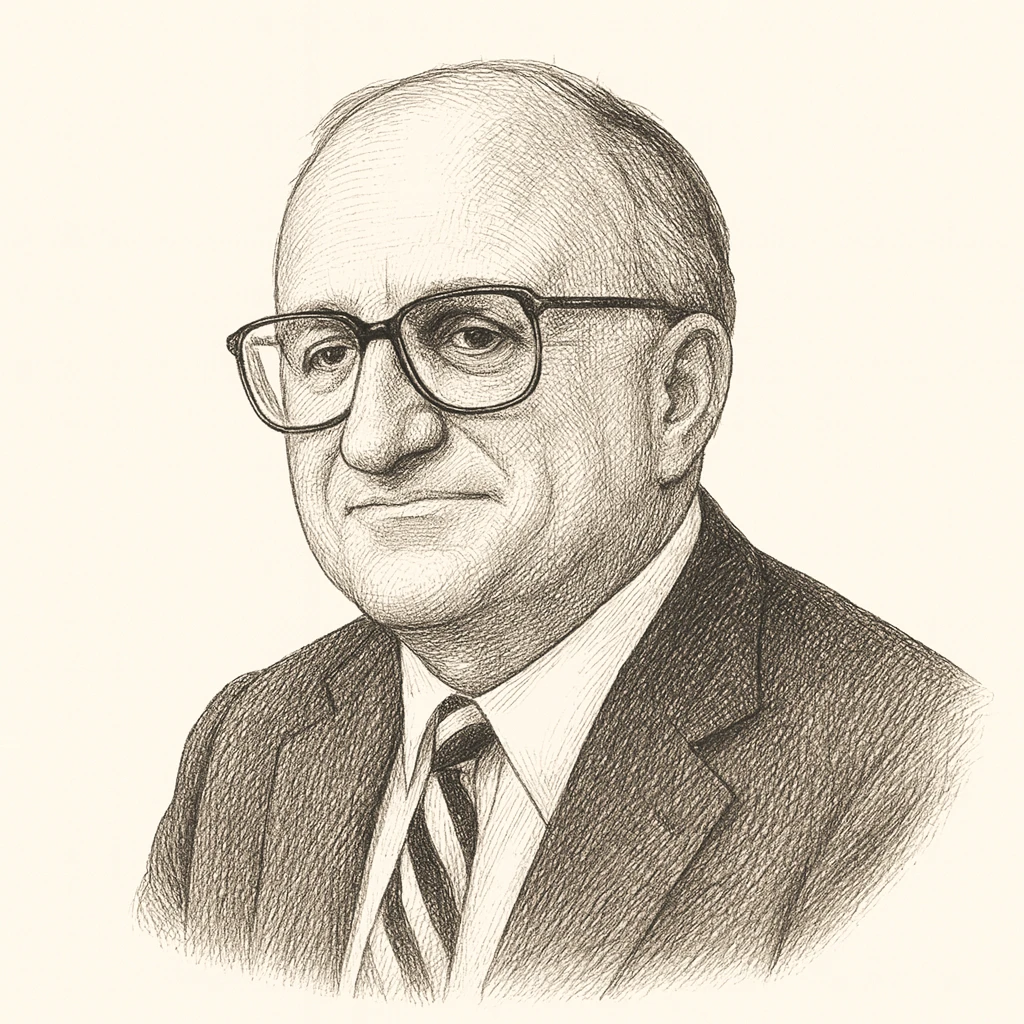
Martin Feldstein (1939–2019) was among the most influential American economists of the late twentieth century, a Harvard professor whose scholarship in public finance shaped debates over taxation, saving, and the welfare state. Much of his intellectual reputation rested on analyses of how government policy alters private incentives—how tax structures affect saving and investment, and how programs such as Social Security might influence household behavior and national capital accumulation. This body of work gave empirical and theoretical ballast to a broadly market-oriented, incentive-focused approach to policy, positioning Feldstein within a tradition that questioned the efficiency of large public commitments and stressed the behavioral consequences of taxation.
His political prominence came through his service as chairman of the Council of Economic Advisers under President Ronald Reagan in the early 1980s. Feldstein was associated with the era's push toward lower marginal tax rates and reduced regulatory burdens, aligning him with the conservative economic movement then ascendant in Washington. Yet he became notable precisely for the limits of his partisanship: he publicly warned that the large budget deficits emerging under Reagan posed serious dangers to the economy, a stance that placed him at odds with more optimistic supply-side advocates within the administration. His willingness to insist on fiscal arithmetic over political convenience became emblematic of a fiscally conservative strain that prized balanced budgets and long-term stability.
Across a long career he also led the National Bureau of Economic Research for many years, an institution central to the professionalization and empirical grounding of American economics. In that role and as a teacher he trained and influenced generations of economists, many of whom went on to prominent policy positions across administrations of both parties. His influence on political thought lay less in grand ideology than in shaping the terms of debate: framing questions about the welfare state, tax reform, and deficits around incentives, efficiency, and measurable consequences.
Feldstein's legacy is that of a bridge figure between academic economics and practical governance—a conservative-leaning technocrat whose commitment to empirical analysis sometimes cut against the political preferences of his allies. He is remembered as a defender of market incentives and prudent public finance, and as someone who argued that sound economic reasoning should discipline, rather than simply serve, political ambition.
Martin Feldstein is associated with Moderate Conservative. See the archetype