
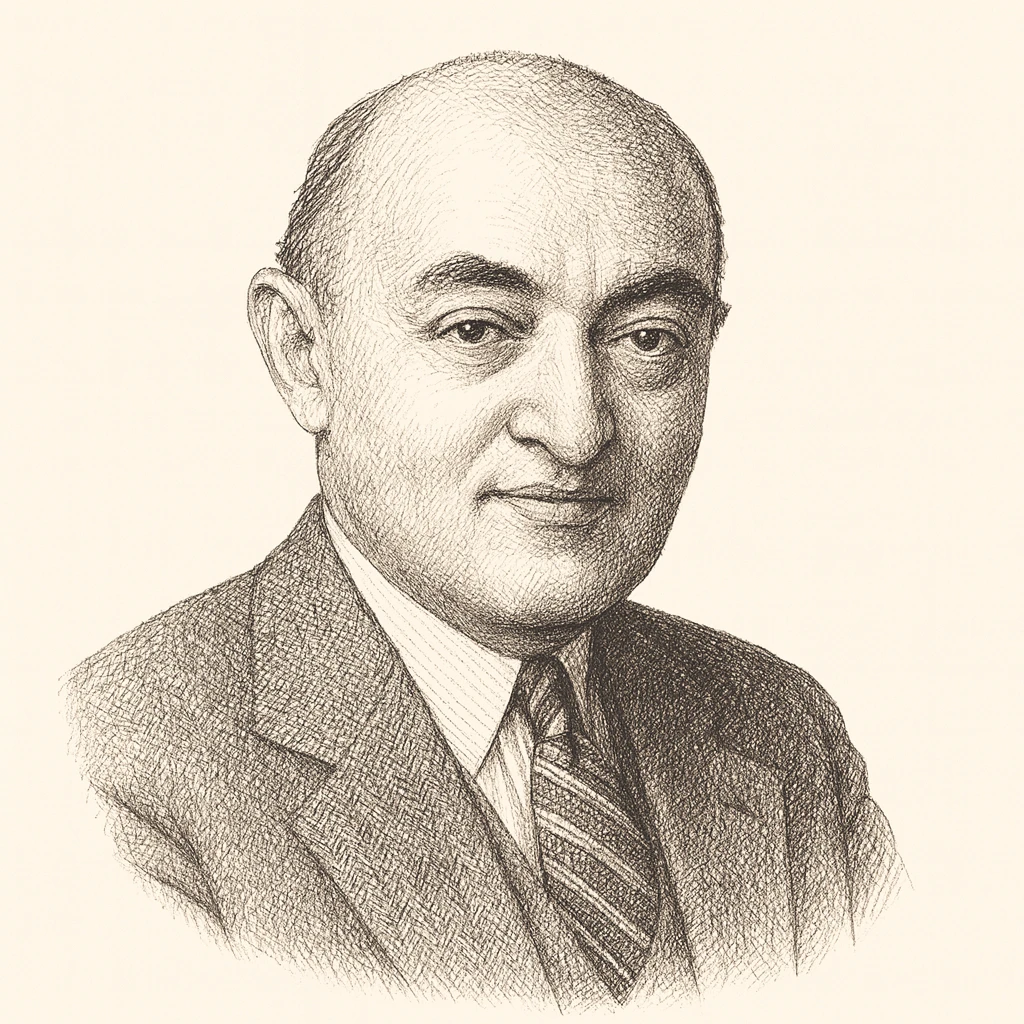
Joseph Schumpeter was among the twentieth century's most influential theorists of capitalism, and his ideas carry a political charge that reaches well beyond economics. His central concept, "creative destruction," held that capitalism advances not through placid equilibrium but through recurrent waves of innovation that destroy old firms, industries, and ways of life while building new ones. In this account the entrepreneur—the disruptive innovator, not the passive investor—is the engine of growth, and the dynamism that generates prosperity is inseparable from the instability and dislocation it also produces. This framing reoriented how many came to understand markets: less as machines for allocating scarce resources efficiently, more as engines of restless, permanent transformation.
Schumpeter's most directly political argument was a paradox: capitalism, he thought, would likely undermine itself not by failing but by succeeding. Prosperity would foster large bureaucratic corporations, a class of intellectuals hostile to bourgeois values, and rationalist habits that eroded the entrepreneurial and cultural foundations on which the system rested. He suspected capitalism would drift toward some form of socialism, though he was ambivalent rather than triumphant about the prospect. Alongside this he advanced an influential redefinition of democracy: rather than the rule of the people enacting a coherent common will, he described democracy realistically as a competitive struggle among elites for the citizens' votes—an "electoral" or procedural conception that shaped much of modern political science.
Born in what was then Austria-Hungary, Schumpeter served briefly as an Austrian finance minister and worked in banking before an academic career that culminated at Harvard, where he taught for the last two decades of his life. His politics resist easy labeling: he admired the vitality of markets and the entrepreneurial class yet was skeptical of laissez-faire optimism, and his elitist and often pessimistic reading of democratic and cultural life has drawn criticism from both left and right. His enduring influence lies less in policy prescriptions than in a distinctive sensibility—that dynamism, disruption, and decline are bound together, and that no economic or political order is permanent.
Joseph Schumpeter is associated with Cosmopolitan. See the archetype