
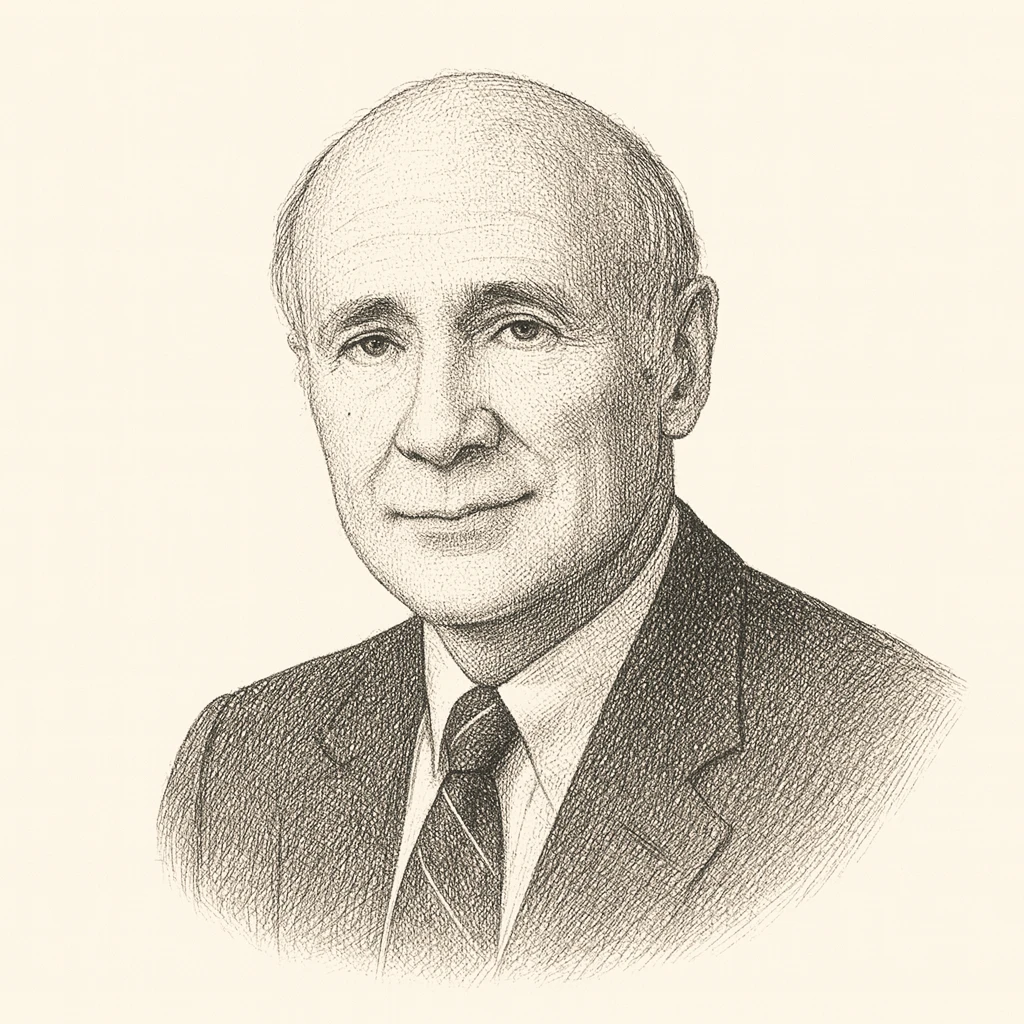
Joseph Nye was an American political scientist and one of the most influential theorists of international relations of the late twentieth and early twenty-first centuries. Working primarily from Harvard University, where he taught for decades and served as dean of its Kennedy School of Government, he combined scholarly work with periods of government service, giving him an unusual vantage point across both academic theory and practical statecraft. His thought sits within the liberal tradition of international relations, which stresses that cooperation, institutions, and economic ties—not only military competition—shape how states behave.
Nye is best known for coining and developing the concept of "soft power," the idea that a country can achieve its aims through attraction and persuasion rather than coercion or payment. In his account, a state's culture, political values, and foreign policies can generate influence when others admire or wish to emulate them, complementing the "hard power" of military and economic force. He later refined this into the notion of "smart power," arguing that effective statecraft requires combining hard and soft instruments. These concepts entered the vocabulary of policymakers, diplomats, and commentators well beyond the academy, giving governments a way to talk about legitimacy, reputation, and the limits of force.
Alongside this, Nye helped found the school of thought known as neoliberalism or complex interdependence in international relations, developed in collaboration with Robert Keohane. Their work challenged the realist assumption that states are the only significant actors and that military security dominates all other concerns, emphasizing instead the dense web of transnational relationships, multiple channels of contact, and the diminished usefulness of force in many issue areas. This framework became a cornerstone of how scholars analyze globalization and international cooperation.
Nye consistently argued for a form of engaged American internationalism, defending the value of alliances, multilateral institutions, and the liberal international order while warning against overreliance on military dominance. He also wrote about the distribution and diffusion of power in the contemporary era, including debates over American decline and the rise of new powers. His influence lies less in a single grand theory than in supplying enduring concepts and vocabulary that continue to frame both academic study and public discussion of how power actually works among nations.
Joseph Nye is associated with Cosmopolitan. See the archetype