
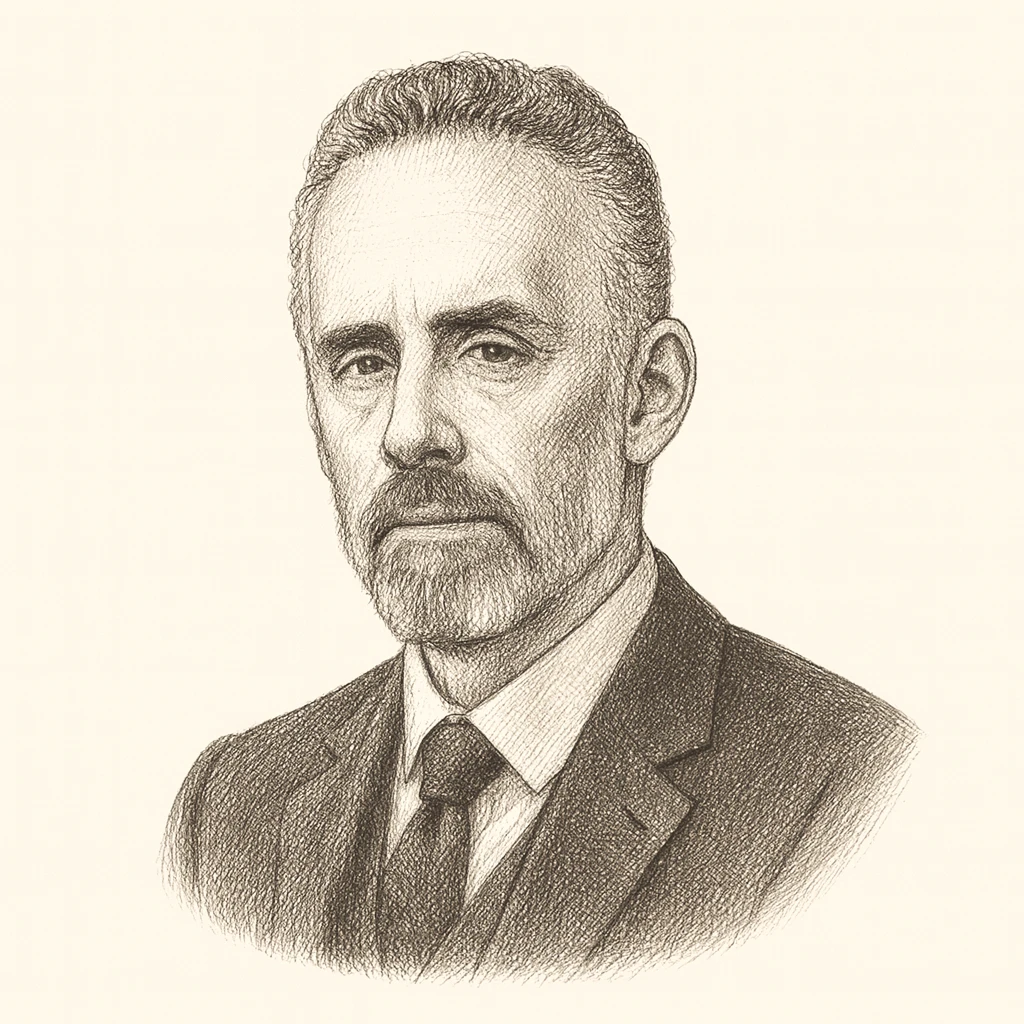
Jordan Peterson is a Canadian clinical psychologist and former University of Toronto professor whose academic work on personality and the psychology of belief preceded his emergence as one of the most widely discussed public intellectuals of the 2010s. Though he identifies himself as a classical liberal, his political influence flows from a temperamentally conservative sensibility: a conviction that inherited institutions, moral traditions, and social hierarchies encode hard-won wisdom that reformers dismiss at their peril. His early book examined myth and religious narrative as repositories of accumulated human experience, an argument he later translated into practical moral guidance in the best-selling 12 Rules for Life.
Peterson rose to broad public attention through his vocal opposition to compelled speech, particularly Canadian legislation concerning gender identity, which he framed as government overreach into individual expression. From there he became a prominent critic of what he termed "postmodern neo-Marxism" in universities, arguing that identity-based politics dissolves the individual into group categories and substitutes grievance for the pursuit of competence and responsibility. Central to his message is the claim that hierarchies of competence are natural and often legitimate rather than simply structures of oppression, and that meaning is found through voluntarily shouldering responsibility, confronting chaos, and orienting one's life around truthful speech.
These themes place him within a traditionalist current even as he resists the label: he defends the family, individual moral discipline, and cultural continuity against what he sees as utopian and resentment-driven ideologies. His enormous online following, lectures, and books have shaped how a generation of especially young men thinks about purpose, authority, and the political meaning of self-governance.
Peterson is a genuinely contested figure. Critics accuse him of misrepresenting the academic left, trafficking in overheated warnings about ideological threats, and lending intellectual cover to reactionary and anti-feminist movements; supporters counter that he offers a serious defense of individual responsibility and cultural inheritance. His public profile has also been marked by health struggles and increasingly combative political commentary. Whatever the verdict, his articulation of hierarchy, responsibility, and meaning has become a reference point in contemporary debates over the value of tradition.
Jordan Peterson is associated with Traditionalist. See the archetype