
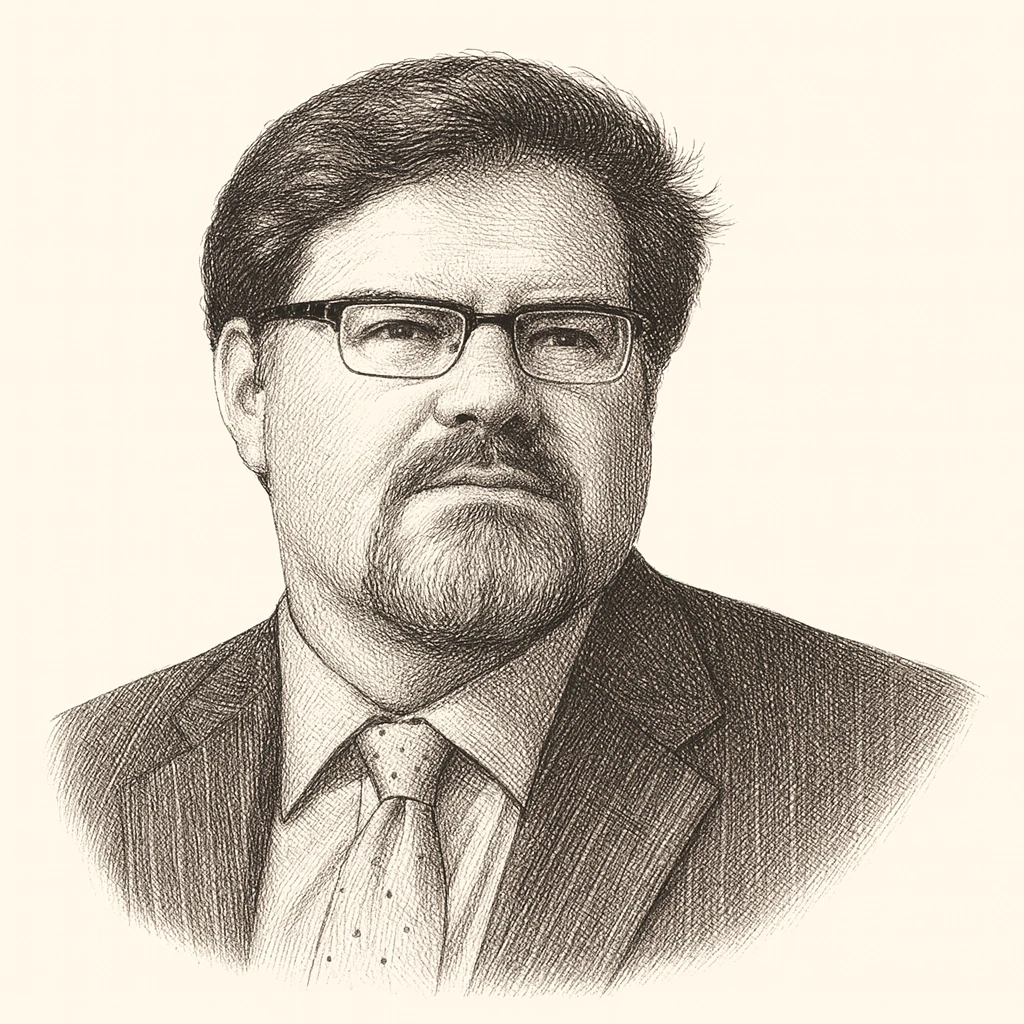
Jonah Goldberg is an American writer and commentator whose work has been closely associated with the movement conservatism of the late twentieth and early twenty-first centuries, particularly the intellectual tradition centered on National Review, where he spent much of his career and helped pioneer the magazine's online presence. His political thought draws heavily on the fusionism associated with figures like William F. Buckley Jr.—an attempt to reconcile free-market economics, social traditionalism, and anti-statist commitments—and on the classical liberal and Anglo-American conservative traditions emphasizing limited government, individual liberty, and the rule of law.
Goldberg is best known for a body of work arguing that state power and centralizing impulses can flow from the political left as readily as the right, and that ideas conventionally coded as progressive share intellectual roots with statist and collectivist currents. His most prominent book advanced a provocative reinterpretation of the history of "liberalism" and "fascism," arguing that certain strands of progressive and left-wing politics had authoritarian tendencies—an argument that generated considerable debate and criticism. A later book explored what he framed as the fragile, historically contingent achievement of Western liberal democracy and market society, warning that ingratitude toward these institutions and a retreat into tribalism could undermine them.
In the years following 2016, Goldberg became a prominent voice among conservatives skeptical of Donald Trump and of the populist and nationalist turn on the American right. He co-founded The Dispatch, a subscription-based media outlet aimed at offering fact-driven, center-right commentary independent of partisan tribalism, and has been an active participant in podcast and column formats. His critiques emphasize the dangers of populism, the abandonment of principle for partisan loyalty, and the corrosion of civic and institutional norms, positioning him within the broader current sometimes described as the "never Trump" or reform-minded conservative dissent.
Across his work, Goldberg tends to frame politics in terms of enduring principles rather than immediate partisan advantage, emphasizing the importance of culture, civil society, and institutions over raw political power. He is a recurring figure in debates about the intellectual identity of American conservatism, arguing that the movement should remain tethered to constitutionalism and classical liberal ideas rather than being redefined by charismatic leadership or grievance-driven populism.
Jonah Goldberg is associated with Moderate Conservative. See the archetype