
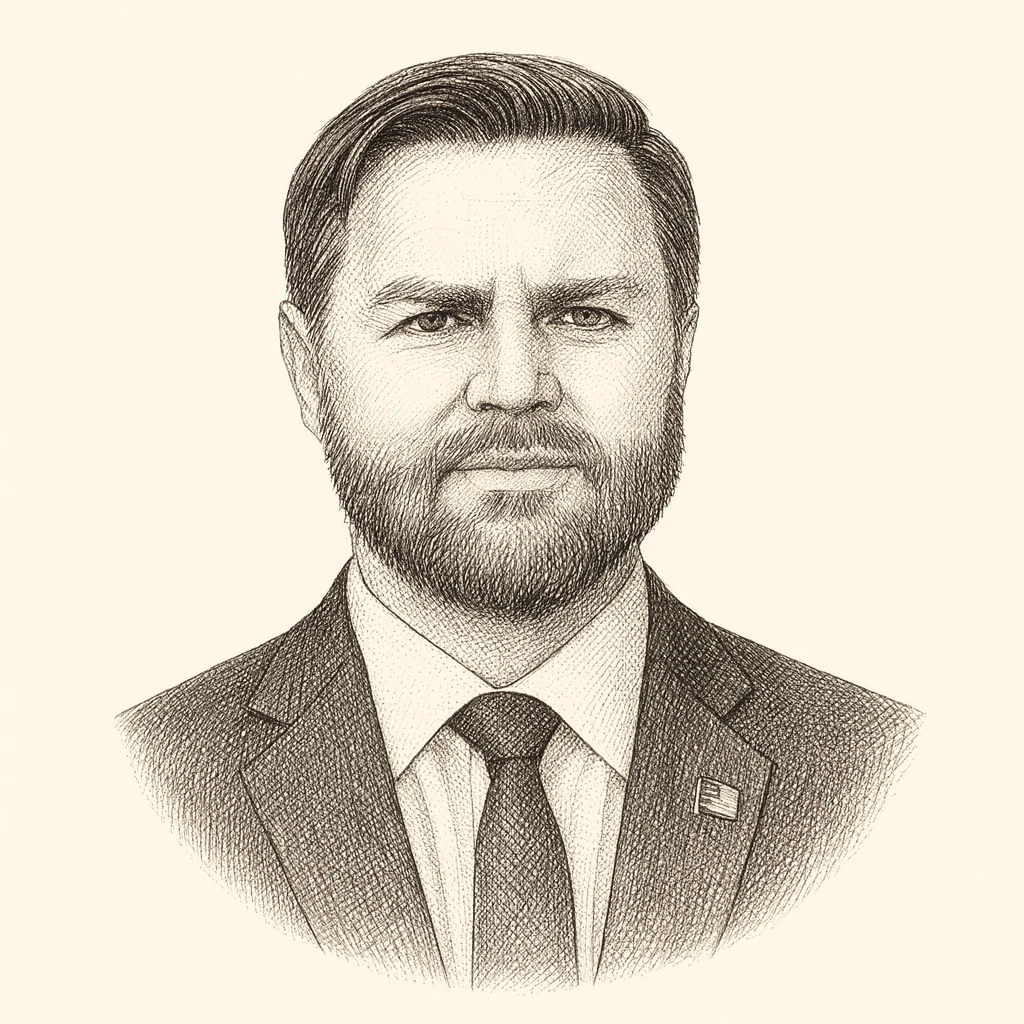
J.D. Vance emerged into public life as the author of a widely read 2016 memoir, Hillbilly Elegy, which recounted his upbringing in a struggling working-class family with Appalachian roots in Ohio and Kentucky. The book was received as a window into the social and economic dislocation of white working-class communities in the American heartland, and it appeared at a moment when many observers were seeking explanations for the political realignment underway. Though the memoir was more diagnostic than programmatic, it associated Vance early on with debates about family breakdown, addiction, personal responsibility, and the decline of once-industrial regions.
Vance's political thought developed toward a self-consciously populist and nationalist conservatism often grouped under the label of the "New Right" or "national conservatism." He became a prominent critic of what he characterizes as a governing elite indifferent to the interests of ordinary Americans, arguing for economic policies skeptical of unfettered free trade and offshoring, restrictionist immigration positions, and a foreign policy of restraint that questions extensive American commitments abroad. This outlook marks a departure from the free-market, interventionist consensus that dominated the Republican Party in earlier decades, and it reflects broader currents that draw on economic nationalism, cultural traditionalism, and a critique of institutions ranging from universities to large corporations.
Having initially been a sharp critic of Donald Trump, Vance later aligned himself closely with Trump's movement, and his intellectual trajectory has been read as emblematic of the party's populist turn. His thinking engages with a network of contemporary right-wing intellectuals and publications concerned with reorienting conservatism toward the material interests of working families, strengthening domestic industry, and defending what he presents as traditional social and religious values, informed in part by his conversion to Catholicism.
Elected to the U.S. Senate from Ohio in 2022 and later serving as Vice President, Vance has become one of the most visible figures translating New Right ideas into governing rhetoric and policy debate. His influence lies less in a systematic body of theory than in his role as a bridge between the intellectual project of post-liberal and nationalist conservatism and the practical arena of electoral politics, giving those currents a prominent platform in American public life.
J.D. Vance is associated with National Conservative. See the archetype