
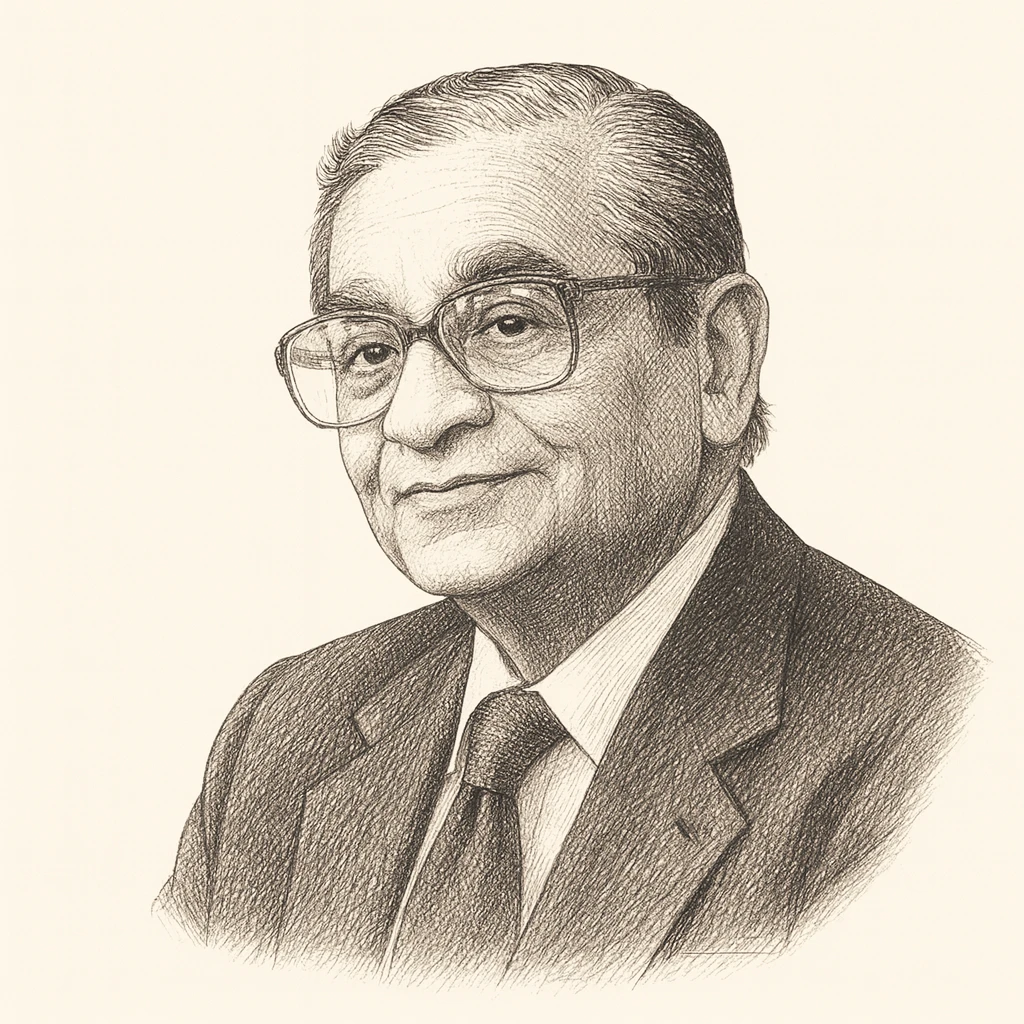
Jagdish Bhagwati is an Indian-born economist, long based at Columbia University, whose work made him one of the most prominent intellectual champions of free trade and globalization. Trained in the mid-twentieth century when development economics leaned heavily toward planning, import substitution, and state direction, Bhagwati emerged as a forceful critic of protectionism, arguing that openness to trade offered poorer countries a more reliable path to growth than inward-looking industrial policy. His shift reflected a broader turn in economic thinking, and his own homeland's later liberalization gave his arguments particular resonance. He is associated with technical contributions to trade theory as well as with a public role as an advocate for liberal internationalism in economic affairs.
Politically, Bhagwati is best understood as a liberal in the classical, market-friendly sense who nonetheless engaged seriously with the moral and distributive concerns raised by critics of globalization. He argued that expanding trade tends to advance social goals—reducing poverty, and in many cases improving conditions for workers, women, and the environment—rather than undermining them, positioning himself against both left-wing anti-globalization movements and the more managed forms of capitalism. At the same time, he drew a sharp and influential distinction between the free movement of goods, which he defended robustly, and the free movement of short-term capital, toward which he was far more skeptical, warning that unregulated capital flows could destabilize developing economies.
A recurring theme in his political economy is a preference for multilateral, rule-based liberalization over preferential and bilateral trade arrangements, which he regarded with suspicion as fragmenting the trading system and privileging politically favored partners. This made him a defender of institutions built to govern global commerce on nondiscriminatory terms. He was also a persistent advocate for more open immigration and for viewing migration as part of the same liberalizing logic he applied to goods.
Bhagwati's influence lies less in a single grand political theory than in his sustained public case that economic openness and human welfare are allies rather than opponents. Through scholarly writing, popular books, and vigorous debate, he shaped how policymakers, journalists, and students argued about globalization, offering a reasoned counterweight to protectionist populism on both the right and the left while conceding that markets require sound institutions and appropriate regulation to serve broadly shared ends.
Jagdish Bhagwati is associated with Cosmopolitan. See the archetype