
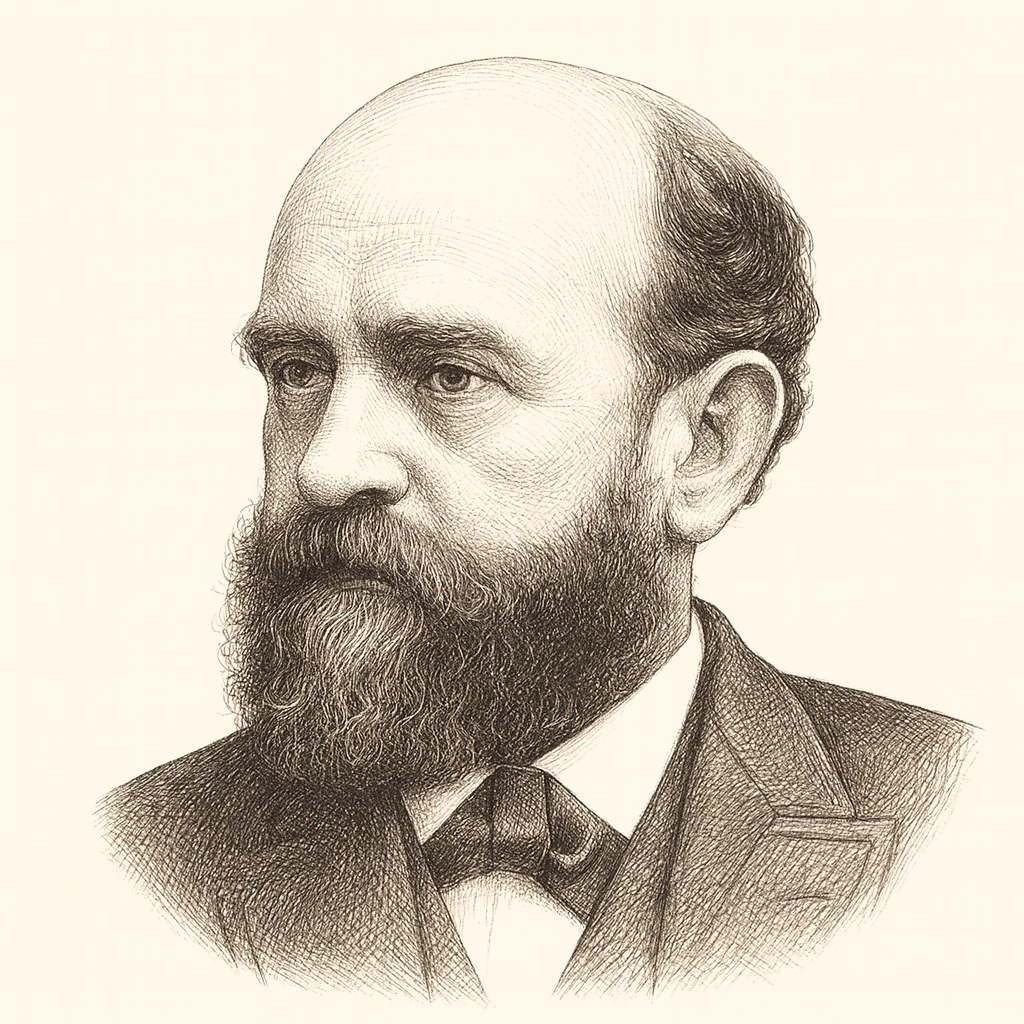
Henry George was the most popular economist in America in the last quarter of the 19th century, and possibly the most widely read economic writer in the entire Western world during that period. His 1879 book Progress and Poverty sold in the millions, was translated into dozens of languages, and made him a household name on both sides of the Atlantic. It also launched a political movement — the Single Tax movement — that influenced progressive politics throughout the late 19th and early 20th centuries and whose central insight is still being rediscovered by contemporary economists and urbanists today.
George was born in Philadelphia in 1839 into a working-class family. He left school at thirteen, worked as a printer's apprentice, went to sea as a young man, settled eventually in San Francisco, and worked his way into journalism and eventually newspaper editorship. His path to political economy came through observation rather than formal training. Watching California transform in the decades after the Gold Rush, George noticed something that troubled him: as the state grew wealthier, as railroads arrived, as new towns sprang up, the land itself became more valuable. But the gains from this increased land value went almost entirely to landowners who had done nothing to create them. Workers and capitalists both worked hard; landowners simply held title to land that rose in value as civilization advanced around them. The rent they could charge went up, the price they could sell at went up, and none of this reflected any productive contribution on their part.
This observation became the central insight of Progress and Poverty. George argued that the persistence of poverty in the midst of rapidly growing wealth was not a mystery. It was the predictable result of a system in which the gains from social and economic progress flowed disproportionately to landowners as rising land values, leaving workers to compete for wages in a labor market where rising costs of living absorbed any gains in productivity. His proposed solution was elegant and radical: abolish all other taxes and replace them with a single tax on the unimproved value of land. Land itself could not be produced or moved; taxing its unimproved value would not distort economic activity the way taxes on labor, capital, or consumption did; and the revenue would be enormous enough to fund the entire public sector. Meanwhile, the tax would strip away the windfall gains landowners currently received from social progress and return them to the society that had created them.
Progress and Poverty was published in 1879 and became one of the bestselling nonfiction books of the 19th century. By the time George died in 1897, it had sold millions of copies and spawned a genuine political movement. George himself twice ran for Mayor of New York City, coming in second in 1886 (ahead of the young Theodore Roosevelt) and dying four days before election day in his second run in 1897. His ideas influenced reformers across the political spectrum and shaped early progressive politics in the United States, Britain, Australia, and New Zealand.
The land value tax idea has had a persistent afterlife. It was championed by economists as different as Milton Friedman (who called it "the least bad tax") and Joseph Stiglitz. Contemporary urban economists have revived George's insights as part of debates about housing affordability, zoning, and the capture of public investment by private landowners. A small but enduring Georgist movement continues to publish, organize, and occasionally win policy victories at the local level. George's broader framework — that economic analysis should distinguish between productive activity and unearned windfalls, and that good tax policy should capture the latter without penalizing the former — has remained one of the most durable alternatives to both laissez-faire and socialist approaches to economic justice.
George died in 1897 at fifty-eight, in the middle of his second New York mayoral campaign, reportedly having worked himself to exhaustion. His funeral drew one of the largest crowds in New York City's history up to that point. His ideas remain some of the most distinctive contributions American political economy has made to the broader Western tradition.
Henry George is associated with Social Liberal. See the archetype