
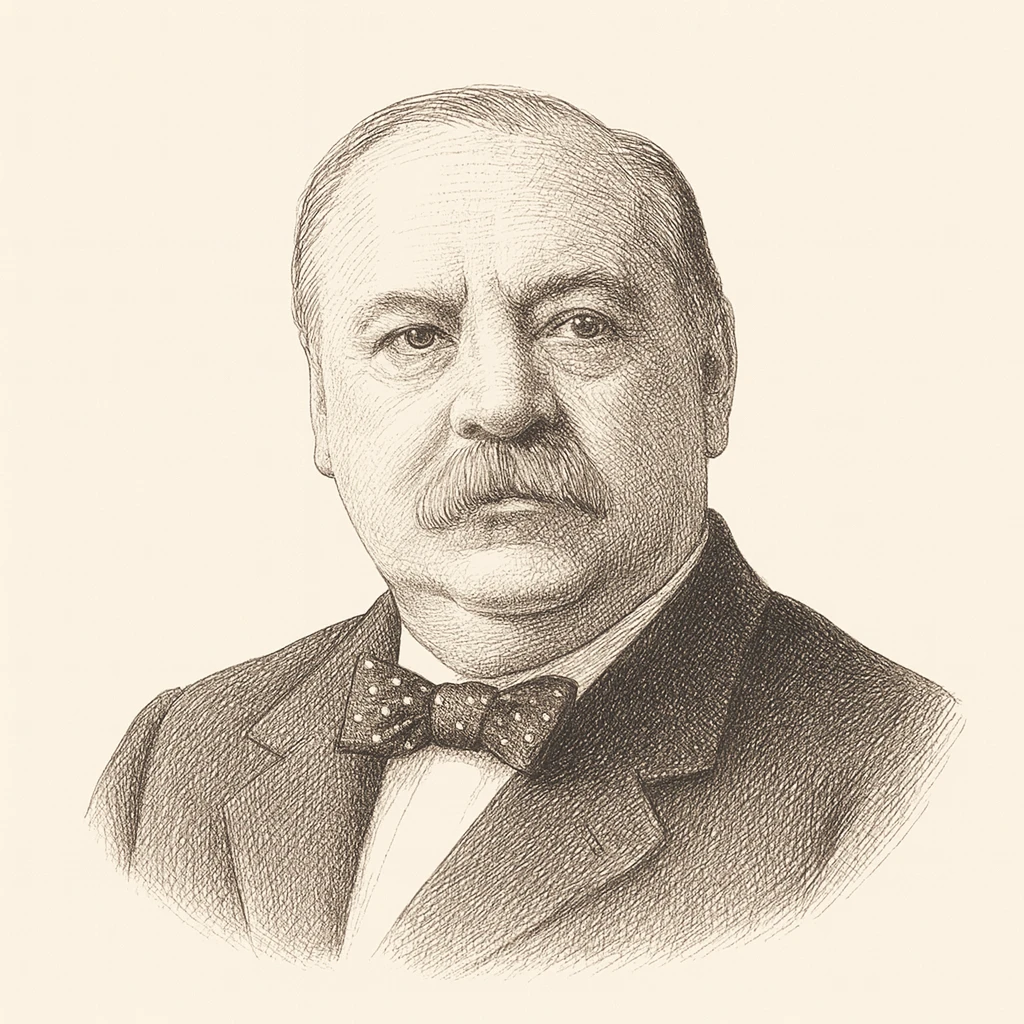
Grover Cleveland occupies a distinctive place in American political thought as the leading exponent of Bourbon Democracy—a strand of the Democratic Party that fused classical-liberal commitments to limited government, sound money, low tariffs, and fiscal restraint. Rising from mayor of Buffalo to governor of New York and then to the presidency, he built a reputation as an incorruptible administrator who believed that the proper role of the state was narrow and that public office was a public trust. His politics were less a systematic ideology than an insistence on economy in government, honesty in administration, and skepticism toward organized interests seeking favors from the federal treasury.
Cleveland is remembered above all for his prolific use of the veto, which he deployed to block what he regarded as unwarranted spending—particularly private pension bills and appropriations he considered raids on the Treasury. His stance during economic distress reflected a conviction that direct federal relief exceeded the government's legitimate function, a position that drew both admiration for its consistency and criticism for its hardness. On monetary questions he was a firm defender of the gold standard against the inflationary silver movement, a fight that ultimately split his party and contributed to its realignment around William Jennings Bryan and free silver.
In foreign affairs Cleveland is associated with a restrained, anti-expansionist posture. He withdrew the treaty to annex Hawaii from Senate consideration, objecting to the manner in which the pro-annexation government had come to power, and he generally resisted the imperial enthusiasms that would gather force at the century's end. This skepticism toward overseas acquisition aligned with his broader distrust of concentrated power.
Cleveland's record is genuinely contested. His administration's response to the Pullman Strike, in which he sent federal troops to break the labor action, and his broadly conservative approach to economic hardship placed him in opposition to the emerging labor and populist movements, and his tenure coincided with the entrenchment of segregation nationally. To later classical liberals he stands as a rare disciplined defender of limited government and sound finance within the Democratic tradition; to critics he embodies the limits of a laissez-faire creed indifferent to industrial-age suffering.
Grover Cleveland is associated with Classical Liberal. See the archetype