
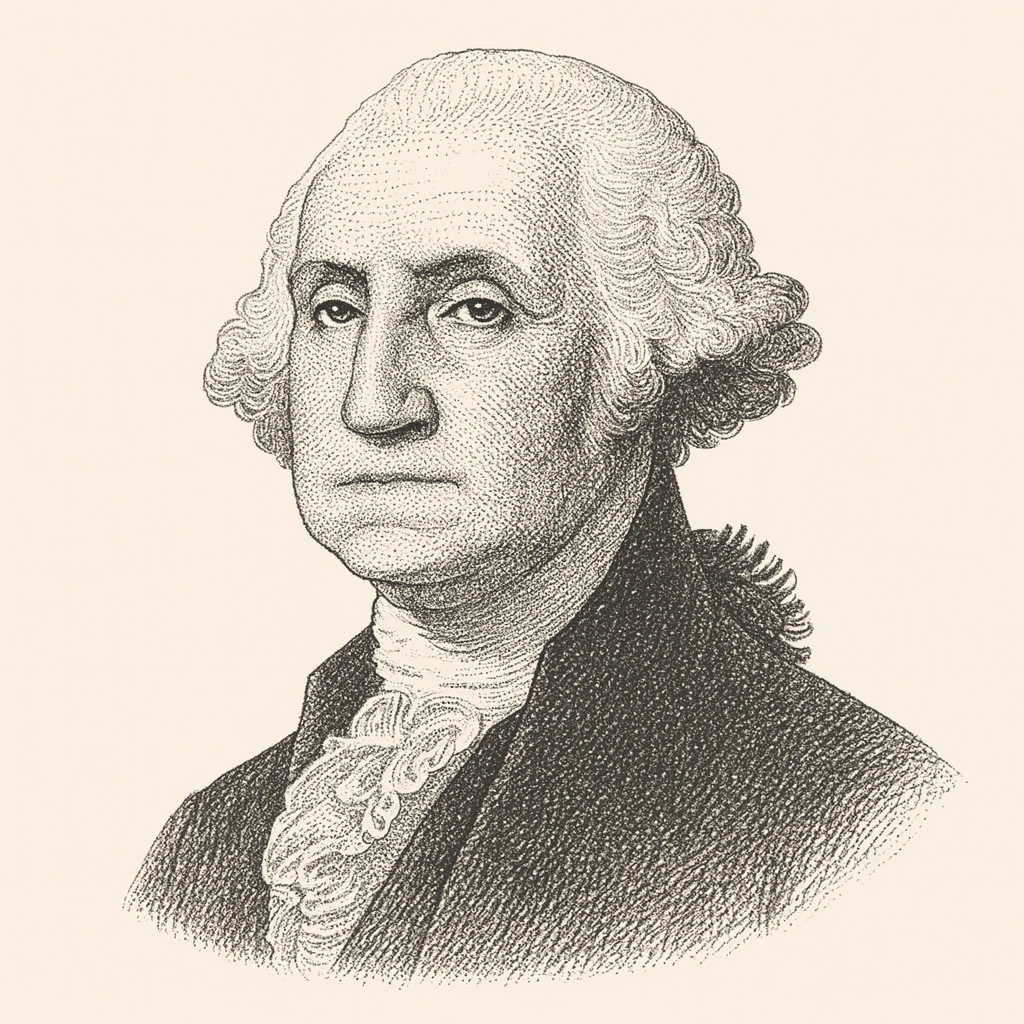
George Washington was the central military and political figure of American independence, serving as Commander-in-Chief of the Continental Army, president of the Constitutional Convention, and first President of the United States. A Virginia planter and surveyor, Washington gained military experience in the French and Indian War before becoming a reluctant revolutionary.
Washington held together an army that was often starving and unpaid, avoiding decisive defeat until victory at Yorktown, but his political reputation rests heavily on acts of restraint. At war's end, he resigned his commission and returned to farming, a step that astonished contemporaries, George III among them, and subordinated military power to civilian authority. His later decision to step down after two presidential terms established a precedent of voluntary transfer of power that lasted until FDR and was written into the Constitution by the Twenty-second Amendment.
He pressed during and after the war for a central government with more power than the states allowed it, a conviction that drew him to the movement for a stronger constitution, and he lent his personal prestige to ratification. As president, he understood that his actions set precedent, and he navigated between Hamilton's Federalists and Jefferson's Republicans, establishing executive precedents and keeping the fragile nation neutral in European wars. He generally favored Hamilton's program of national finance and credit, but tried to govern above party even as the first party system formed around him.
His Farewell Address warned against partisan faction, sectional division, and permanent foreign entanglements, arguing that the young republic should keep its independence of action and stay out of Europe's quarrels. Americans across the political spectrum have invoked its foreign-policy counsel ever since.
Washington owned enslaved people throughout his adult life. He did not free them during his lifetime; his will provided for the freedom of those he owned.
George Washington is associated with Classical Liberal. See the archetype