
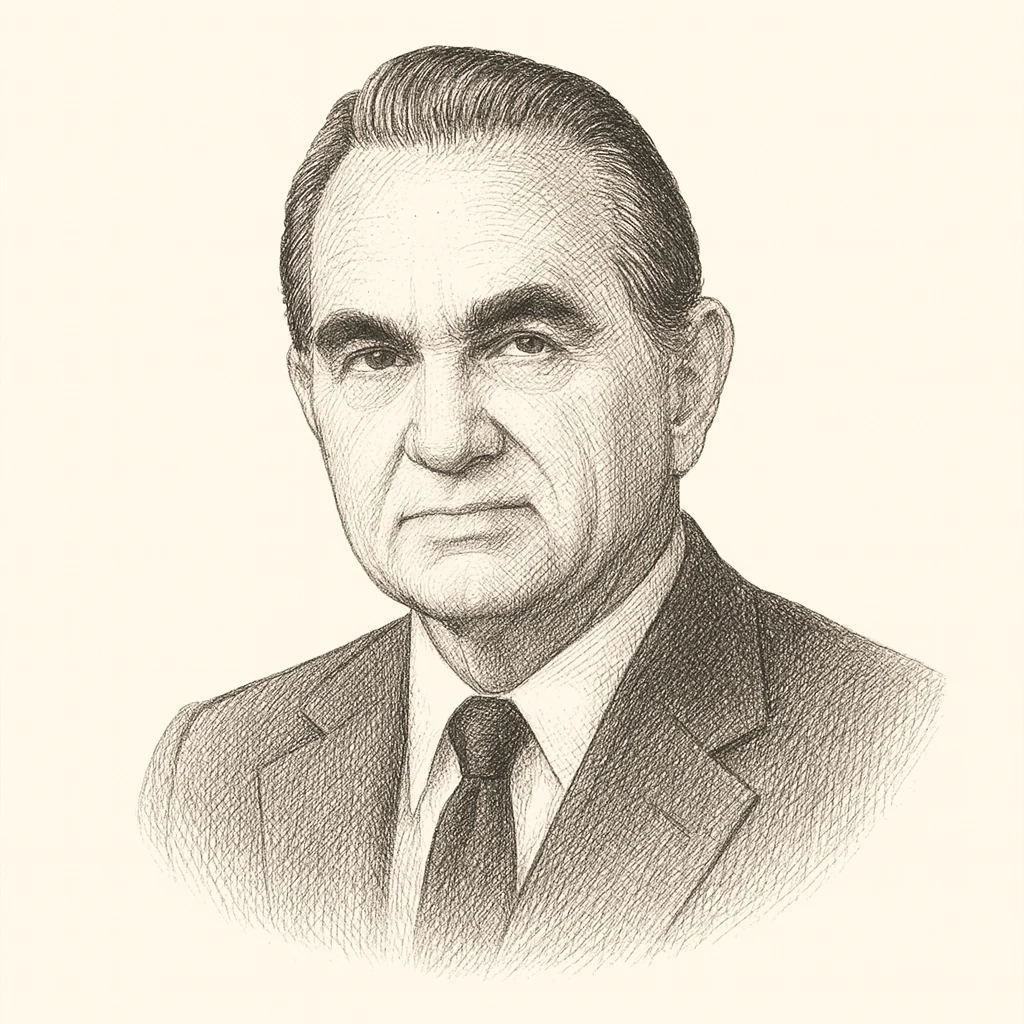
George Wallace was a four-term governor of Alabama and a repeat presidential candidate whose career fused Southern segregationism with a broader populist revolt against federal power and cultural elites. He rose to national prominence in the early 1960s as the most theatrical defender of racial segregation, vowing to resist court-ordered integration and personally staging a symbolic obstruction of Black students' enrollment at the University of Alabama. His pledge to defend "segregation forever" made him the era's most recognizable voice of white resistance to the civil rights movement.
Wallace's deeper political significance lies in how he translated that resistance into a durable populist idiom. He cast himself as the champion of ordinary working people against distant bureaucrats, federal judges, intellectuals, and the national media, arguing that unelected elites were imposing social change on communities that never consented to it. In his presidential bids—as a Democrat and then in 1968 as a third-party candidate—he carried this message beyond the South, drawing significant support among Northern white working-class voters anxious about crime, busing, and rapid social change. Analysts have long credited him with anticipating a realignment that later parties would absorb, demonstrating that grievance over race, order, and national identity could be mobilized nationally.
His 1972 campaign was cut short when an assassination attempt left him paralyzed. In later years Wallace publicly renounced his segregationist past, apologized to civil rights figures, and won Black votes in his final gubernatorial term. Historians disagree over how sincere or self-serving the recantation was, but it did not erase his earlier record, which remains inseparable from state-sanctioned racial oppression.
Wallace is studied less for any systematic body of thought than for a political style and strategy. His rhetoric of resentment against "pointy-headed" experts and detached elites, his appeal to a supposedly forgotten majority, and his blending of nationalism, cultural backlash, and populist anti-establishment energy have been widely identified as a template for later movements. Scholars of American populism frequently treat him as a pivotal transitional figure whose methods outlived the segregationist cause he first attached them to.
George Wallace is associated with National Populist. See the archetype