
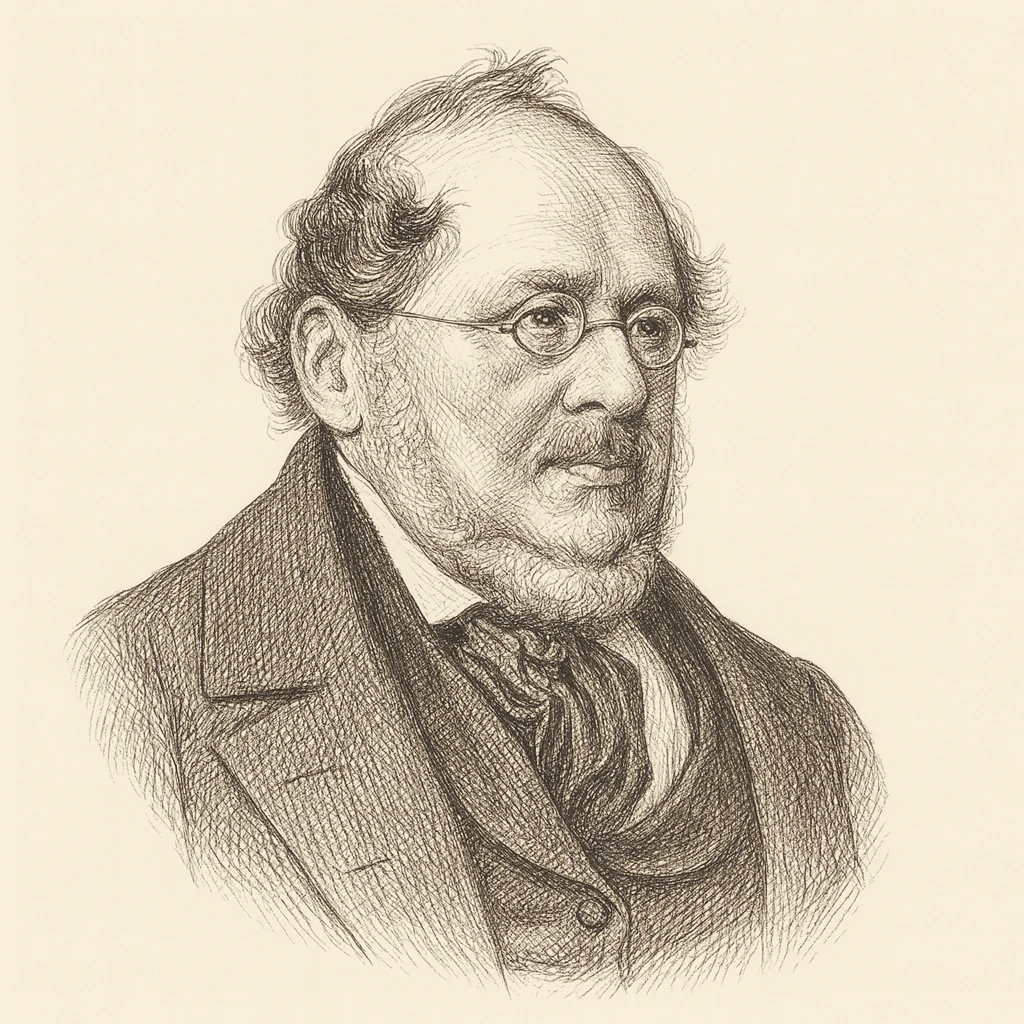
Friedrich List was a German economist and political thinker whose defense of economic nationalism made him one of the most influential critics of classical free-trade orthodoxy in the nineteenth century. Writing at a time when Adam Smith and the British classical school treated free exchange as universally beneficial, List argued that such doctrines reflected the interests of an already-industrialized Britain and would leave latecomers like Germany and the United States locked into permanent agrarian dependency. His central concept was the development of a nation's "productive powers" — the industrial, technical, and institutional capacities that generate long-run wealth — which he held to be more important than the immediate accumulation of exchange values that free trade maximized.
List spent formative years in the United States during the 1820s, where exposure to American debates over protection and internal improvement sharpened his thinking about how a rising economy could catch up to more advanced rivals. He championed the removal of internal trade barriers among the German states while advocating protective external tariffs to shelter emerging manufacturers until they could compete internationally. His best-known work developed the argument that tariffs should be understood not as permanent policy but as a temporary, stage-specific instrument suited to a nation still building its industrial base. Domestically he was a prominent advocate of railway construction and economic unification, seeing infrastructure and a common market as instruments of national cohesion as much as commerce.
His thought fused economics with a strong conception of the nation as the natural unit of political and economic life, standing between the individual and humanity. This made him a foundational figure for later traditions of state-led industrial development and for economic nationalism more broadly. Twentieth-century development economists, advocates of the developmental state in East Asia, and modern proponents of industrial policy have all drawn on List's argument that markets serve national ends rather than the reverse.
List's legacy is genuinely contested. Free-market economists regard his infant-industry case as a justification for protectionism that too often outlives its rationale and entrenches inefficiency. His nationalist framing has also been read, controversially, as a precursor to more aggressive later German economic nationalism, though he himself died in 1846, well before those developments and by his own hand amid personal and financial difficulty.
Friedrich List is associated with National Conservative. See the archetype