
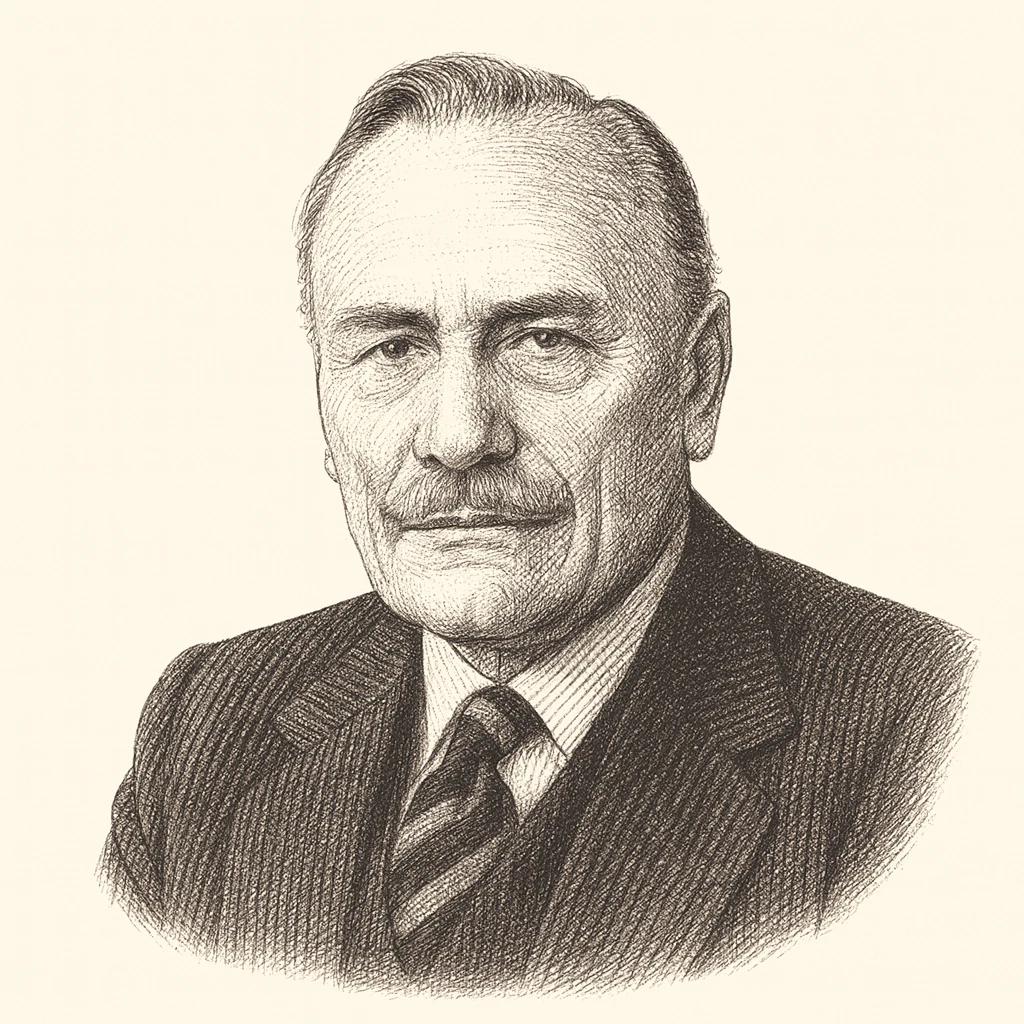
Enoch Powell was a British Conservative (and later Ulster Unionist) politician, classicist, and orator whose thought fused an uncompromising economic liberalism with a fierce defense of national sovereignty and cultural continuity. A formidable intellectual—a professor of Greek in his twenties—he entered Parliament after wartime service and became one of the earliest and most articulate advocates within his party of free markets, sound money, and a rolling back of the state. He argued against price controls, subsidies, and what he saw as the illusions of economic planning, positioning himself as a prophet of monetarist ideas that would later gain wider currency in the 1970s and 1980s.
Powell is most notoriously remembered for his 1968 speech opposing mass immigration, widely known as the "Rivers of Blood" speech, in which he warned in apocalyptic terms of social conflict arising from immigration from the Commonwealth and criticized anti-discrimination legislation. The speech led to his dismissal from the Conservative front bench and made him a deeply divisive national figure. It has been widely condemned as inflammatory and racist, and it remains a reference point in British debates over immigration, race, and national identity; his defenders cast him as a truth-teller on a taboo subject, while critics see him as having legitimized prejudice.
Beyond immigration, Powell was a committed opponent of Britain's entry into the European Economic Community, framing membership as an unacceptable surrender of parliamentary sovereignty—an argument that anticipated later Euroskeptic and pro-Brexit thinking. He also opposed a strident foreign policy of overseas commitments, taking skeptical positions on empire and intervention. His insistence that the nation-state, its borders, and its self-governing parliament were the essential units of political life gave later national-conservative movements a distinctive template.
Powell's enduring influence lies less in any single office he held—he never led his party or reached the highest ranks of government—than in the way he articulated a synthesis of market economics, nationhood, and cultural anxiety. He remains one of the most studied and contested figures in postwar British politics, invoked by admirers as a principled dissenter and by opponents as a cautionary example of how rhetorical brilliance can be turned to divisive ends.
Enoch Powell is associated with National Conservative. See the archetype