
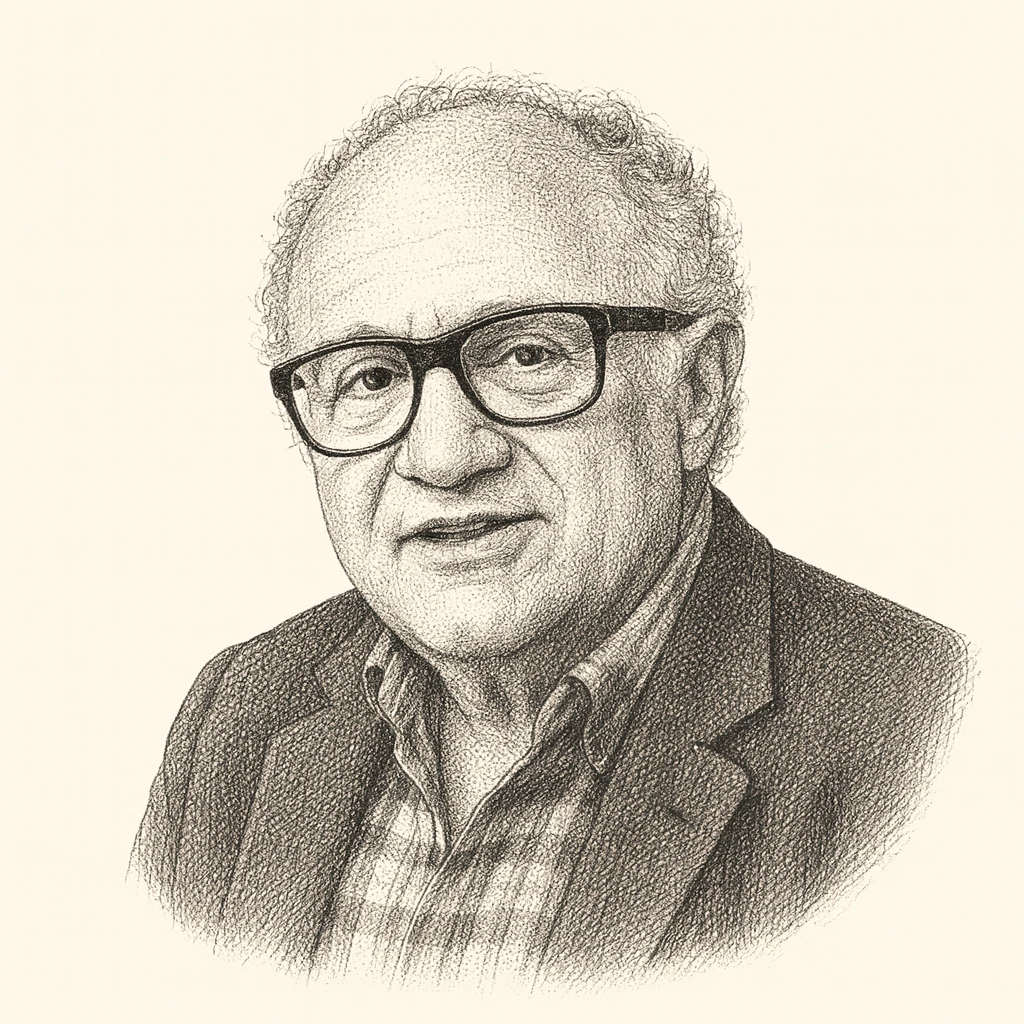
David Friedman is an American economist, legal scholar, and writer best known as a leading proponent of anarcho-capitalism, the idea that even the core functions of the state—law, courts, and protection—could be supplied through voluntary market arrangements. His most influential work, The Machinery of Freedom, sets out a vision of a society without government in which competing private agencies provide security and adjudication, and legal rules emerge through market processes rather than centralized legislation. The book has circulated widely among libertarians and remains a standard reference point in debates over private provision of law and order.
What distinguishes Friedman within the libertarian tradition is his methodological approach. Rather than resting his case on natural rights or a moral prohibition on coercion—the route taken by figures such as Murray Rothbard—Friedman argues on consequentialist grounds, contending that market-based institutions would tend to produce better outcomes than state provision. He applies economic reasoning, particularly the analysis of incentives and efficiency, to institutions usually assumed to require government, asking how private actors might supply them and what results would follow. This gives his anarchism a pragmatic, empirical character, framing the question of the state as one about which arrangements work rather than which are inherently just.
Friedman's thought sits at the intersection of Chicago-school economics and radical libertarianism. He has written on the economic analysis of law, exploring how legal systems can be understood and evaluated through the lens of efficiency and incentives, and he has drawn on historical examples of decentralized or private legal orders to argue that stateless legal institutions are not merely theoretical. His willingness to treat law as something that can evolve through competition rather than be imposed by a sovereign connects him to broader discussions in law and economics as well as to spontaneous-order themes associated with classical liberalism.
His influence lies less in building a mass movement than in shaping how a segment of libertarian and academic thinkers frame their arguments. By separating the anarcho-capitalist conclusion from any particular moral foundation and defending it through cost-benefit reasoning, Friedman offered an alternative pathway into radical anti-statism that continues to be debated, cited, and contested in libertarian intellectual circles.
David Friedman is associated with Anarcho-Capitalist. See the archetype