
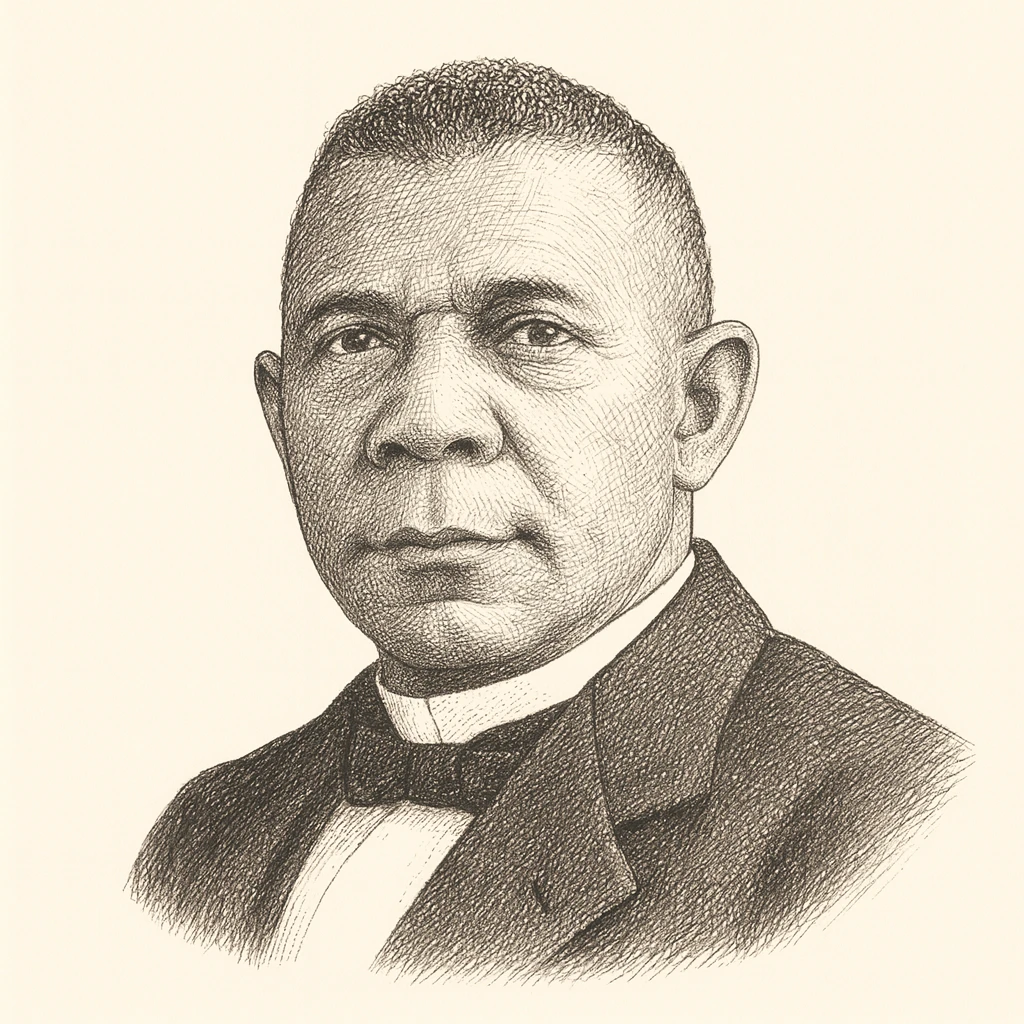
Booker Taliaferro Washington was the most powerful African American leader of his era, building Tuskegee Institute into a major educational institution while advocating economic self-improvement over political agitation. Born into slavery in Virginia, Washington worked his way through Hampton Institute before founding Tuskegee in 1881.
Washington's 'Atlanta Compromise' speech (1895) articulated his philosophy: Black Americans should temporarily accept segregation and disenfranchisement while building economic strength through vocational education and hard work. 'Cast down your bucket where you are.' The argument rested on a theory of gradual advancement: that thrift, skilled labor, property, and demonstrated economic usefulness would eventually make civil and political rights unavoidable, and that preparation to exercise those rights mattered more than agitation for them. This approach won white philanthropic support and made Washington the broker of Black patronage, giving him wide influence over appointments, funding, and the Black press.
The position responded to the collapse of Reconstruction, the spread of Jim Crow laws, and pervasive lynching. In the Atlanta address he called agitation over social equality 'the extremest folly.' W.E.B. Du Bois challenged him in The Souls of Black Folk (1903), attacking Washington for accepting second-class citizenship and arguing that surrendering the vote and civil equality would only entrench subordination and that a 'Talented Tenth' of liberally educated leaders, not merely vocational training, was essential. The dispute fed into the founding of the Niagara Movement (1905) and the NAACP (1909), and Washington used his influence over patronage and the Black press against his Black opponents.
Behind his public accommodationism, Washington secretly sponsored civil rights lawsuits while publicly counseling patience. His autobiography, Up From Slavery, became a classic of self-help literature, presenting his own rise as a model of discipline and uplift.
Washington's emphasis on economic empowerment, property ownership, and practical education influenced later Black conservative thought, as well as strands of Black nationalism and entrepreneurship that stressed self-help and community institution-building.
Booker T. Washington is associated with Classical Liberal. See the archetype